
Why Enrichment Matters

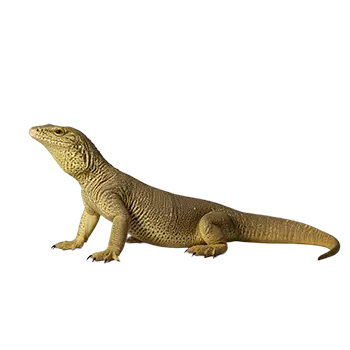
Argus Monitors (Varanus panoptes) are among the most cognitively advanced reptiles in private keeping. Field studies of wild varanids have documented problem-solving ability, spatial memory, and exploratory behavior that rivals some mammalian species. In captivity, this intelligence becomes a liability when the environment fails to provide adequate stimulation. A bored Argus Monitor does not simply sit quietly; it paces relentlessly, scratches at enclosure walls, becomes defensively aggressive during handling, and may develop stereotypic behaviors that are difficult to reverse once established.

Enrichment for this species is not an afterthought or an occasional treat but a structural component of husbandry as essential as correct temperature gradients or proper nutrition. The wild Argus Monitor spends its active hours patrolling a home range that can span several hectares, investigating burrows, digging for prey, monitoring its territory for competitors, and responding to a constant stream of sensory input. An enclosure, no matter how large, compresses this behavioral repertoire into a fraction of the space, and enrichment strategies are the mechanism by which keepers restore complexity and purpose to the animal's daily experience.

The most effective enrichment programs operate on multiple sensory channels simultaneously. Physical challenges such as climbing and digging address the animal's locomotor drives. Foraging puzzles engage its predatory cognition. Novel scents and objects stimulate its investigative instincts. Rotation of these elements prevents habituation, which is the point at which the monitor has fully mapped a stimulus and no longer finds it interesting. An enrichment plan that never changes is only marginally better than no enrichment at all.

Measuring enrichment success is subjective but observable. A well-enriched Argus Monitor explores its enclosure purposefully rather than pacing the same circuit. It investigates new objects with tongue-flicking and deliberate approach rather than fleeing or ignoring them. It uses the full volume of the enclosure, including climbing structures, burrows, and open ground, rather than occupying only one preferred corner. Feeding responses are vigorous and oriented toward problem-solving rather than frantic lunging. These behavioral indicators should guide enrichment decisions more than any prescriptive checklist.

Digging and Burrowing Enrichment

Digging is the single most important natural behavior for the Argus Monitor and the one most frequently compromised in captive settings. In the wild, these animals excavate extensive burrow systems that serve as thermal refugia, sleeping quarters, and ambush sites. The act of digging itself provides vigorous physical exercise that maintains muscle tone and claw condition while satisfying a deep behavioral drive. Providing adequate digging opportunities is arguably the highest-impact enrichment decision a keeper can make.

The substrate depth and composition discussed on the housing page form the foundation, but enrichment-focused modifications take digging from a passive option to an active engagement. Burying food items at varying depths within the substrate transforms a routine feeding into a foraging expedition that can occupy an Argus Monitor for an extended period. A thawed rodent placed six inches below the surface forces the animal to detect it through chemosensory cues and excavate methodically, replicating the effort-reward dynamic of wild foraging far more faithfully than dropping prey onto the surface.

Variation in substrate texture across different zones of the enclosure adds another dimension to the digging experience. A section of packed clay-sand mix behaves differently under the claws than loose topsoil, and the monitor quickly learns which areas yield different digging results. Introducing a buried section of cork bark or a flat stone at a specific depth creates a tactile surprise that interrupts the digging routine and triggers investigation. These modifications are inexpensive, easy to implement during substrate changes, and produce visible behavioral responses.

Outdoor digging opportunities, where climate and security permit, provide the highest-quality burrowing enrichment available. A secure outdoor enclosure with natural soil allows the monitor to dig in a medium with the temperature gradients, moisture layers, and microbial ecology of real earth. Even brief supervised sessions in a contained outdoor space produce dramatic increases in activity level and exploratory behavior. The animal returns to its indoor enclosure visibly calmer and more settled, suggesting that the outdoor digging session satisfies drives that indoor substrate cannot fully replicate.

Climbing Structures

Although Argus Monitors are primarily terrestrial as adults, they retain significant climbing ability and will use elevated structures regularly when they are available. Juveniles are especially arboreal, spending substantial time off the ground to avoid predation, but even full-grown adults climb to survey their territory, access basking sites, and simply because the vertical dimension is available. An enclosure that offers only floor space wastes the upper volume entirely and eliminates an entire category of natural movement.

Sturdy branches, ledges, and shelves anchored securely to the enclosure walls transform dead vertical space into functional habitat. Materials must support the full weight of an adult Argus Monitor, which can exceed ten to fifteen pounds depending on sex and body condition, with a generous safety margin for the dynamic forces generated when the animal leaps onto or drops from a perch. Hardwood branches with rough bark provide excellent grip, while smooth dowels and PVC pipes are too slippery for comfortable use and should be avoided unless wrapped in textured material.

Positioning climbing structures to create routes between different thermal and humidity zones within the enclosure adds functional purpose to the physical challenge. A branch that leads from the cool end up to a secondary basking shelf near the warm end gives the animal a reason to climb beyond mere exploration. A ledge positioned near the UVB fixture allows the monitor to bask at an elevated position closer to the light source, which some individuals clearly prefer over ground-level basking. The goal is to make climbing a practical transportation strategy within the enclosure rather than a purposeless dead end.

Regular reconfiguration of climbing structures is one of the simplest and most effective forms of enrichment rotation. Moving a branch to a new angle, repositioning a shelf to a different height, or introducing a new piece of driftwood resets the monitor's spatial map of the enclosure and triggers a period of re-exploration that can occupy the animal for days. This novelty effect costs nothing beyond a few minutes of rearrangement during routine maintenance and produces measurable increases in activity and investigative behavior.

Foraging and Feeding Enrichment

Converting feeding time from a passive handout into an active problem-solving exercise is the most consistently effective enrichment strategy for Argus Monitors. These animals are wired for predatory pursuit and investigation, and simply placing food in a dish or dropping it on the substrate bypasses the entire behavioral sequence that precedes consumption in the wild. Foraging enrichment reintroduces effort, uncertainty, and cognitive engagement into the feeding process.

Scatter feeding, where individual insects or small prey items are distributed across the enclosure rather than presented in a single location, is the simplest foraging modification and appropriate for daily use. The monitor must actively search the enclosure, using visual scanning and chemosensory tongue-flicking to locate each item. This distributes feeding activity over a longer time period, reduces the frantic gorging behavior that concentrated feeding encourages, and ensures the animal traverses its entire enclosure during the feeding session.

Puzzle feeders designed for parrots and small mammals can be adapted for monitor use with appropriate modifications. Containers with removable lids, balls with dispensing holes, and stackable cups that must be knocked apart to access hidden food all challenge the Argus Monitor's problem-solving ability. The key design criterion is that the puzzle must be solvable by the animal within a reasonable timeframe; a device so difficult that the monitor gives up after brief investigation produces frustration rather than enrichment. Starting with easy configurations and gradually increasing complexity as the animal learns the mechanism produces the best engagement.

Tong feeding, where prey items are presented individually on long feeding tongs and moved to simulate live prey, stimulates the pursuit-and-strike sequence that is central to the monitor's predatory repertoire. This technique is particularly valuable for animals that have become habituated to stationary food and show declining feeding enthusiasm. The movement of the prey item triggers a qualitatively different response than a motionless target, engaging visual tracking, body positioning, and explosive strike behavior that exercises both the body and the predatory cognition of the animal.

Whole prey items concealed inside destructible containers offer another enrichment layer. Wrapping a thawed rodent loosely in untreated paper or placing it inside a cardboard tube that the monitor must tear apart adds a manipulation phase before consumption. The monitor detects the food through scent, investigates the container, and must apply physical force and problem-solving to access the reward. These sessions consistently produce some of the most sustained and focused behavioral engagement observed in captive Argus Monitors.

Sensory and Environmental Enrichment

The Argus Monitor's primary sense organ is its tongue, which delivers chemical information about the environment to the vomeronasal organ in the roof of the mouth with extraordinary sensitivity. Scent-based enrichment exploits this sensory channel and produces reliable investigative behavior even in animals that have habituated to physical enrichment items. Introducing novel scents into the enclosure, whether from substrate collected from an outdoor location, shed skin from another reptile species, or commercially available animal scents, triggers extended periods of tongue-flicking and systematic investigation.

Bioactive substrate communities add a living dimension to the enclosure environment that provides continuous low-level sensory enrichment. Springtails, isopods, and other clean-up crew invertebrates create a substrate ecosystem with its own chemical signatures, movements, and population dynamics. While the primary function of a bioactive system is waste processing and substrate maintenance, the incidental presence of tiny moving organisms provides ongoing micro-stimulation for a predatory animal attuned to detecting small prey.

Visual enrichment receives less attention in reptile husbandry than it deserves. Argus Monitors have excellent color vision and respond to changes in their visual environment. Repositioning decor items, introducing branches or rocks with different colors and textures, and even placing the enclosure where the monitor can observe household activity through a transparent panel all contribute visual novelty. Some keepers report that their monitors watch television or respond to activity visible through windows, suggesting a level of visual processing and interest that warrants deliberate stimulation.

Controlled exposure to outdoor conditions, whether through supervised time in a secure outdoor enclosure or simply opening a window to allow natural air currents and ambient sounds to reach the indoor enclosure, provides a multi-sensory experience that no indoor modification can fully replicate. The combination of natural light spectra, ambient temperature variation, wind-borne scents, and environmental sounds stimulates the monitor across every sensory channel simultaneously. Even brief outdoor sessions produce marked behavioral changes, including increased alertness, intensified tongue-flicking, and heightened exploratory drive that persists after the animal returns indoors.

Water-Based Enrichment

Argus Monitors in the wild are frequently associated with riparian habitats and are competent swimmers that forage in shallow water for fish, crustaceans, and amphibians. Capitalizing on this affinity for water in the captive environment opens an enrichment avenue that is largely unavailable to keepers of strictly arid-zone reptiles. Water-based activities engage locomotor patterns, thermoregulatory behavior, and predatory instincts that land-only enrichment cannot address.

A large soaking tub or shallow pool positioned in the enclosure allows natural wading and swimming behavior. For enrichment purposes, the water feature can be enhanced beyond its basic hygienic function by occasionally introducing floating objects that the monitor investigates or pushes through the water. Cork bark pieces, floating feeder dishes that drift unpredictably, or buoyant balls create moving targets on the water surface that provoke visual tracking and striking behavior. These additions should be temporary, introduced for specific enrichment sessions and then removed to maintain novelty.

Live feeder fish such as guppies, minnows, or small goldfish placed in the water container transform soaking time into an active hunting session. Aquatic pursuit engages a completely different set of motor patterns than terrestrial prey capture, requiring the monitor to coordinate its strike through a medium that resists movement differently than air. Fish are unpredictable targets that evade capture, providing a genuine challenge that can occupy the animal for an extended period. This form of enrichment should be used sparingly to maintain its novelty value and supplemented with appropriate calcium dusting on subsequent terrestrial feedings to offset the typically low calcium content of feeder fish.

Supervised bathing sessions outside the enclosure, whether in a bathtub, a large storage container, or an outdoor kiddie pool, provide an enrichment experience distinct from the familiar water container inside the enclosure. The novel space, different water volume, and changed surroundings all contribute to the enrichment value. These sessions also serve practical purposes including facilitating hydration, softening pre-shed skin, and encouraging defecation in a location that simplifies cleanup. The key is ensuring the water temperature is appropriate and that the animal can exit the water onto a secure, non-slip surface at will.

Rotation and Safety Considerations

The single most important principle in monitor enrichment is rotation. Argus Monitors are fast learners that habituate to static environments within days. An enrichment item that provokes intense investigation on day one may be completely ignored by day five, not because the item is inadequate but because the animal has fully cataloged it and no longer derives cognitive benefit from its presence. Systematic rotation of enrichment items, configurations, and schedules maintains the novelty that drives engagement.

A practical rotation system involves maintaining an inventory of enrichment items stored outside the enclosure and cycling subsets through on a scheduled basis. One week might feature a particular arrangement of climbing branches, a buried food puzzle, and a scent introduction. The following week, the branches are repositioned, the puzzle is replaced with scatter feeding, and a different scent is introduced. The specific items matter less than the principle of change; it is the act of encountering something unexpected that produces enrichment, not the intrinsic quality of any particular object.

Safety evaluation must precede the introduction of any enrichment item into the enclosure. Argus Monitors are powerful animals that will dismantle, crush, and attempt to consume objects that were not designed to withstand their attention. Items with small removable parts, sharp edges, toxic coatings, or materials that fragment into ingestible pieces are dangerous regardless of their enrichment potential. Every item should be evaluated with the assumption that the monitor will bite it, claw it, and attempt to swallow any piece that separates from the main structure.

Material toxicity is a concern that extends beyond obvious hazards. Treated lumber, painted surfaces, galvanized metals, and certain plastics release compounds that accumulate in reptilian tissue with chronic exposure. Enrichment items should be constructed from untreated hardwoods, food-grade plastics, stainless steel, or natural materials like cork and stone. When in doubt about a material's safety, excluding it from the enclosure is always the correct decision. The veterinary cost of treating a toxicosis or intestinal obstruction caused by an unsafe enrichment item vastly exceeds the value of any temporary behavioral benefit the item provided.

Always consult a qualified professional before making any health-related decisions. This content is provided for informational reference only and should not replace professional guidance specific to your animal.