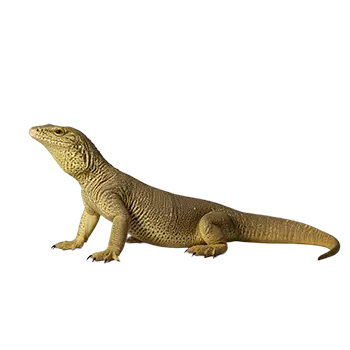

Technology in Varanid Husbandry

The environmental demands of an Argus Monitor (Varanus panoptes) are among the most exacting of any commonly kept reptile, and the margin for error is narrow. Basking surfaces must reach temperatures that would be dangerous for most other species, ambient gradients must span a wide range across a large enclosure, humidity must be maintained within a band that prevents both respiratory distress and scale rot, and UVB delivery must be consistent and measurable. Managing these parameters manually across a multi-zone enclosure the size of a small room is unsustainable over the fifteen-to-twenty-year lifespan of the animal. Technology transforms this from a constant manual juggling act into a managed, auditable system.

The core technology stack for an Argus Monitor enclosure consists of thermostatic heating control, environmental sensing for temperature and humidity, automated lighting management, and ideally remote monitoring that allows the keeper to verify conditions without physically opening the enclosure. Each component serves a distinct function, and while it is possible to start with manual control and upgrade incrementally, the interdependence of these systems means that the full benefit of each device is realized only when it operates as part of an integrated setup.

Reliability is the single most important attribute of any technology deployed in a reptile enclosure. A thermostat that fails in the on position can overheat the enclosure to lethal temperatures within hours. A timer that skips a cycle leaves lighting on continuously or off entirely, disrupting circadian rhythms and UVB delivery. A humidity sensor that drifts out of calibration allows conditions to shift gradually into a pathogenic range without triggering any alarm. Every device in the system must be selected for its failure mode as much as its performance specifications, and redundancy should be built into the system wherever the cost of failure is measured in animal welfare.

Budgeting for technology should be considered part of the enclosure build, not an afterthought funded from whatever remains. The cost of a quality thermostat, a set of calibrated probes, a reliable timer, and a basic camera system is modest relative to the total investment in enclosure construction, the animal itself, and the cumulative cost of veterinary care that results from environmental management failures. Keepers who economize on control technology consistently spend more over time correcting the health consequences of the environmental instability that cheap or absent equipment permits.

Thermostats and Temperature Controllers

A proportional or dimming thermostat is the single most critical piece of technology in the Argus Monitor enclosure. Unlike simple on-off thermostats that allow temperature to oscillate above and below the setpoint in a saw-tooth pattern, proportional controllers continuously modulate power to the heating element, maintaining a stable output that holds temperature within a narrow band. This precision is especially important for halogen basking lamps, which produce the infrared-A deep-tissue heating that Argus Monitors require. Dimming the lamp smoothly maintains consistent heat output without the sudden cycling that stresses both the bulb and the animal.

The thermostat must be rated for the wattage of the heating elements it controls. Argus Monitor basking setups frequently involve one or more high-wattage halogen flood lamps, and the combined load can exceed the capacity of thermostats designed for smaller reptile enclosures. Underpowered thermostats overheat internally, drift out of calibration, and eventually fail, sometimes catastrophically. Selecting a unit rated for at least twenty percent above the total connected load provides a safety margin that extends the device's service life and prevents thermal runaway scenarios.

Probe placement determines the accuracy of the entire system and is the most common source of thermostat-related problems. The temperature probe should be positioned at the basking surface itself, secured in a location where it measures the temperature the monitor actually experiences rather than the ambient air several inches away. A probe suspended in open air above the basking spot will read significantly cooler than the surface temperature, causing the thermostat to overdrive the heating element and create a dangerously hot basking zone. Probes must also be protected from direct contact with the monitor, which can dislodge, bite, or crush an exposed sensor.

Dual-zone thermostat systems that independently control the basking zone and the ambient warm-end heating element offer the most precise environmental management for large enclosures. A single thermostat cannot optimize two heating elements operating at different setpoints, and attempting to control both from one probe results in one zone being consistently too hot or too cold. Dedicated controllers for each zone allow the basking lamp and the ambient heater to operate on independent feedback loops, each responding to its own probe at its own setpoint.

Hygrometers and Humidity Monitoring

Accurate humidity measurement in an Argus Monitor enclosure is complicated by the fact that humidity varies dramatically across the enclosure's volume. The air directly above the basking zone may be well below 40 percent relative humidity, while the air at substrate level in the cool end may exceed 70 percent, and the atmosphere inside a burrow several inches below the surface can approach saturation. A single hygrometer reading from one location provides, at best, a partial picture of conditions and, at worst, a misleading one that drives incorrect management decisions.

Digital hygrometers with remote probes allow the keeper to monitor humidity at multiple locations simultaneously. Placing one probe at substrate level in the cool zone, another at mid-height in the center of the enclosure, and a third near the basking area establishes a humidity profile that captures the gradient the animal actually navigates. Wireless sensor units that transmit readings to an external display or smartphone application make multi-point monitoring practical without routing cables through the enclosure walls.

Calibration of hygrometers is an often-skipped step that directly affects the usefulness of the data they produce. Consumer-grade hygrometers frequently ship with accuracy tolerances of plus or minus five percent or worse, and drift further from true readings over months of use. A simple salt-test calibration using a sealed container with a saturated salt solution verifies whether the unit reads accurately at the 75 percent relative humidity reference point. Units that cannot be calibrated or that show persistent inaccuracy should be replaced rather than mentally corrected, as the keeper will inevitably forget the offset during a busy maintenance session.

For keepers managing automated misting systems, a hygrometer with a high and low alarm function provides an early warning when humidity departs from the target range. A failed misting pump, an empty reservoir, or a clogged nozzle can cause humidity to drop below the threshold for hours before the keeper notices during a visual check. An audible or push-notification alarm triggered by the hygrometer catches these failures in real time, preventing the slow dehydration and respiratory irritation that result from extended low-humidity exposure in a species that depends on moderate ambient moisture.

Lighting Timers and Controllers

Consistent photoperiod management is essential for maintaining the circadian rhythm, appetite, and hormonal cycles of a diurnal species like the Argus Monitor. Manual switching of lights is unreliable over time; even conscientious keepers occasionally forget, leave for the weekend, or shift their schedule in ways that disrupt the animal's light cycle. A programmable timer eliminates this variable entirely and ensures that the enclosure's lighting transitions occur at the same time every day regardless of the keeper's presence.

Digital timers with minute-level programming resolution and multiple on-off cycles per day offer the flexibility needed for complex lighting setups. An Argus Monitor enclosure typically involves at least three independent lighting circuits: the primary visible-light fixture, the UVB tube, and the halogen basking lamp. Each may operate on a slightly different schedule; for example, the visible light might activate fifteen minutes before the basking lamp to simulate dawn, and the UVB tube might run for a shorter daily window than the visible light to prevent overexposure. A timer with multiple independently programmable channels accommodates this staggered scheduling without requiring separate timer units for each circuit.

Dusk-and-dawn dimming controllers represent a refinement that benefits the animal's behavioral transition between active and resting states. Rather than switching from full darkness to full brightness instantaneously, a dimming controller ramps light intensity gradually over a period of fifteen to thirty minutes, simulating the natural twilight transition that the animal would experience in the wild. This gradual onset reduces the startle response that abrupt illumination produces in some monitors and allows the animal to begin its basking and activity cycle in a more naturalistic manner.

Integrating lighting control with heating control through a centralized smart-home hub or a dedicated reptile automation controller creates a unified environmental management system. When the basking lamp, the UVB fixture, the ambient light, and any supplemental heating elements all operate under coordinated automated schedules, the enclosure runs as a self-managing ecosystem that requires only monitoring and periodic maintenance from the keeper. This level of integration is not strictly necessary for competent Argus Monitor husbandry, but it reduces the daily management burden significantly and virtually eliminates the category of husbandry errors that result from forgetting to switch a device on or off.

Digital Thermometers and Probes

While thermostats control heating elements, independent thermometers verify that the thermostat is doing its job correctly. Relying solely on the thermostat's built-in temperature display to confirm enclosure conditions creates a single point of failure; if the thermostat's sensor drifts or its display becomes inaccurate, the keeper has no independent reference to detect the error. A separate digital thermometer with its own probe, positioned near but not identical to the thermostat probe's location, provides the cross-check that catches thermostat drift before it becomes a health issue.

Infrared temperature guns are indispensable tools for measuring surface temperatures throughout the enclosure without making physical contact. The basking surface temperature, which is the single most important thermal parameter in the Argus Monitor enclosure, can only be measured accurately with an infrared gun aimed at the actual surface where the animal rests. Air-temperature probes positioned above the basking spot consistently underread the surface temperature by a significant margin, and this discrepancy leads many keepers to unknowingly operate their basking zones well below the optimal range for this species.

Multi-channel digital thermometers that accept two, four, or more probe inputs allow simultaneous monitoring of the basking surface, warm-end ambient air, cool-end ambient air, and substrate temperature from a single display unit. These devices provide a comprehensive thermal snapshot of the enclosure at a glance and make it easy to identify gradients that have collapsed, zones that are running too hot or too cold, or heating elements that have failed. Wireless versions that transmit readings to a wall-mounted display outside the enclosure or to a smartphone application allow monitoring without opening the enclosure doors.

Data-logging thermometers that record temperature readings at regular intervals over days or weeks provide insights that instantaneous readings cannot. A logger reveals the enclosure's thermal behavior during the night, during the keeper's absence, and across seasonal changes in ambient room temperature. Reviewing a week's worth of logged data often uncovers temperature excursions that coincide with household events such as air conditioning cycles, open windows, or furnace activation, patterns that would be invisible without continuous recording. This historical data is also valuable when consulting with a veterinarian about unexplained health issues, as it provides an objective record of the thermal conditions the animal has actually experienced.

Cameras and Remote Monitoring

A camera system mounted inside or facing into the Argus Monitor enclosure serves both practical husbandry and behavioral observation purposes. Practical applications include verifying that heating and lighting systems have activated on schedule, confirming that the animal is behaving normally during the keeper's absence, and monitoring feeding activity when timed or scatter-fed meals are left for the animal. Behavioral applications include observing nocturnal activity, documenting pre-shed behavior, and assessing the monitor's use of enrichment items and different enclosure zones over time.

Wi-Fi-connected cameras with smartphone app integration allow the keeper to check on the enclosure from anywhere with an internet connection. A quick visual check during a work break confirms that the basking lamp is on, the water dish has not been overturned, and the animal is active and alert. This capability is especially valuable during extended absences when a pet sitter or neighbor is providing basic care but may not recognize early signs of equipment failure or animal distress.

Night-vision or infrared camera modes reveal the monitor's nocturnal behavior without introducing visible light that would disrupt its rest. Argus Monitors are not strictly inactive at night; they shift positions within their burrows, occasionally emerge to drink, and may display restless behavior that indicates environmental discomfort. Observing these patterns over time builds a baseline understanding of what constitutes normal nighttime activity, making it much easier to identify abnormal behavior that might signal illness, temperature problems, or stress.

Motion-triggered recording and alert features add a security dimension to the camera system. An alert generated by unexpected motion in the enclosure during nighttime hours could indicate the animal has escaped from its designated sleeping area and is interacting with equipment it normally avoids, which may signal a problem. More practically, motion alerts can detect equipment failures such as a water dish overturning or a climbing branch collapsing. Some keepers integrate their enclosure cameras into broader home security systems, creating a unified monitoring interface that includes the reptile enclosure alongside other household cameras.

Power Management and Safety

An Argus Monitor enclosure's electrical infrastructure can easily draw over a thousand watts across basking lamps, ceramic heat emitters, UVB fixtures, ambient lighting, misting pumps, and monitoring equipment. This load demands dedicated electrical planning that goes beyond plugging everything into the nearest outlet with a power strip. Overloaded circuits, daisy-chained extension cords, and unconditioned power are fire hazards that are entirely preventable with proper electrical management.

A dedicated circuit for the enclosure, or at minimum a circuit shared only with low-draw household devices, ensures that the heating and lighting systems have sufficient power headroom and do not trip breakers during high-demand periods. If a dedicated circuit is not feasible, calculating the total amperage draw of all enclosure equipment and verifying that it falls comfortably within the circuit's rating is a mandatory first step. An electrician can install an additional circuit relatively inexpensively if the existing infrastructure cannot support the load safely.

Ground-fault circuit interrupter protection on every outlet serving the enclosure is non-negotiable. The combination of water features, misting systems, and high-wattage electrical equipment in close proximity creates conditions where a ground fault could deliver a lethal shock to the animal or the keeper. GFCI outlets or GFCI breakers detect current leakage and cut power in milliseconds, preventing electrocution. Every outlet within reach of splashed water or misting overspray should be GFCI protected, and the protection should be tested monthly using the built-in test button.

An uninterruptible power supply rated for the enclosure's essential heating element provides a buffer against brief power outages that would otherwise drop enclosure temperature rapidly. Even a modest UPS that sustains a ceramic heat emitter for thirty to sixty minutes prevents the thermal crash that occurs when a winter power outage kills all heating simultaneously. For keepers in areas prone to extended outages, a generator or a battery-inverter system capable of running the enclosure's primary heating and misting systems for several hours extends this safety net further.

Surge protection on all sensitive electronic equipment, including thermostats, timers, cameras, and data loggers, prevents damage from voltage spikes caused by lightning, utility switching, or appliance cycling within the household. A quality surge protector with an indicator light that confirms protection is active costs very little relative to the equipment it defends and should be considered a permanent fixture in the enclosure's electrical chain. Devices that have lost their surge protection capacity, which occurs after absorbing one or more significant surges, must be replaced even if they continue to provide power normally.

Always consult a qualified professional before making any health-related decisions. This content is provided for informational reference only and should not replace professional guidance specific to your animal.