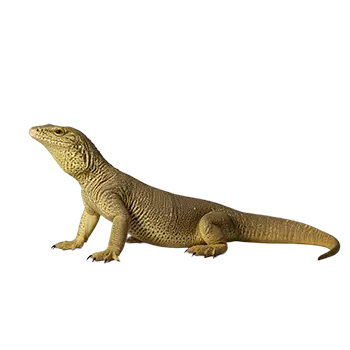

Argus Monitors (Varanus panoptes) are among the most active and space-demanding varanids commonly kept in captivity. Adults routinely reach four to five feet in total length with powerful limbs and thick, muscular tails, and they patrol their territory constantly during daylight hours. An enclosure that might seem generous on paper will feel inadequate the moment a full-grown Argus begins pacing its perimeter, and insufficient space is one of the most common contributors to chronic stress, aggression, and health decline in captive monitors.
The minimum recommended enclosure for a single adult Argus Monitor is eight feet long by four feet deep by four feet tall, though larger is always better and most experienced keepers advocate for enclosures in the range of ten to twelve feet in length when space permits. These dimensions accommodate the animal's need for a meaningful thermal gradient, a deep substrate zone for burrowing, and enough open floor area to allow the running and foraging behavior that defines the species. Juveniles can be raised in smaller temporary enclosures, but the growth rate of this species is rapid enough that investing in the adult-sized build early often proves more economical than upgrading through multiple intermediate setups.
Custom-built enclosures constructed from sealed plywood, PVC panels, or a combination of both are the standard approach for housing adult Argus Monitors. Glass aquariums and commercially produced reptile terrariums are structurally and dimensionally inadequate for this species. Plywood offers excellent insulation and is relatively affordable, but all interior surfaces must be sealed with a waterproof, reptile-safe coating to prevent moisture absorption that leads to warping, mold, and eventual structural failure. PVC panels are more expensive upfront but resist moisture inherently and are easy to sanitize.
Front-opening doors with secure latching hardware are essential. Argus Monitors are powerful, intelligent animals that will test every closure point in their enclosure repeatedly. Sliding glass or acrylic panels set in aluminum tracks provide good visibility and access, but the tracks must be reinforced and fitted with locks or pins that the animal cannot manipulate. Top-opening designs are impractical for an enclosure this size and create handling difficulties, as approaching a large monitor from above triggers a defensive response in most individuals.