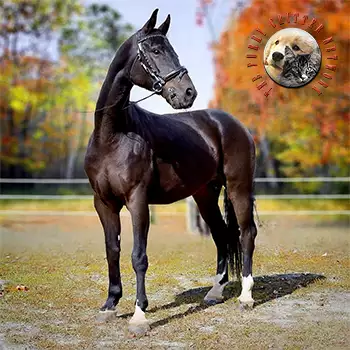

Play Style & Mental Needs

Trakehners are among the most intelligent warmblood breeds, and that intelligence is a double-edged sword when it comes to stall management. A bored Trakehner does not simply stand quietly — it finds ways to entertain itself, and those ways frequently involve destructive behavior. Cribbing, weaving, pawing, wood chewing, and stall walking are all common outlets for a Trakehner that lacks sufficient mental engagement. Enrichment is not a luxury for this breed; it is a management necessity.

Their play style tends to be investigative and manipulative rather than purely physical. While some horses are content to kick a ball around a paddock, Trakehners often gravitate toward objects they can mouth, push, lift, or solve. They notice changes in their environment quickly and will explore new objects with curiosity rather than the suspicion that more phlegmatic breeds might display. This makes them excellent candidates for puzzle-based enrichment that rewards problem-solving with a treat payoff.

Social enrichment is equally important for this breed. Trakehners are herd-oriented horses that draw comfort and stimulation from companionship. A Trakehner isolated without visual or physical contact with other horses will often develop anxiety-driven behaviors that no amount of toys can fully address. Enrichment products work best as a supplement to adequate turnout and social interaction, not as a replacement for them.

Rotation is key to maintaining a Trakehner's interest in enrichment items. This breed habituates quickly to familiar objects, so cycling toys in and out of the stall on a weekly basis keeps the environment novel. Introducing a new item while removing an old one prevents the accumulation of clutter in the stall while ensuring there is always something fresh to investigate.

Puzzle & Treat-Dispensing Toys

Treat-dispensing toys are the most reliably engaging enrichment category for Trakehners. These devices require the horse to manipulate the toy in specific ways — rolling, tipping, or sliding components — to release small food rewards. The cognitive challenge combined with a food incentive aligns perfectly with the Trakehner's problem-solving drive and food motivation. Start with simpler designs and progress to more complex mechanisms as the horse masters each level.

Wall-mounted puzzle feeders attach to the stall and present treats behind sliding panels or rotating discs. These are excellent for Trakehners because they cannot be tossed around the stall or stepped on, which reduces breakage and the risk of a horse tripping over a toy underfoot. Look for designs constructed from heavy-duty plastic or powder-coated metal that can withstand the forceful mouthing a determined Trakehner will apply.

Ground-level treat balls and rollers encourage the horse to push the toy with its nose or hoof to dispense food. These work best in paddock settings where the horse has room to follow the ball as it rolls. In a stall, a rolling toy can end up wedged in a corner within minutes, frustrating the horse rather than entertaining it. If using a ground roller in a stall, choose a design with a flat base or weighted bottom that limits how far and fast it travels.

When loading treat-dispensing toys, use low-sugar options like hay cubes, plain pellets, or small pieces of carrot. Avoid filling devices with grain or sugary treats, which can add significant unintended calories over the course of a day. The goal is cognitive engagement, not supplemental feeding, and the treat volume should be modest enough that it does not disrupt the horse's overall nutritional plan.

Stall Toys & Hanging Objects

Hanging toys suspended from the ceiling or a stall-mounted bracket provide stimulation without occupying floor space. The classic stall ball on a rope gives horses something to nudge, push, and mouth, creating unpredictable movement that holds attention. For Trakehners, look for hanging toys that incorporate multiple textures or moving parts, as simple smooth balls tend to lose their appeal quickly with this breed.

Flavor-infused hanging toys add a gustatory element to the experience. These are typically made from dense, non-toxic rubber or molded salt and mineral compounds that the horse can lick and chew without consuming dangerous quantities of material. The licking action itself has a calming effect similar to grazing, making these toys particularly useful for Trakehners that are stalled during recovery from injury or during travel when turnout is not available.

Mirrors installed at eye level in stalls have shown interesting results with horses that are stalled in isolation. The reflection provides a visual stimulus that mimics the presence of another horse, which can reduce anxiety-driven behaviors in some individuals. Not all Trakehners respond positively to mirrors — some ignore them entirely, while others become agitated — so introduce a mirror gradually and observe the horse's reaction before committing to a permanent installation.

Safety is paramount with any stall toy. All hanging objects should be attached with breakaway hardware that releases under pressure if a horse becomes entangled. Chains, ropes, and straps should be short enough that they cannot loop around a leg or neck. Inspect toys daily for signs of wear, cracking, or loosening hardware, and remove any item that shows structural compromise before it becomes a hazard.

Paddock & Outdoor Enrichment

Outdoor enrichment takes advantage of the Trakehner's natural curiosity and movement drive. Large, durable balls designed for equine use — typically 25 to 40 inches in diameter — can provide hours of entertainment in a paddock setting. Horses push them with their chests, noses, and front legs, which combines physical activity with play. Choose balls rated for equine use, as soccer balls and yoga balls puncture easily under hooves and can leave dangerous fragments in the pasture.

Trail obstacles set up in a turnout area or a dedicated playground space offer structured enrichment that also builds confidence and coordination. Pool noodles on fence posts, ground poles in varied patterns, a low platform to step onto, and tarps weighted at the edges all create an environment where the Trakehner can explore at its own pace without the pressure of a training session. Many Trakehners will investigate these obstacles voluntarily during turnout, developing boldness that translates directly to under-saddle performance.

Natural environmental features can serve as enrichment without any purchased products. Varied terrain including gentle hills, different footing surfaces, and safe natural water features encourages the horse to use its body differently throughout the day. Trees and brush lines provide wind shelter and visual barriers that make the paddock environment more complex and interesting than a flat, featureless field.

Sandpits or designated rolling areas are simple additions that most Trakehners will use enthusiastically. Rolling is a natural behavior that helps horses stretch their backs, distribute skin oils, and relieve itching. A cleared area with loose sand or fine dirt, positioned away from fencing where a horse could become cast, gives horses a comfortable place to indulge this instinct safely.

Training-Based Enrichment

For a breed as intelligent as the Trakehner, structured training sessions are themselves a form of enrichment. Short, varied groundwork sessions that introduce new skills or refine existing ones engage the horse's mind in ways that repetitive riding routines cannot. Liberty work, in-hand exercises, and clicker training are all approaches that reward the Trakehner's willingness to think and problem-solve while strengthening the partnership between horse and handler.

Clicker training is particularly well-suited to Trakehners because it leverages their food motivation and quick learning speed. The precision of the marker signal appeals to their sensitivity, and the positive reinforcement framework avoids the escalating pressure that can make reactive Trakehners defensive. Teaching novel behaviors — targeting objects, picking up items, or navigating obstacles on cue — provides cognitive challenges that tire the mind as effectively as physical exercise tires the body.

Sensory desensitization exercises serve dual purposes as enrichment and practical training. Introducing new textures, sounds, and visual stimuli in a controlled, positive context satisfies the Trakehner's curiosity while building the unflappable temperament needed for competition environments. Flags, umbrellas, plastic bags, and novel sounds from a portable speaker all become enrichment tools when presented at the horse's pace with rewards for investigation.

Variation in the daily routine itself functions as a form of environmental enrichment. Alternating between arena work, trail rides, ground driving, lunging over cavaletti, and free schooling prevents the mental staleness that Trakehners develop when asked to perform the same tasks in the same order day after day. Even changing the direction in which you walk the horse to and from the barn introduces novelty into the daily pattern.

DIY & Budget Options

Effective Trakehner enrichment does not require expensive commercial products. Many of the most engaging items can be assembled from hardware store materials and common barn supplies. A heavy-duty traffic cone placed in the stall or paddock becomes an object the horse can pick up, toss, and chase. A length of thick rope knotted at intervals and hung from a stall bracket provides a chew-safe toy that costs almost nothing to replace when it wears out.

A simple DIY treat dispenser can be made from a large plastic jug with holes cut in the sides, filled with hay cubes or pellets. As the horse rolls and mouths the jug, treats fall through the holes. Use only food-safe plastics with no sharp edges, and size the holes so the horse cannot wedge its lips or tongue into the openings. Supervise the first several uses to ensure the horse interacts with the device safely before leaving it as unsupervised enrichment.

Frozen treat blocks are an excellent warm-weather enrichment option. Fill a bucket with water, add apple slices, carrot pieces, and a handful of hay cubes, then freeze overnight. The resulting ice block can be placed in a feed tub in the stall or paddock. The horse licks and nudges the block to access the frozen treats, which provides both mental stimulation and a cooling activity during hot weather. The slow consumption rate extends the enrichment value well beyond what a loose handful of treats would provide.

Cardboard boxes filled with hay and a few hidden treats offer short-term investigative enrichment. Trakehners will shred the box to find the food inside, which satisfies foraging instincts. Use only plain cardboard without ink, tape, or staples, and clean up the remnants promptly to prevent the horse from ingesting large pieces. This is a supervised enrichment activity best suited for grooming time or short stall periods rather than overnight use.

Always consult a qualified professional before making any health-related decisions. This content is provided for informational reference only and should not replace professional guidance specific to your animal.