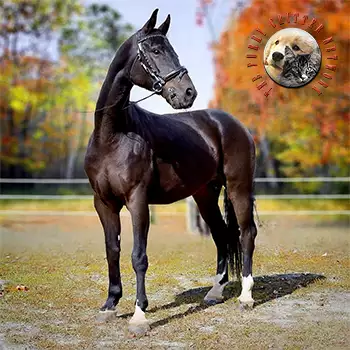

A well-fitted halter is the most frequently used piece of equipment in any Trakehner's daily life. For everyday barn use, a flat nylon or leather halter in a horse or warmblood size fits most Trakehners, though individuals with especially refined heads may need adjustable crownpiece and noseband hardware to achieve a proper fit. The noseband should sit two fingers below the cheekbone, and the throatlatch should allow a fist's width of space to prevent pressure on the jaw when the horse raises its head.
Breakaway halters are strongly recommended for any Trakehner turned out in a halter. These designs incorporate a leather crownpiece or a fused breakaway point that releases under extreme pressure, preventing the catastrophic injuries that can occur when a horse catches a standard halter on a fence post, feeder, or tree branch. Given the Trakehner's active and sometimes reactive nature during turnout, a breakaway mechanism is a worthwhile safety investment.
Lead ropes should be at least ten feet long to give adequate working distance during groundwork and handling. Cotton leads are soft on the hands and easy to grip but wear out faster than synthetic alternatives. Poly-blend ropes offer excellent durability and come in a range of diameters — a 5/8-inch rope provides a comfortable grip for most handlers while being substantial enough to communicate clear signals to a sensitive Trakehner. Heavy brass or zinc snaps are more secure than lightweight trigger snaps that can fatigue and open unexpectedly.
Turnout sheets and blankets are seasonal essentials for Trakehners, particularly those that are body-clipped for competition. A basic turnout sheet with a waterproof, breathable outer shell protects against rain and wind during milder weather, while insulated turnout blankets in varying weights handle cold conditions. Proper fit is critical — a blanket that shifts, rubs, or gaps at the chest will cause hair loss and skin irritation. Measure from the center of the chest around the widest point of the shoulder to the point of the buttock to determine the correct blanket size.