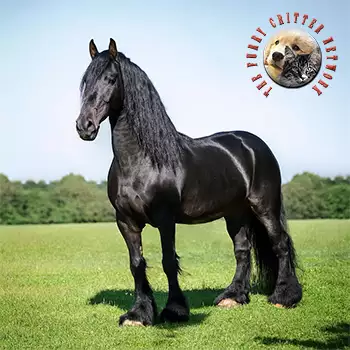

Fitting a saddle to a Friesian is one of the more challenging tack decisions an owner faces. The breed's conformation — broad, flat back, wide shoulders, short coupling, and high-set neck — does not conform to the tree shapes used in most off-the-rack saddles designed for Thoroughbred or Warmblood builds. A saddle that fits a typical sport horse will almost certainly bridge on a Friesian's back, creating pressure points over the withers and lumbar region while leaving the middle of the back unsupported.
Wide or extra-wide tree widths are typically necessary, and many Friesian owners find that adjustable-gullet systems offer the flexibility to fine-tune fit as the horse's condition changes through the seasons or over a training cycle. Treeless saddles have gained a following in the Friesian community for their ability to conform to the broad, flat topline, though they require a well-designed pad system to distribute the rider's weight properly.
Dressage saddles are the most common choice given the breed's primary discipline, and models with deep seats, long billets, and a straighter flap accommodate the Friesian's upright shoulder angle and the rider's longer leg position. Driving harnesses are the other major tack category for Friesians, and here the emphasis shifts to breast collar fit, trace attachment points, and crupper design that accounts for the thick tail root.
Regardless of saddle type, professional fitting is strongly recommended. A qualified saddle fitter who has experience with draft-type or baroque breeds can assess the horse's back shape, check for symmetry, and recommend appropriate padding. Refitting should happen at least annually, as changes in muscle development, weight, and age all affect the way a saddle sits.