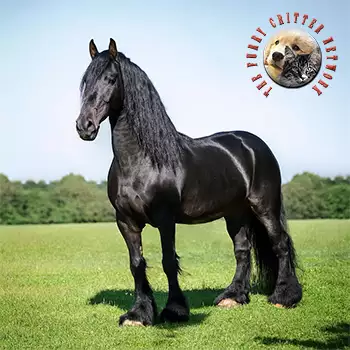

Space Requirements

Friesians are solidly built horses that typically stand between fifteen and seventeen hands and weigh between 1,300 and 1,500 pounds. That size means standard stall dimensions designed for average riding horses often feel cramped. A Friesian's stall should be at minimum twelve feet by twelve feet, with fourteen by fourteen being preferable for taller individuals or horses that spend extended periods stalled.

Beyond the stall itself, Friesians benefit from generous turnout space. These are athletic, social horses that need room to move freely and interact with herd mates. A paddock of at least one acre per horse is a reasonable starting point, with larger acreage preferred where land allows. Overcrowded turnout areas lead to increased stress, aggression at feeding stations, and accelerated pasture degradation.

Ceiling height in barns and run-in sheds is another consideration that owners of larger breeds sometimes overlook. A minimum clearance of ten feet prevents head injuries and allows adequate airflow above the horse's back. Friesians that rear or toss their heads during grooming or tacking can easily strike low ceilings or light fixtures, so erring on the side of more headroom is always wise.

Aisle width in the barn should accommodate the Friesian's broader chest and the voluminous tail and feathering that extend the horse's effective footprint. Twelve-foot aisles allow comfortable passage and cross-tying without the horse's feathering brushing against walls or neighboring stall fronts.

Stalls & Barn Design

Stall construction for Friesians should prioritize durability, ventilation, and ease of cleaning. Hardwood kick boards or heavy-gauge steel panels along the lower walls withstand the occasional kick or leaning that comes with housing a large horse. Stall fronts with vertical bars or mesh allow visual contact with neighboring horses, which suits the Friesian's sociable nature and reduces stress-related stall vices.

Ventilation is critical in any horse barn, but especially so for Friesians. The breed can be sensitive to respiratory irritants, and the thick double coat they carry through winter generates more body heat than lighter breeds. Barns should be designed with ridge vents, eave openings, or cupolas that promote passive airflow without creating direct drafts at horse level. Supplemental fans may be necessary in hot climates or during summer months.

Flooring in stalls sees significant wear from a horse of this weight. Rubber stall mats over a compacted base of crushed limestone or packed clay provide cushioning for joints, reduce bedding costs, and make daily cleaning faster. Concrete alone is too hard on joints and too slippery when wet, though it works well as a sub-floor beneath mats. Bare dirt floors require more bedding and are harder to sanitize but offer natural cushioning.

Drainage deserves careful planning. Stalls should slope gently — roughly one inch per foot — toward a drain channel or the stall entrance. Standing moisture promotes thrush, bacterial infections in the feathered lower legs, and ammonia buildup that damages the respiratory tract. A well-drained stall paired with daily cleaning is the most effective defense against all three problems.

Bedding & Footing

Bedding choices for Friesians involve a tradeoff between absorbency, dust levels, and the practical reality of maintaining heavily feathered legs. Kiln-dried pine shavings are the most popular option — they absorb well, produce relatively low dust when sourced from a reputable supplier, and are easy to muck out. Avoid black walnut shavings entirely, as they cause laminitis on contact.

Straw bedding is traditional and provides a comfortable, deep bed, but it comes with drawbacks for Friesians. The long strands tangle in feathering and require more frequent leg grooming. Straw is also less absorbent than shavings, meaning wet spots develop faster and ammonia levels can climb if stalls are not cleaned thoroughly each day. Chopped straw blends address some of these issues while retaining straw's cushioning qualities.

Pelleted bedding products made from compressed wood fiber offer excellent absorbency and very low dust. They expand when wet and can be spot-cleaned efficiently, reducing overall bedding consumption. The smaller particle size is less likely to tangle in feathering than long shavings or straw, making pelleted bedding a strong choice for Friesian owners prioritizing leg and hoof cleanliness.

Regardless of bedding type, stalls should be stripped and fully rebedded on a regular schedule — weekly for most setups, more frequently in wet climates. Daily spot-cleaning of manure and wet patches keeps ammonia under control and extends the useful life of the bedding. Banks of dry bedding along the walls encourage the horse to lie down comfortably, which is important for the deep REM sleep that horses can only achieve in a recumbent position.

Fencing & Turnout Areas

Fencing for Friesians must balance containment with safety. Board fencing — three or four horizontal rails on sturdy posts — remains the gold standard for horse properties. It is highly visible to horses, discourages leaning and pushing, and presents smooth surfaces that minimize injury risk. Posts should be set at least three feet deep in concrete or compacted gravel, and top rails should stand at least five feet high to discourage jumping.

Polymer-coated wire fencing and high-tensile options offer lower-cost alternatives with good durability. The key is visibility — plain wire is nearly invisible to a galloping horse and can cause catastrophic injuries. Adding a top rail of wood or vinyl, or using wide-tape electric fencing, makes the boundary obvious. Electric fencing works well as a psychological barrier and can be configured in multiple strands to keep even the most curious Friesian respectful of boundaries.

Barbed wire has no place on a horse property. The combination of thin wire and sharp points creates a high risk of lacerations, and the Friesian's feathering makes entanglement especially dangerous. If you are purchasing property with existing barbed wire, budgeting for immediate fence replacement should be part of the acquisition plan.

Gate design matters as much as fencing material. Gates should be wide enough — at minimum twelve feet — for a horse and handler to pass through comfortably, and latches should be horse-proof. Friesians are intelligent and dexterous with their lips, and many learn to operate simple slide bolts or hook latches. Snap-clip or padlock-secured latches prevent unauthorized pasture escapes.

Climate Considerations

Friesians originate from the cool, damp climate of Friesland in the northern Netherlands. Their heavy coat and dense mane evolved for cold, wet conditions, which means they generally tolerate winter weather well but can struggle significantly in heat and humidity. Housing decisions should account for this climate bias.

In warm regions, shade and airflow become the most important features of any housing setup. Run-in sheds should be positioned to catch prevailing breezes, and barn stalls need robust ventilation — fans, misting systems, or even evaporative coolers in arid climates. Friesians in hot climates often benefit from body clipping in summer, but even clipped horses need access to shade during peak sun hours.

Cold-weather housing is more straightforward for this breed. Friesians grow a substantial winter coat that provides excellent insulation, and most healthy adults do well with access to a three-sided run-in shelter and continuous forage for thermoregulation. Blanketing is usually unnecessary unless the horse has been clipped or is elderly and thin, though rain sheets can prevent the heavy coat from becoming waterlogged, which compromises its insulating properties.

Mud management is a year-round concern in wet climates and a seasonal one almost everywhere else. Friesians' feathered legs are particularly vulnerable to scratches, mud fever, and bacterial dermatitis when constantly exposed to wet, muddy conditions. Sacrifice areas with footing material — gravel, crushed stone, or geotextile-and-gravel pads — around gates, water troughs, and feeding stations prevent the worst mud accumulation and protect leg health.

Multi-Horse Properties

Friesians are generally sociable horses that thrive in the company of other equines. When designing housing for a multi-horse property, the key considerations are safe introduction protocols, adequate individual space, and feeding arrangements that prevent resource guarding.

Stall layouts that allow visual and limited physical contact between neighbors — mesh or bar partitions rather than solid walls — help satisfy the Friesian's social needs while preventing kicks and bites. Some barns use partial walls that are solid to about four feet with bars above, allowing horses to see each other and share airspace without being able to reach over and nip.

Turnout groupings should consider temperament, size, and social hierarchy. While Friesians tend to be calm and agreeable, introducing a new horse to an established group should be done gradually — first through adjacent paddocks with shared fence lines, then supervised group turnout in a large, open area where subordinate horses can move away from dominant ones without being trapped in corners.

Feeding in group settings requires enough stations — hay piles, feeders, or slow-feed nets — that every horse can eat without competition. The general rule is one more feeding station than the number of horses, spaced at least thirty feet apart. This arrangement allows lower-ranking horses to eat in peace and prevents the calorie restrictions that can occur when dominant horses monopolize a single feeder. Water sources should follow the same principle — multiple troughs prevent a single horse from guarding the water supply.

Always consult a qualified professional before making any health-related decisions. This content is provided for informational reference only and should not replace professional guidance specific to your animal.