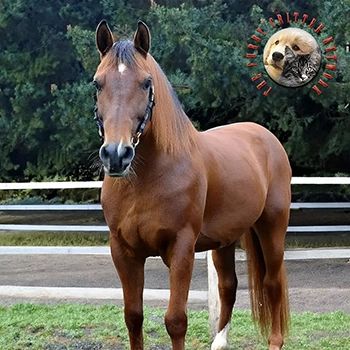

Play Style & Temperament

The Cleveland Bay is an intelligent, curious breed with a strong work ethic and a calm disposition. These traits make enrichment particularly important — a smart horse without adequate mental stimulation will find its own entertainment, and that usually means destroying stall walls, unfastening latches, or developing stereotypic behaviors like cribbing and weaving. Understanding how this breed interacts with its environment is the first step toward choosing enrichment tools that actually get used.

Cleveland Bays tend to be investigative rather than reactive. They approach novel objects with interest rather than fear, which means most enrichment products will be explored rather than avoided. This curiosity works in the owner's favor, but it also means that toys and enrichment items need to be durable enough to withstand sustained manipulation by a large, persistent horse. Lightweight or flimsy products will be destroyed quickly and may create choking or ingestion hazards from broken pieces.

Social play is another important dimension of Cleveland Bay behavior. This breed generally enjoys the company of other horses and engages in mutual grooming, play biting, and coordinated movement in turnout. Enrichment strategies that support social interaction — shared obstacles, paired turnout with compatible companions, and group feeding setups that encourage movement — complement individual toy-based enrichment effectively.

The breed's working heritage also means that many Cleveland Bays respond well to task-oriented enrichment. Activities that simulate problem-solving or require effort to obtain a reward align with the breed's natural inclination to work for a purpose. Simple puzzle feeders, trail obstacles, and ground work exercises provide mental engagement that a ball in a paddock alone cannot match.

Puzzle & Foraging Toys

Puzzle feeders and foraging toys are among the most effective enrichment tools for Cleveland Bays because they tap into the horse's natural motivation to seek and consume food. These products require the horse to manipulate an object — rolling, tipping, pushing, or lifting — to release small amounts of feed or treats. The process slows consumption, extends engagement time, and rewards the horse's problem-solving effort.

Ground-level ball feeders with adjustable openings are a popular starting point. These heavy-duty spheres dispense pellets or chopped forage as the horse pushes them around the paddock or stall. For a Cleveland Bay, choose the largest available size to prevent the horse from picking up the ball with its teeth, and select models made from thick, food-safe polyethylene that can withstand being stepped on by a 1,200-pound horse.

Hanging treat dispensers that require the horse to spin or manipulate a suspended container add a vertical dimension to foraging enrichment. These are useful for stalled horses and can be filled with hay cubes, small pieces of carrot, or low-sugar commercial treats. Mount them at chest height so the horse can engage comfortably without straining its neck or creating a head-tossing habit.

For a more natural foraging experience, scatter feeding — distributing hay or forage across a wide area rather than in a single pile or net — encourages movement and mimics the grazing patterns horses follow in the wild. This approach costs nothing and works in any turnout setting. Combining scatter feeding with a few strategically placed puzzle feeders creates a layered enrichment environment that holds a Cleveland Bay's attention for extended periods.

Durable Play Objects

Large, heavy-duty play objects provide physical and mental stimulation for Cleveland Bays during turnout. The most effective options are those that move in interesting ways when pushed, kicked, or nudged — oversized balls, barrel rollers, and weighted wobble objects all fall into this category. The key requirement is that the object must be large enough that the horse cannot bite down on it and heavy enough that it responds to contact without launching unpredictably.

Equine-specific play balls are typically 25 to 40 inches in diameter and constructed from thick polyethylene or rubber that resists puncture from hooves and teeth. Some models feature handles or textured surfaces that make them easier for the horse to grip and manipulate. Avoid balls designed for other animals or sports — they lack the durability and size specifications needed for safe use around a large horse.

Traffic cones, though unconventional, are surprisingly effective and inexpensive enrichment objects for horses. Cleveland Bays often enjoy picking them up, tossing them, and knocking them over. Standard highway cones are durable enough for moderate play and can be replaced at low cost when they eventually crack. They also serve double duty as ground work training markers.

When introducing any new play object, place it in the paddock or stall without fanfare and allow the horse to investigate on its own schedule. Most Cleveland Bays will approach a new object within minutes, but some may take a day to warm up. Avoid forcing interaction or startling the horse with an unfamiliar object, as this can create a negative association that defeats the purpose of enrichment.

Stall & Paddock Enrichment

Environmental enrichment extends beyond individual toys to include how the horse's living space is arranged and managed. Stall enrichment for Cleveland Bays should address the primary welfare concerns of confinement: boredom, restricted movement, and limited sensory input. A stall that offers varied textures, multiple feeding points, and something to watch or interact with is far more comfortable than four blank walls and a water bucket.

Mirrors have shown measurable benefits in reducing stress behaviors in stalled horses. A horse-safe acrylic mirror mounted on a stall wall provides visual companionship for horses that are isolated or cannot see other horses. Studies have documented decreases in weaving and other repetitive behaviors when mirrors are introduced, likely because the reflected image satisfies some of the horse's social needs.

Slow-feed hay nets serve an enrichment function beyond their nutritional role. Nets with one-inch or smaller openings extend hay consumption from minutes to hours, giving the horse an ongoing activity that occupies both its mouth and its mind. Multiple nets hung at different heights and positions within the stall encourage the horse to move and change posture throughout the day.

Paddock enrichment can include varied terrain features, logs or low obstacles to step over, and safe objects to investigate. A simple course of ground poles, a sandpit for rolling, and a few strategically placed scratching posts or trees can transform a flat, featureless paddock into an engaging environment. Rotate or rearrange enrichment elements periodically to maintain novelty — a Cleveland Bay that has memorized every feature of its paddock will lose interest.

Social & Interactive Enrichment

Horses are herd animals, and for the Cleveland Bay — a breed with a particularly sociable temperament — companionship is one of the most powerful forms of enrichment available. When compatible turnout partners are available, shared time in a well-designed paddock provides physical activity, social learning, and emotional stability that no toy can replicate. Mutual grooming sessions, parallel movement, and even mild play-sparring are natural behaviors that contribute to psychological well-being.

For Cleveland Bays housed individually or in situations where compatible equine companions are unavailable, alternative companion animals can fill part of the social void. Goats, donkeys, and miniature horses are commonly used as companion animals for horses and often form genuine bonds with their larger paddock-mates. The companion animal's housing, dietary, and veterinary needs must be met independently, and introductions should be supervised until the animals have established a comfortable dynamic.

Handler interaction is another valuable source of enrichment that is often underestimated. Cleveland Bays are responsive to human engagement and benefit from regular grooming sessions, ground work exercises, and in-hand walks that provide both physical activity and mental challenge. Even 15 to 20 minutes of focused handler time per day — beyond routine feeding and turnout — can significantly reduce boredom-related behaviors.

Liberty work and trick training offer advanced interactive enrichment for Cleveland Bays that have mastered basic ground manners. Teaching a horse to target, bow, or retrieve objects channels the breed's intelligence into structured activities that strengthen the horse-handler relationship. These activities should always use positive reinforcement methods and should be introduced gradually to avoid frustration.

DIY & Budget Options

Effective enrichment does not require expensive commercial products. Many of the best enrichment strategies for Cleveland Bays cost little or nothing and can be assembled from materials already available around most farms. The key is creativity, safety awareness, and a willingness to observe what captures your individual horse's interest.

A simple and highly effective DIY foraging toy can be made from a clean, food-safe plastic container with holes drilled or cut into the sides. Filled with hay cubes or a small amount of pelleted feed, the container becomes a puzzle feeder that the horse must roll and manipulate to access the contents. Ensure all edges are smooth, the container is large enough to prevent accidental ingestion, and there are no small parts that could break off and be swallowed.

Frozen treat blocks are excellent warm-weather enrichment that provides hydration alongside mental stimulation. Fill a bucket with water, add apple slices, carrot pieces, and a handful of hay cubes, and freeze it solid. Place the frozen block in the paddock or a feed tub and let the horse work at licking and breaking it apart as it melts. This activity can occupy a horse for an hour or more and provides welcome cooling during hot weather.

Rotating existing enrichment items is a zero-cost strategy that maintains novelty. Rather than leaving the same toys and objects in the paddock permanently, remove half of them for a week or two and then swap them back in. The reintroduced items will receive renewed interest because the horse has had time to forget them. Combining rotation with occasional rearrangement of paddock features keeps the environment fresh and engaging without any ongoing expense.

Always consult a qualified professional before making any health-related decisions. This content is provided for informational reference only and should not replace professional guidance specific to your animal.