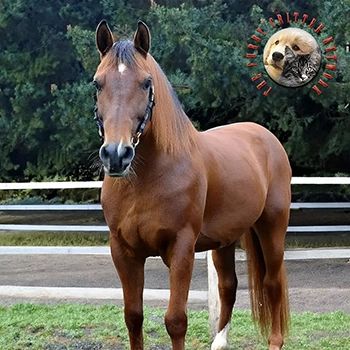

Wearable health monitors for horses have matured significantly and now offer practical value for Cleveland Bay owners who want objective data on their horse's daily activity, rest patterns, and overall wellness. These devices typically attach to a halter, leg band, or surcingle and use accelerometers and other sensors to track movement, resting time, lying-down episodes, and general activity levels throughout the day and night.
For the Cleveland Bay, activity monitoring is particularly useful for detecting subtle changes in behavior that might indicate the early stages of lameness, colic, or other health issues. A horse that suddenly reduces its movement by 30 percent, lies down more frequently than its established baseline, or shifts its weight patterns may be showing signs of discomfort that are not yet visible to the human eye during a brief daily check. The data trend over days and weeks is far more informative than any single reading.
Heart rate monitors designed for equine use provide valuable training data for Cleveland Bays in active work programs. A chest-strap monitor paired with a smartphone or GPS watch records heart rate throughout a ride or drive, allowing the owner to assess fitness levels, identify appropriate work intensity, and track cardiovascular improvement over a training cycle. Recovery heart rate — how quickly the horse returns to resting levels after exertion — is one of the most reliable indicators of equine fitness.
When evaluating health monitoring products, prioritize battery life, durability, and the quality of the companion app or data platform. A device that requires daily charging or fails after a few weeks of turnout exposure is not practical for real-world horse management. Look for products with battery life of at least several days, waterproof or water-resistant construction rated for outdoor conditions, and a data interface that presents information in a clear, actionable format.