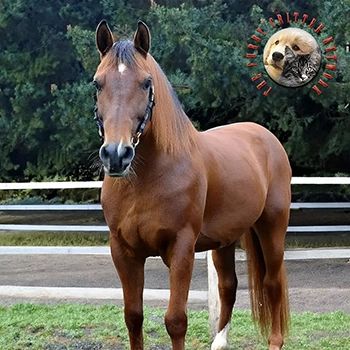

The halter is the most frequently used piece of equipment for any horse, and for a Cleveland Bay it needs to be sized for a large, broad head with substantial jaw width. Most Cleveland Bays require a horse-size or warmblood-size halter, and owners should measure the noseband circumference and poll length rather than relying on generic sizing charts. A halter that sits too low on the nasal bone can restrict breathing, while one that is too loose can slip over the ears or catch on objects.
Flat nylon web halters are the standard for daily turnout and handling. They are affordable, easy to clean, and available in a wide range of sizes. For Cleveland Bays that are turned out in groups, a breakaway halter or a leather crown piece that will snap under pressure is essential to prevent the catastrophic injuries that can occur when a caught halter does not release. Rope halters offer more precise communication during ground work but should never be left on an unattended horse.
Lead ropes should be a minimum of ten feet in length and made from a material that provides a secure grip without burning the hands if the horse pulls. Cotton and poly-blend ropes with a medium diameter offer good handling characteristics. Avoid thin, slippery nylon leads that become dangerous when wet, and always use a lead with a quality snap or bolt attachment — cheap snaps can fail under load at the worst possible moment.
Saddle and bridle fitting for the Cleveland Bay requires attention to the breed's specific conformation. The breed tends toward a broad, flat back and well-sprung ribs, which means many standard tree widths will bridge or pinch. A professional saddle fitting is strongly recommended before purchasing, and owners should plan for follow-up assessments as the horse's fitness and muscling change through the seasons.