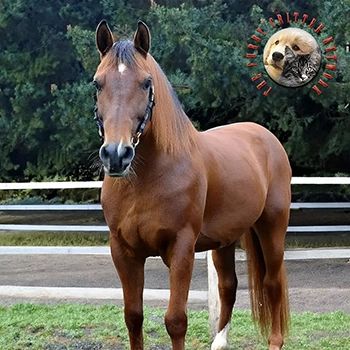

The Cleveland Bay is a substantial horse, typically standing between 16 and 16.2 hands and carrying considerable bone and muscle. This size demands more generous stabling dimensions than what suffices for lighter breeds. A standard 12-by-12-foot stall is an absolute minimum for a Cleveland Bay, and many owners find that a 12-by-14 or 14-by-14-foot stall provides the extra room this breed needs to lie down comfortably, turn around without restriction, and move enough to prevent stiffness.
Ceiling height matters as much as floor space. Cleveland Bays carry their heads high and can easily reach or bump low ceilings, light fixtures, and fans. A minimum ceiling height of ten feet is recommended, with twelve feet being preferable in barns where overhead storage, hay lofts, or ventilation equipment occupy the upper space. Any fixtures within the stall area should be recessed or protected to prevent injury.
Turnout space is equally critical for this breed. Cleveland Bays were developed as working horses with active daily routines, and confinement without adequate exercise leads to behavioral issues, joint stiffness, and weight management problems. A minimum of one acre of turnout per horse provides enough room for natural movement patterns, though larger paddocks are always better. Turnout areas should have secure, well-maintained fencing and be free of hazards like exposed wire, broken boards, or standing water.
For facilities housing multiple Cleveland Bays, consider the social dynamics of turnout groups. This breed is generally sociable and does well in compatible herds, but new introductions should be managed with visual barriers and gradual integration to prevent injuries during the establishment of herd hierarchy.