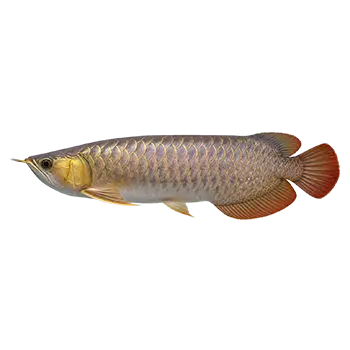

Tank Size & Dimensions

Arowanas are among the largest freshwater fish commonly kept in home aquariums, and their housing requirements reflect that. A juvenile Arowana can start in a tank as small as 75 gallons, but this is strictly a temporary arrangement. Within 12 to 18 months, most species will outgrow anything under 200 gallons, and a full-grown adult requires a minimum of 250 gallons with many experienced keepers recommending 300 gallons or more.

Dimensions matter as much as total volume. Arowanas are long, fast-moving fish that need room to turn without bending their bodies against the glass. A tank should be at least three times the fish's adult body length in width and ideally six times its length from front to back. For a fish that may reach 30 to 36 inches, that translates to a tank at least 72 inches long and 24 to 30 inches wide at the bare minimum.

Depth is less critical than length and width, but a shallow tank presents its own problems. Arowanas are surface dwellers that occasionally dive, and a tank under 20 inches deep can make the fish feel exposed and stressed. Conversely, excessively deep tanks waste vertical space the Arowana rarely uses. A depth between 24 and 30 inches strikes the right balance for most setups.

Floor support is a factor that many first-time Arowana keepers underestimate. A 300-gallon tank filled with water, substrate, and equipment can weigh well over 3,000 pounds. Verify that your floor can handle this load, particularly in upper-story rooms or older buildings. Reinforced steel stands rated for the specific tank weight are essential — never improvise with furniture or unrated shelving.

Filtration & Water Flow

Arowanas are heavy feeders that produce a correspondingly heavy bioload. Filtration for an Arowana tank should be rated for at least twice the tank's actual volume — if you have a 300-gallon tank, aim for a filtration system rated at 600 gallons per hour or higher. Under-filtering an Arowana tank is one of the fastest routes to ammonia spikes, cloudy water, and chronic health issues.

Canister filters and sump systems are the two most common choices for large predatory fish tanks. Canister filters are self-contained and relatively easy to maintain, but they may struggle to keep up with the waste output of a full-grown Arowana as the sole filtration source. Sump systems, which use a separate reservoir below the main tank, offer significantly more media capacity and can house additional equipment like heaters and UV sterilizers out of the display tank.

Water flow direction and intensity deserve careful thought. Arowanas prefer moderate current — enough to keep the water circulating and oxygenated but not so strong that the fish has to fight the flow constantly. Position outlets to create a gentle lateral current rather than a direct blast aimed at the fish's preferred resting area. Spray bars or adjustable nozzles give you fine control over flow patterns.

Biological filtration media is the engine that drives long-term water stability. Ceramic rings, bio-balls, and sintered glass media provide surface area for beneficial bacteria colonies that convert ammonia to nitrite and then to the far less toxic nitrate. Avoid replacing all biological media at once during maintenance — stagger replacements to preserve the bacterial colony that keeps your nitrogen cycle stable.

Substrate & Aquascaping

Substrate choices for Arowana tanks tend toward the minimal. A bare-bottom tank is the easiest option to maintain and makes it simple to spot and remove uneaten food and waste. Many serious Arowana keepers prefer this approach because it eliminates trapped debris that can decompose and spike ammonia levels between cleanings.

If aesthetics matter to you, a thin layer of fine sand or smooth river gravel can work without creating excessive maintenance burden. Avoid sharp or coarse substrates that could injure the Arowana if it darts toward the bottom during a startle response. Dark-colored substrates are often favored because they provide contrast that can enhance the fish's natural coloration, though this is purely a visual preference with no health impact.

Aquascaping in an Arowana tank must account for the fish's size, speed, and tendency to rearrange its environment. Heavy driftwood pieces anchored securely can provide visual interest and slight territorial boundaries, but anything lightweight will be displaced. Live plants are generally impractical — most Arowanas will uproot them, and the low light conditions many keepers maintain are not conducive to plant growth.

Leave the center and upper portion of the tank open. Arowanas patrol the surface and need unobstructed swimming lanes. Any decorative elements should be positioned along the back and sides of the tank, low enough that they do not interfere with the fish's movement. The goal is a clean, spacious environment that prioritizes the fish's comfort over elaborate visual design.

Lighting Requirements

Lighting in an Arowana tank serves two purposes: it lets you see the fish, and it influences the fish's circadian rhythm and color expression. Arowanas do not require intense lighting — in fact, excessively bright setups can stress them, causing erratic behavior and pale coloration. Moderate, diffused lighting that mimics the dappled conditions of a tropical river is ideal.

LED fixtures have largely replaced fluorescent options for aquarium use, and they offer significant advantages for Arowana keepers. LEDs run cooler, last longer, consume less energy, and many units allow you to adjust both intensity and color temperature. A fixture in the 6,500 to 7,500 Kelvin range produces a natural daylight appearance that shows off the fish's colors without the artificial blue or purple cast some hobbyist setups favor.

Photoperiod — the number of hours the light is on each day — should be consistent and predictable. Arowanas benefit from 8 to 10 hours of light followed by a full dark period. Use a timer to automate the cycle so the fish is never subjected to sudden light changes or irregular schedules. Abrupt transitions from full light to complete darkness can trigger startle responses, so fixtures with gradual dimming or sunrise-sunset modes are worth the investment.

Tanning lights are a specialized category marketed primarily for red and gold Arowana varieties. These fixtures emit specific wavelengths intended to enhance pigment intensity. While some keepers swear by them, the effect is largely cosmetic and temporary. Color genetics and diet play a far greater role in long-term coloration than any lighting fixture. If you experiment with tanning lights, monitor the fish for signs of stress and avoid continuous high-intensity exposure.

Water Parameters

Arowanas are tropical freshwater fish that require warm, slightly acidic to neutral water. The target temperature range for most species is 76 to 84 degrees Fahrenheit, with 80 degrees being a comfortable midpoint. Temperature stability is more important than hitting an exact number — fluctuations of more than two degrees within a 24-hour period stress the fish and can suppress immune function.

PH should be maintained between 6.0 and 7.5, depending on the species. Asian Arowanas generally prefer the lower end of that range, while Silver Arowanas are somewhat more tolerant of neutral to slightly alkaline conditions. Test pH weekly and make adjustments gradually if needed — rapid pH swings are more dangerous than a reading slightly outside the ideal range.

Ammonia and nitrite levels must remain at zero at all times. Even trace amounts of ammonia are toxic to Arowanas and can cause gill damage, appetite loss, and lethargy within hours. Nitrate, the end product of the nitrogen cycle, is less immediately toxic but should be kept below 20 parts per million through regular water changes. A weekly water change of 25 to 30 percent is standard practice for most Arowana setups.

Water hardness is a secondary parameter that still deserves attention. Most Arowanas prefer soft to moderately hard water, in the range of 1 to 8 dGH. If your tap water is significantly harder, consider using a reverse osmosis unit or blending tap water with RO water to bring hardness into the acceptable range. Consistent water parameters, tested regularly and adjusted proactively, are the foundation of long-term Arowana health.

Tank Mates & Compatibility

Arowanas are semi-aggressive, territorial fish that will eat anything small enough to fit in their mouth. This eliminates the vast majority of common aquarium species from consideration as tank mates. Any fish housed with an Arowana must be too large to be swallowed, robust enough to hold its own space, and not so aggressive that it will harass or injure the Arowana.

Large, bottom-dwelling species are often the safest companions. Fish that occupy the lower portion of the water column minimize direct competition with the surface-dwelling Arowana. Certain large catfish, large cichlids, and similar heavy-bodied species have track records of coexisting peacefully with Arowanas, provided the tank is large enough to give each fish adequate territory. The key requirement is space — tank mate compatibility drops sharply in cramped conditions.

Introduce tank mates before or simultaneously with the Arowana whenever possible. An Arowana that has established territory in a tank is far more likely to view new additions as intruders. If you must add fish to an existing Arowana tank, rearranging the decor can help disrupt established territorial boundaries and reduce initial aggression.

Monitor interactions closely during the first several weeks. Compatibility that looks stable on day one can deteriorate as fish grow or during feeding time when competition intensifies. Have a contingency plan — a divider, a separate tank, or a local fish store willing to take a rehomed fish — in case a pairing that seemed workable becomes dangerous. A solo Arowana in a well-maintained tank is always preferable to a crowded setup with ongoing aggression.

Always consult a qualified professional before making any health-related decisions. This content is provided for informational reference only and should not replace professional guidance specific to your animal.