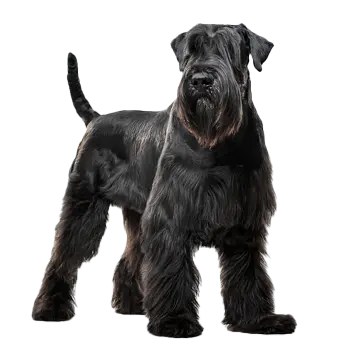

Collars, Harnesses & Leashes

Selecting the right collar and leash combination for a Giant Schnauzer requires balancing control, comfort, and durability. A flat collar in heavy-duty nylon or leather, one and a half to two inches wide, serves well for everyday identification and casual walks with a well-trained dog. The collar should fit snugly enough that two fingers slide beneath it but not so loose that the dog can slip free — Giant Schnauzers have strong necks and can back out of a poorly fitted collar with surprising ease.

For dogs still developing leash manners or those with a tendency to pull, a front-clip harness is generally more effective and safer than a collar alone. Front-clip designs redirect forward momentum toward the handler, naturally discouraging pulling without placing pressure on the trachea. Avoid harnesses that sit too far back on the shoulders, as these can actually make pulling easier by distributing force across the chest. A well-fitted harness should have a snug chest strap, adjustable girth, and padded contact points to prevent chafing under the Giant Schnauzer's coarse coat.

Head halters are another option for strong pullers, though they require a careful acclimation period. Most Giant Schnauzers resist the sensation initially, and forcing the issue creates a negative association that makes the tool counterproductive. When introduced gradually with positive reinforcement, head halters give handlers precise directional control with minimal physical effort.

Leashes should be six feet long for standard walking — retractable leashes are generally discouraged for large, powerful breeds because they provide inconsistent feedback and can snap under sudden force. A leather or biothane leash one inch wide offers comfortable grip, excellent durability, and sufficient strength to handle the pulling force a Giant Schnauzer can generate. For training purposes, a long line of 15 to 30 feet allows controlled off-leash practice in safe areas.

Grooming Tools

The Giant Schnauzer's wiry double coat is one of the breed's defining features and one of its most demanding maintenance requirements. The outer coat is harsh and dense, while the undercoat is soft and thick. Proper grooming requires a specific set of tools that differ from those used on smooth-coated or long-haired breeds.

A slicker brush is the everyday workhorse tool for maintaining a Giant Schnauzer's coat between grooming appointments. Use it several times a week to remove loose undercoat, prevent mats, and distribute natural oils. A steel comb with both wide and fine teeth follows the slicker brush to check for tangles the brush missed, particularly in the leg furnishings, beard, and eyebrows where matting concentrates.

Stripping knives and stripping stones are essential for owners who maintain the coat in its traditional hand-stripped form. Hand stripping — pulling dead outer coat hairs to allow new growth — preserves the correct wiry texture and color that clipping destroys. The process is time-consuming and requires skill, but many Giant Schnauzer enthusiasts consider it non-negotiable for maintaining breed-standard coat quality. Owners who do not plan to show their dogs often opt for professional clipper grooming instead, which is faster and more affordable but gradually softens the coat texture over time.

Beyond coat tools, a Giant Schnauzer grooming kit should include nail clippers or a rotary grinding tool rated for large breeds, ear cleaning solution and cotton pads, a quality dog shampoo formulated for wire-coated breeds, and beard-cleaning supplies. The beard collects food, water, and debris constantly and needs daily wiping to prevent odor and skin irritation. A dedicated beard comb and pet-safe facial wipes simplify this ongoing chore.

Bowls & Feeders

Food and water bowls for a Giant Schnauzer should prioritize stability, hygiene, and size. Stainless steel bowls remain the gold standard for most owners because they are virtually indestructible, easy to sanitize in a dishwasher, and resistant to bacterial buildup. Ceramic bowls are another quality option and tend to be heavier, which reduces sliding and tipping during meals. Plastic bowls should be avoided — they scratch easily, harbor bacteria in surface imperfections, and can cause contact dermatitis on the chin and muzzle in some dogs.

Bowl size matters more than owners typically realize. A Giant Schnauzer needs a bowl with a capacity of at least three to four quarts for food and an even larger vessel for water, as large breeds drink substantial volumes throughout the day. Wide, shallow bowls are generally better than deep, narrow ones for this breed because the beard stays drier when the dog does not have to submerge its entire muzzle to reach the food or water.

Slow-feeder bowls are strongly recommended for Giant Schnauzers. This breed is prone to bloat, and rapid eating is a significant contributing factor. Slow feeders use ridges, mazes, or raised patterns to force the dog to work around obstacles rather than gulping large mouthfuls. The difference in eating speed between a standard bowl and a well-designed slow feeder can be dramatic — some models extend mealtimes from 90 seconds to 10 or 15 minutes.

A water bowl mat or tray beneath the drinking station is a practical necessity. Giant Schnauzers are notoriously messy drinkers — the beard acts as a sponge, absorbing water and depositing it across the floor with every head shake. A mat with raised edges contains the splash zone, and some owners use a dedicated beard towel hung near the water station for a quick wipe after each drink.

Travel Gear

Traveling with a Giant Schnauzer requires planning and equipment scaled to the dog's size and energy level. For car travel, a crash-tested crate or vehicle-specific containment system provides the highest level of safety. If a crate does not fit in your vehicle, a crash-tested harness that attaches to the seatbelt system is the next best option. Loose dogs in vehicles are a safety hazard for everyone in the car and dramatically increase injury risk during sudden stops or collisions.

Car seat covers and cargo liners protect your vehicle's interior from the Giant Schnauzer's coat, nails, and the inevitable mess that accompanies any large dog on the road. Look for waterproof, non-slip covers that attach securely to headrests and seat anchors. Hammock-style covers are particularly useful because they create a barrier between the back seat and the front, preventing the dog from climbing forward while also catching hair and debris.

Collapsible travel bowls, a portable water container, and a spill-proof travel water bottle should accompany the dog on any trip lasting more than an hour. Giant Schnauzers need frequent water access, especially during warm weather or after periods of excitement. Pack a familiar blanket or bed for overnight stays — the scent of home reduces anxiety in unfamiliar environments and helps the dog settle more quickly.

For air travel, Giant Schnauzers must fly as cargo in an airline-approved kennel, as they far exceed cabin size limits. Research airline-specific pet policies carefully, as regulations regarding breed restrictions, temperature embargoes, and kennel specifications vary significantly between carriers. Many experienced Giant Schnauzer owners prefer ground transportation for domestic travel, reserving air travel for situations where no practical alternative exists.

Safety & ID

Reliable identification is essential for any dog, but the stakes are particularly high with a Giant Schnauzer. A loose dog of this size and appearance can frighten people unfamiliar with the breed, increasing the risk of animal control involvement or worse if the dog cannot be quickly identified and returned. Every Giant Schnauzer should carry at least two forms of identification at all times.

A durable ID tag attached to the everyday collar is the most immediately visible form of identification. Tags should include the dog's name, the owner's phone number, and — depending on local regulations — the current rabies tag or license number. Stainless steel or brass tags engraved with the information are more durable than printed or coated options that wear off over time. Slide-on collar tags that sit flat against the collar eliminate the jingling that hangs-tag designs produce and are less likely to catch on objects.

Microchipping provides permanent identification that cannot be lost, removed, or damaged. A microchip is a rice-sized transponder injected under the skin between the shoulder blades — a procedure as quick and simple as a routine vaccination. The chip links to a registration database containing the owner's contact information, which must be kept current to be useful. Microchipping and collar tags are complementary, not interchangeable — the tag provides instant visual identification, while the chip serves as a backup when the collar is missing.

Reflective and LED accessories improve visibility during early morning, evening, and nighttime walks. Reflective collar strips, clip-on LED lights, and illuminated leash attachments make the dog visible to motorists at distances where an unlit dark-coated Giant Schnauzer would be virtually invisible. Given that the majority of this breed is black or very dark salt-and-pepper, visibility gear is not optional for owners who walk during low-light hours.

Seasonal Gear

Giant Schnauzers living in regions with distinct seasons benefit from a small selection of weather-appropriate gear. Winter accessories should include paw protection — either boots or a paw wax — to guard against ice, salt, and chemical de-icers that cause cracking, burns, and irritation. Many Giant Schnauzers resist boots initially, so introduce them indoors with positive reinforcement before expecting the dog to walk in them outdoors.

Coats and jackets are generally unnecessary for healthy adult Giant Schnauzers in moderate cold, thanks to their insulating double coat. However, puppies, senior dogs, dogs with health conditions, and individuals kept in a clipped coat rather than a stripped coat may benefit from a waterproof jacket during wet, cold, or windy conditions. Choose a coat with a good fit through the chest and belly that does not restrict movement or rub against the legs during a normal gait.

Summer gear focuses on cooling and sun protection. Cooling vests that use evaporative technology can lower a working dog's core temperature during hot-weather exercise. These vests are soaked in water, wrung out, and placed on the dog, where evaporation draws heat away from the body. They are particularly useful for dogs participating in outdoor training, hiking, or competition during warm months.

Rain gear may seem excessive for a dog, but a lightweight rain jacket can significantly reduce post-walk drying time and mud management for a Giant Schnauzer. The breed's beard, leg furnishings, and undercoat absorb moisture like a mop, and a 15-minute walk in rain can require 30 minutes of toweling and drying afterward. A water-resistant jacket that covers the back and chest — leaving the legs free for natural movement — cuts that burden considerably and keeps the undercoat from becoming saturated.

Always consult a qualified professional before making any health-related decisions. This content is provided for informational reference only and should not replace professional guidance specific to your animal.