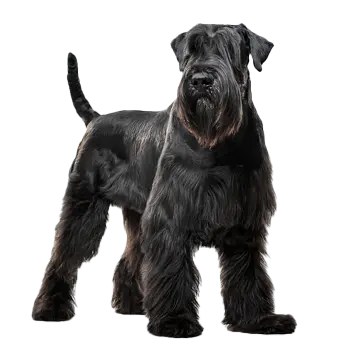

Play Style & Drive

The Giant Schnauzer is a working breed with a powerful combination of physical strength, high intelligence, and relentless drive. These traits produce a dog that does not simply play — it engages with intensity and purpose. Understanding this play style is essential before investing in toys, because products designed for average dogs will be destroyed within minutes and may create safety hazards in the process.

This breed thrives on activities that engage both body and mind simultaneously. A simple ball toss will entertain a Giant Schnauzer briefly, but it lacks the cognitive challenge these dogs crave. Games that involve problem-solving, searching, tracking, or multi-step tasks hold their attention far longer and produce deeper satisfaction. Owners who provide only physical outlets without mental stimulation often find that the dog invents its own entertainment — usually by disassembling household items.

Giant Schnauzers also have a strong tug drive rooted in their working heritage. Tug games are excellent for building handler engagement and providing a controlled outlet for the breed's natural grip strength. Contrary to outdated training myths, structured tug play does not encourage aggression — it actually strengthens the dog's responsiveness to cues like "drop" and "take" when played with clear rules.

Prey drive varies among individuals but is generally moderate to high. Many Giant Schnauzers are intensely motivated by toys that move unpredictably — bouncing balls, flirt poles, and toys on ropes. This drive can be channeled productively through structured play sessions, but it also means that flimsy plush toys with squeakers may be gutted almost immediately. Knowing your individual dog's drive level helps you select toys that last and provide appropriate stimulation.

Interactive & Puzzle Toys

Puzzle toys are arguably the single most important category of enrichment product for a Giant Schnauzer. This breed's intelligence is comparable to that of breeds routinely used in professional detection and service work, and without adequate mental challenges, that intelligence turns toward mischief. Puzzle feeders, treat-dispensing toys, and multi-step problem-solving devices provide the cognitive engagement these dogs need.

Beginner puzzle toys use sliding panels, lift-up compartments, or spinning discs to conceal treats. These are useful for introducing the concept of food-based problem solving, but most Giant Schnauzers will master them within a few sessions. Intermediate and advanced puzzles — those requiring sequential steps, combination movements, or manipulation of multiple components — provide longer-lasting engagement. Rotating through several puzzles prevents the dog from memorizing solutions and losing interest.

Treat-dispensing balls and wobble toys are excellent for unsupervised enrichment. Filled with a portion of the dog's daily kibble, these toys transform a passive meal into an active foraging session that can occupy a Giant Schnauzer for 20 to 40 minutes. Select products made from heavy-duty rubber or hard nylon, as standard plastic dispensers will crack under the jaws of a determined large dog.

Snuffle mats and scent work games tap into the Giant Schnauzer's capable nose and provide a different type of mental stimulation than mechanical puzzles. Hiding treats in a snuffle mat, scattering kibble in grass, or setting up simple find-it games around the house encourages natural foraging behavior and produces a calm, focused dog — a welcome contrast to the breed's sometimes frenetic energy during physical play.

Chew Toys & Durability

Giant Schnauzers are powerful chewers, and durability must be the primary consideration when selecting chew toys. Products marketed as "tough" or "durable" for general use are often inadequate for this breed's jaw strength. Look specifically for toys rated for aggressive or power chewers, manufactured from solid rubber compounds, reinforced nylon, or natural materials like thick-walled bones and antlers.

Rubber chew toys in the heavy-duty category provide the best combination of safety and longevity. They should have enough give to be satisfying to chew without being soft enough to tear apart. Avoid products with thin walls, protruding features that can be bitten off, or internal cavities that can trap pieces of the dog's jaw. When a chew toy shows significant wear — deep gouges, missing chunks, or structural weakening — replace it immediately to prevent ingestion of fragments.

Natural chews like bully sticks, tendons, and dried trachea offer a consumable alternative that most Giant Schnauzers find highly rewarding. These should always be given under supervision, as large chunks can pose choking hazards. Some owners use a holder device that grips the end of the chew, preventing the dog from swallowing the last piece. Rawhide is generally discouraged because it swells in the stomach and can cause dangerous blockages, particularly in dogs that gulp large pieces rather than chewing thoroughly.

Antlers and hard bones are popular but come with caveats. They are long-lasting and appealing to strong chewers, but they are also hard enough to fracture teeth — a particular concern for dogs that chew with aggressive force. Split antlers are somewhat safer than whole ones because they expose the softer marrow without requiring the dog to bear down on the hardest outer shell. Monitor your dog's chewing style and consult your veterinarian if you are unsure whether hard chews are appropriate for your individual dog.

Fetch & Outdoor Toys

Fetch is a staple activity for Giant Schnauzers, providing cardiovascular exercise and reinforcing recall skills when practiced correctly. Standard tennis balls work for casual play but deteriorate quickly and present a choking hazard for large breeds if they compress or break apart. Oversized balls designed for large dogs, solid rubber balls, and bumper-style retrieving dummies are safer, more durable alternatives.

Ball launchers — both manual and automatic — extend throwing distance and reduce strain on the owner's arm during extended fetch sessions. Automatic launchers can also provide independent play for dogs trained to reload the device, though most Giant Schnauzers will need initial guidance before using one reliably. Position the launcher away from fences, walls, and other obstacles to prevent collision injuries during high-speed retrieves.

Flirt poles are an outstanding but underutilized tool for Giant Schnauzers. Consisting of a pole with a rope and lure attachment, they simulate the movement of prey and trigger intense, focused engagement. A five-minute session with a flirt pole can tire a Giant Schnauzer as effectively as thirty minutes of casual walking, making it an efficient exercise option for limited time or space. Incorporate obedience commands — sit, wait, take, drop — into flirt pole sessions to blend physical and mental work.

Water toys are worth considering if your Giant Schnauzer enjoys swimming. Floating retrieving bumpers, buoyant discs, and water-safe tug toys add variety to exercise routines and provide low-impact physical activity that is especially beneficial for dogs with joint concerns. Not every Giant Schnauzer takes naturally to water, so introduce swimming gradually in shallow, calm settings before attempting fetch in deeper water.

Comfort & Companion Toys

Despite their imposing size and working-dog reputation, many Giant Schnauzers form surprisingly strong attachments to specific comfort objects. A favored stuffed toy, a particular blanket, or a soft plush item can provide emotional security during stressful situations such as thunderstorms, travel, or changes in household routine. Owners should not dismiss this behavior — it reflects the breed's deep emotional sensitivity.

When selecting comfort toys, durability remains important even though these items serve a different purpose than chew toys. Choose plush toys with reinforced seams, minimal small parts, and no plastic eyes or noses that can be bitten off and swallowed. Some manufacturers produce stuffed toys specifically designed for large, strong dogs, using layered fabric and double-stitched construction to withstand moderate mouthing without disintegrating.

Heartbeat simulators and warming toys can be particularly useful for Giant Schnauzer puppies adjusting to a new home. These products mimic the presence of a littermate and can reduce nighttime crying and crate anxiety during the first few weeks of separation. While most puppies outgrow the need for these items, some dogs continue to find comfort in a specific toy well into adulthood.

Rotating comfort toys — keeping two or three available while storing others — helps maintain the dog's interest without overwhelming the living space. If a Giant Schnauzer shows possessive behavior over a comfort item, address it through positive training rather than removing the object entirely. Possessiveness is a management issue, not a reason to deprive the dog of an item that provides genuine emotional benefit.

DIY & Budget Options

Enrichment for a Giant Schnauzer does not require an expensive toy collection. Some of the most effective mental stimulation tools can be assembled from household items at little or no cost. A muffin tin with tennis balls covering treats in each cup creates an instant puzzle feeder. A cardboard box filled with crumpled paper and hidden kibble provides a satisfying shredding and foraging activity. A towel rolled around treats and knotted at each end becomes a simple but engaging challenge.

Frozen enrichment is another budget-friendly strategy. Stuffing a durable hollow toy with a mixture of wet food, yogurt, and kibble, then freezing it overnight, creates a long-lasting treat that occupies a Giant Schnauzer for 30 minutes or more. Frozen broth cubes in a larger bowl of water provide a bobbing, licking, and fishing challenge that combines hydration with entertainment during warm weather.

DIY flirt poles can be made from a length of PVC pipe, paracord, and a fabric lure — total cost under ten dollars. Homemade snuffle mats can be crafted from a rubber sink mat and strips of fleece fabric tied through the holes. These projects take an hour or less to assemble and deliver enrichment value comparable to commercial products costing many times more.

The most valuable free enrichment tool is structured training. Giant Schnauzers were bred to work, and learning new skills — whether formal obedience, trick training, or household tasks like carrying items or closing doors — satisfies their need for purpose more effectively than any toy. Five to ten minutes of focused training twice a day provides mental exhaustion that physical exercise alone cannot match and deepens the bond between dog and handler in the process.

Always consult a qualified professional before making any health-related decisions. This content is provided for informational reference only and should not replace professional guidance specific to your animal.