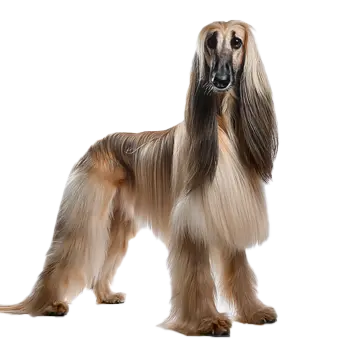

The Afghan Hound's long, flowing coat demands special consideration when selecting collars and harnesses. Traditional flat collars can mat and break the hair around the neck, creating a ring of damage that is difficult to repair without trimming. Many Afghan Hound owners prefer snoods or tube-style collar covers that protect the neck coat during walks. If you use a standard collar for identification tags, choose a narrow, smooth-surfaced option and consider removing it indoors to minimize coat wear.
Martingale collars are widely regarded as the best everyday collar choice for sighthounds, including Afghan Hounds. These limited-slip collars tighten slightly under tension to prevent the dog from backing out — an important feature for a breed with a narrow head that can easily slip a standard buckle collar — but they do not cinch tight enough to choke. Look for a martingale with a wide fabric band and smooth lining to distribute pressure evenly and reduce friction on the coat.
Harnesses are an excellent alternative for Afghan Hounds that pull on leash or for owners who want to avoid any pressure on the throat. A front-clip harness provides steering control for pullers, while a back-clip harness is comfortable for relaxed walkers. Choose a harness with padded straps and smooth nylon or neoprene contact points to minimize coat damage. Avoid harnesses with multiple buckles, velcro straps, or rough edges that can catch and tangle the long hair.
For leashes, a six-foot leather or biothane lead provides a good combination of control and freedom. Retractable leashes are generally not recommended for Afghan Hounds because the thin cord can wrap around the dog's legs or body, and the retraction mechanism provides no meaningful control over a powerful sighthound in chase mode. A solid leash with a comfortable handle gives you reliable connection to a dog that may decide to bolt without warning.