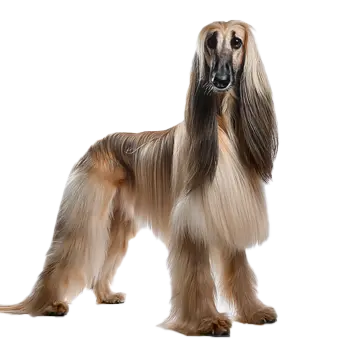

Play Style & Drive

Understanding how an Afghan Hound plays is the first step to choosing toys that will actually get used. Unlike retrievers that will fetch endlessly or terriers that shake and tug with relentless energy, Afghan Hounds tend to play in short, intense bursts followed by periods of rest and observation. Their sighthound heritage means they are most excited by movement — things that dart, roll, or flutter across their field of vision trigger their chase instinct and light up their interest immediately.

This prey-driven play style means that toys requiring sustained, repetitive engagement may be ignored after the initial novelty wears off. An Afghan Hound might chase a ball with spectacular speed the first three times you throw it, then lose interest and wander off to investigate something else. This is not stubbornness or a lack of intelligence — it is a breed characteristic rooted in how sighthounds hunt. They sprint, capture, and move on. Expecting a golden retriever's fetch stamina will only lead to frustration for both of you.

Afghan Hounds also tend to be gentler with toys than many large breeds. They are less likely to destroy a plush toy in seconds and more likely to carry it around, mouth it gently, or use it as a comfort object. This opens up toy options that would be shredded instantly by a pit bull or a lab, but it also means that ultra-durable, rock-hard toys designed for aggressive chewers may hold little appeal.

Social play varies widely among individual Afghan Hounds. Some enjoy interactive games with their owners, while others prefer to entertain themselves. Observing your dog's natural inclinations will help you invest in toys that match their personality rather than fighting against it.

Interactive & Puzzle Toys

Puzzle toys can be excellent enrichment for Afghan Hounds, but the difficulty level and design matter. This breed is intelligent but not motivated by the relentless food drive that makes some dogs puzzle-toy champions. Start with simple treat-dispensing toys that reward effort immediately — a ball that releases kibble when rolled, or a basic slider puzzle with shallow compartments. If your dog engages, gradually introduce more complex designs.

Interactive toys that involve the owner tend to work better than solitary puzzles for many Afghan Hounds. Toys that you hide and your dog finds, or flirt poles that simulate the darting movement of prey, tap into the breed's natural instincts and add the social element that even independent Afghan Hounds enjoy in controlled doses. A flirt pole is particularly effective because it combines the visual chase trigger with physical exertion in a compact space.

Snuffle mats and scent-based enrichment offer a different kind of mental stimulation that many Afghan Hounds find surprisingly engaging. Burying treats in a fabric mat or scattering them across a grassy area encourages the dog to use its nose rather than its eyes, which provides a novel cognitive challenge for a breed that typically relies on sight. These activities are also low-impact, making them suitable for rainy days or recovery periods after vigorous exercise.

Rotate puzzle toys regularly to maintain novelty. An Afghan Hound that has solved a particular puzzle will rarely find it interesting a second time. Keep three or four options in circulation and swap them out every few days so each reappearance feels fresh.

Chew Toys & Durability

Afghan Hounds are moderate chewers, which gives you a wider range of chew toy options than you would have with a power-chewing breed. Natural rubber toys in medium firmness work well — they provide satisfying resistance without being so hard that they risk cracking teeth. Look for toys that have some give when you press them with your thumbnail, and avoid anything made of nylon or compressed bone that is harder than the dog's teeth.

Natural chews such as bully sticks, tendons, and dried sweet potato strips are generally well received by Afghan Hounds and provide both mental engagement and dental benefits. These consumable chews should always be offered under supervision, and any piece that becomes small enough to swallow whole should be taken away. The Afghan Hound's narrow muzzle and throat mean that choking hazards should be taken seriously, even with products marketed as safe for large dogs.

Avoid chew toys with small detachable parts, squeakers that can be extracted, or rope toys that fray into long strings. While Afghan Hounds are not typically aggressive destroyers, any dog can eventually work a toy apart, and ingested fragments of rope, plastic, or rubber can cause intestinal blockages. Inspect chew toys regularly and replace them at the first sign of significant wear.

For teething puppies, frozen rubber toys or damp washcloths that have been chilled provide soothing relief for sore gums. Puppy-specific chew toys in softer formulations are designed for developing teeth and jaws and should be replaced with adult-appropriate options once the permanent teeth are in.

Fetch & Outdoor Toys

Fetch is where the Afghan Hound's athleticism truly shines, even if their enthusiasm for returning the toy is inconsistent. The chase itself is the reward for a sighthound, so focus on toys that fly far, bounce unpredictably, or move in ways that trigger the pursuit instinct. Rubber balls that bounce erratically on uneven ground can provide more excitement than a standard tennis ball thrown in a straight line.

Flirt poles deserve special mention as one of the most effective outdoor toys for Afghan Hounds. These long poles with a lure attached to a rope simulate the movement of fleeing prey and can provide an intense workout in a relatively small space. A few minutes of flirt pole play can tire an Afghan Hound more thoroughly than a thirty-minute walk, making it an invaluable tool for burning energy on days when a long outing is not possible.

Lure coursing equipment, even in simplified backyard versions, is the ultimate enrichment for this breed. Setting up a basic pulley system with a plastic bag or faux fur lure allows your Afghan Hound to engage the instinct it was literally bred for. Many Afghan Hound clubs and sighthound organizations host lure coursing events that are open to all dogs of the breed, not just show dogs, and participating can be a wonderful outlet for both the dog and the owner.

Always play fetch and chase games in a fully enclosed area. An Afghan Hound in pursuit mode will not hear your recall command, will not notice traffic, and will not stop until the quarry is caught or out of sight. No amount of training will fully override four thousand years of selective breeding for independent, high-speed pursuit. An unfenced field near a road is not a safe play environment for this breed under any circumstances.

Comfort & Companion Toys

Many Afghan Hounds develop attachments to specific soft toys, carrying them around the house, sleeping with them, and grooming them with gentle mouthing. This behavior is endearing and harmless, and providing a dedicated comfort toy can help reduce anxiety during stressful situations such as thunderstorms, fireworks, or periods when the owner is away from home.

When choosing a comfort toy, look for plush toys made with reinforced stitching and no small plastic eyes, noses, or buttons that could be chewed off and swallowed. Flat, pillow-style plush toys without protruding limbs tend to hold up longer because there are fewer edges for the dog to work at. Some owners find that placing a worn piece of their own clothing inside or near the toy adds a comforting scent association.

Heartbeat simulation toys, which contain a small battery-operated device that mimics a resting heartbeat, can be particularly soothing for Afghan Hound puppies adjusting to a new home. The rhythmic pulse provides a sense of companionship that helps ease the transition from littermates to solo sleeping. These toys can also benefit adult dogs experiencing separation anxiety, though they should be part of a broader anxiety-management strategy rather than a standalone solution.

Replace comfort toys when they become worn but try to maintain consistency. If your Afghan Hound has bonded with a particular toy, purchasing a duplicate before the original falls apart ensures a seamless transition. Sudden removal of a beloved comfort object can cause confusion and stress in a breed that, despite its aloof reputation, forms quiet but deep attachments.

DIY & Budget Options

Not every effective toy needs to come from a pet store. Afghan Hounds can be entertained with simple homemade options that cost little or nothing. A plastic bottle placed inside a sock creates a crinkly, lightweight toy that many dogs find irresistible. Remove the cap and ring first to eliminate choking hazards, and replace the bottle when it becomes crushed or cracked. Supervise play with bottle toys, as some dogs will eventually chew through the sock and reach the plastic.

Frozen treats offer enrichment and cooling relief in warm weather. Fill a rubber toy or silicone mold with a mixture of plain yogurt, mashed banana, and a few pieces of kibble, then freeze it solid. The resulting frozen puzzle keeps an Afghan Hound occupied as it works to lick out the contents, and the cold temperature feels good on gums and tongue during hot months.

Cardboard boxes and paper bags provide surprisingly engaging enrichment for scent-oriented play. Hide a few treats inside a crumpled paper bag placed inside a cardboard box, and let your dog figure out how to access them. This low-cost setup encourages problem-solving and nose work, and cleanup is as simple as recycling the materials afterward. Avoid boxes with staples, tape, or printed inks that could be harmful if ingested.

Rotation is the cheapest enrichment strategy of all. Rather than buying new toys constantly, keep half of your dog's toy collection stored away and swap them every week. Toys that have been out of sight for several days feel new again when they reappear, extending the useful life of every toy you own and keeping your Afghan Hound consistently engaged without a growing pile of barely-used products.

Always consult a qualified professional before making any health-related decisions. This content is provided for informational reference only and should not replace professional guidance specific to your animal.