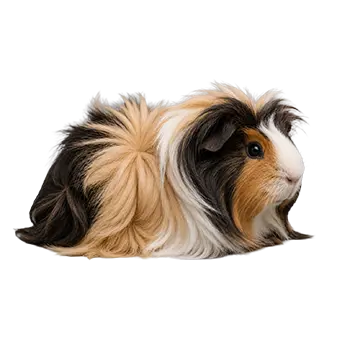

Activity monitoring for guinea pigs is a relatively new category, but the available technology has matured enough to offer genuine value for attentive owners. Small, lightweight motion sensors placed inside the cage can track how much time your Sheba Mini Yak spends moving versus resting throughout the day and night. Since guinea pigs are crepuscular — most active during dawn and dusk — a baseline activity pattern emerges quickly, and any significant deviation from that pattern can signal illness before visible symptoms appear.
Weight tracking is one of the simplest and most effective health monitoring practices for guinea pigs, and a digital kitchen scale accurate to one gram is the only technology required. Weigh your Sheba Mini Yak at the same time each week and record the results. Guinea pigs lose weight rapidly when ill, and because the Sheba Mini Yak's voluminous coat masks body condition, the scale often catches a problem days before you would notice it visually. A loss of more than two ounces in a week warrants a veterinary consultation.
Wearable health monitors designed for dogs and cats are generally too large and heavy for guinea pigs, and collar-mounted devices are impractical for a breed whose long fur would immediately engulf any attached hardware. Cage-based monitoring — motion sensors, weight tracking platforms, and environmental sensors — is a far more practical approach for cavies than anything worn on the animal itself.
Some dedicated small-animal health platforms now integrate weight data, activity levels, and environmental readings into a single dashboard accessible via smartphone app. These systems can generate alerts when metrics fall outside user-defined thresholds, providing an early warning system that is especially valuable for owners who work long hours and cannot observe their guinea pigs continuously throughout the day.