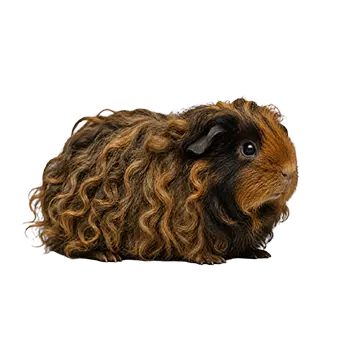

Guinea pigs are active, social animals that require far more space than the small pet-store cages typically marketed for them. For a single Lunkarya, the absolute minimum enclosure size is 7.5 square feet of unbroken floor space, but 10.5 square feet or more is strongly recommended. Since guinea pigs should always be kept in pairs or small groups for social wellbeing, plan for at least 10.5 square feet for two cavies and add roughly 2 to 3 square feet for each additional animal.
The Lunkarya's long, curly coat adds a practical dimension to space planning. In cramped quarters, that dense coat picks up soiled bedding, drags through food and water spills, and becomes matted far more quickly. A spacious enclosure allows the guinea pig to move freely between clean and active zones, naturally reducing the amount of debris that collects in the fur.
Floor space matters far more than vertical height for guinea pigs. Multi-level cages with ramps are popular, but the upper levels should be considered bonus space — not a substitute for adequate ground-level area. Guinea pigs are not natural climbers, and steep or narrow ramps can cause injuries, especially for a Lunkarya whose long coat may catch on edges or grating.
When measuring your available space, remember that the enclosure also needs room for hides, food stations, hay racks, and water bottles without feeling cluttered. A well-laid-out cage gives the guinea pig distinct areas for eating, sleeping, eliminating, and exploring, which supports both physical health and psychological comfort.