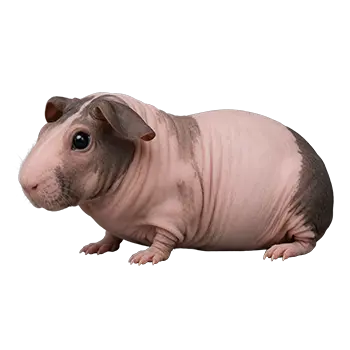

Play Style & Behavior

Baldwin guinea pigs share the same playful, curious temperament as other cavy breeds, though their hairless bodies introduce a few practical considerations for toy selection. Guinea pigs are not high-energy athletes like hamsters or ferrets — their play tends to be exploratory, food-motivated, and expressed in short bursts of activity interspersed with long periods of rest and grazing. Understanding this natural rhythm helps you choose enrichment that actually gets used rather than collecting dust in the corner of the cage.

The hallmark guinea pig behavior known as popcorning — sudden leaps and mid-air twists — is a sign of happiness and excitement that Baldwins display just as enthusiastically as furred breeds. You will also see zoomies, where your pig sprints laps around the enclosure, and rumblestrutting, a slow swagger accompanied by a low vibrating sound used in social communication. These behaviors indicate a pig that feels safe, comfortable, and stimulated. A Baldwin that never popcorns or explores may be understimulated, cold, or unwell.

Chewing is a constant need for guinea pigs, not a behavioral problem. Their teeth grow continuously throughout their lives, and without adequate opportunities to gnaw, teeth can overgrow and cause serious dental issues. Most guinea pig enrichment revolves around providing safe, interesting things to chew, shred, and destroy. Unlike dogs or cats, guinea pigs rarely play fetch or chase toys — their enrichment is about investigation, texture, and taste rather than predatory or retrieval behaviors.

For Baldwins specifically, avoid toys with rough edges, sharp wicker points, or coarse textures that could scratch bare skin. A furred guinea pig might push through a rough-textured hay tunnel without issue, but a Baldwin doing the same thing risks abrasions. Prioritize smooth-finished wood, soft fabric, and well-sanded natural materials. Inspect toys regularly for splintering or wear that could create a sharp point against exposed skin.

Chew Toys & Dental Health

Chew toys are the most functionally important category of guinea pig enrichment because they directly support dental health. A guinea pig's incisors and molars grow approximately two to three millimeters per week, and without abrasive materials to wear them down, overgrowth leads to malocclusion — a painful condition where misaligned teeth prevent the animal from eating. Unlimited hay is the primary dental wear tool, but chew toys supplement this by offering different textures and angles of gnawing.

Apple wood sticks are among the safest and most popular chew options for guinea pigs. The wood is hard enough to provide meaningful dental wear but soft enough that it does not splinter dangerously. Other safe wood options include willow, pear, and kiln-dried pine (not raw pine, which contains harmful phenols). Avoid cedar, cherry, plum, peach, and any wood from stone-fruit trees, as these contain compounds that are toxic to small animals. Always source chew sticks from pet suppliers rather than collecting branches from your yard, which may have been exposed to pesticides or parasites.

Woven grass and hay-based chew toys — such as braided timothy hay twists, grass mats, and compressed hay cubes — combine chewing with foraging in a way that guinea pigs find especially appealing. These toys are consumed as they are destroyed, so they need regular replacement. They are also low-risk for a Baldwin's bare skin because the materials are soft and flexible. Hanging a hay twist from the cage wall at nose height encourages your pig to stretch and reach while chewing, adding a small physical challenge.

Mineral and salt licks are often marketed alongside chew toys, but their necessity is debatable. A guinea pig eating a balanced diet of hay, pellets, and fresh vegetables typically receives adequate minerals without supplementation. Excessive mineral intake can contribute to urinary stones, which guinea pigs are already predisposed to developing. If you do offer a mineral block, monitor how aggressively your pig uses it — obsessive licking can indicate a nutritional gap that is better addressed through diet adjustment than through a lick block.

Tunnels & Hideaways

Tunnels tap into the guinea pig's natural instinct to seek covered pathways. In the wild, cavies navigate through dense grass and underbrush, and a tunnel in the cage replicates that sense of sheltered movement. Fabric tunnels are the best option for Baldwins because the soft lining protects bare skin from friction. Look for tunnels made from fleece or another smooth material, with a diameter of at least six inches to accommodate an adult guinea pig without forcing it to squeeze through.

Connectable tunnel systems that allow you to build winding pathways across the cage create engaging exploration opportunities. Rearranging the layout every week or two keeps the environment novel and encourages your Baldwin to re-explore its territory. Some owners create tunnel mazes during floor time, leading from one open area to another with hay placed at various points along the route. This kind of spatial enrichment is more stimulating than any single toy because it transforms the entire environment.

Cardboard tunnels — such as paper towel rolls, large mailing tubes, or cardboard boxes with entry holes cut in the sides — are inexpensive and disposable alternatives that most guinea pigs love. A Baldwin can push through, chew on, and explore a cardboard setup, and when it is soiled or destroyed, you simply recycle it and replace it. Ensure any cardboard used is plain, unprinted, and free of tape, staples, or glue. Glossy or heavily printed cardboard may contain inks that are unsafe if ingested.

Hideaway combinations that function as both shelter and play structure work especially well in guinea pig enclosures. A fleece-covered arch, for instance, provides overhead cover while allowing through-traffic from both sides. Stacking fleece cubes or cushions to create a small crawl space gives your Baldwin a cozy nook to investigate. The key principle is that guinea pigs feel safest when they have overhead cover, so even play structures should incorporate an element of concealment.

Foraging & Puzzle Toys

Foraging enrichment is the most effective way to engage a guinea pig's brain because it aligns with their strongest natural drive: finding food. In the wild, guinea pigs spend the majority of their waking hours grazing and searching for edible plants. An enclosure where all food is piled in an obvious bowl removes that entire behavioral repertoire. By scattering pellets through hay, hiding vegetable pieces inside paper bags, or tucking treats into the folds of a fleece liner, you restore the foraging challenge and keep your Baldwin mentally occupied.

Purpose-built foraging toys for small animals typically involve a container that the pig must manipulate to access food. A ball with holes that dispenses pellets when nudged, a puzzle board with sliding covers over treat wells, or a hanging basket stuffed with hay and vegetable scraps all require your Baldwin to problem-solve. Guinea pigs are more food-motivated than mechanically inclined, so start with easy challenges and increase difficulty gradually. A puzzle that is too hard will simply be ignored.

Scatter feeding is the simplest and most effective foraging technique. Instead of placing your Baldwin's daily pellet portion in a bowl, sprinkle the pellets across the hay in the cage. This forces the pig to nose through the hay to find each piece, simultaneously encouraging hay consumption and extending the time spent on the meal. For Baldwins, make sure the hay used for scatter feeding is soft enough not to poke bare skin — second-cut timothy or orchard grass works well for this purpose.

Paper bag foraging is another low-cost enrichment method that most guinea pigs enjoy. Place a few pieces of vegetable or a small hay pile inside a plain brown paper lunch bag, fold the top loosely, and place it in the cage. Your Baldwin will sniff it out, chew through the bag, and extract the food inside. The bag itself becomes a chew toy in the process. Rotate foraging methods regularly so your pig does not habituate to a single puzzle and lose interest.

Exercise & Exploration

Daily floor time outside the cage provides the best exercise opportunity for a Baldwin guinea pig. Set up a secure play area using C&C grid panels, a puppy exercise pen, or a large section of floor space bounded by furniture and blocked off from hazards. Cover the floor with old towels or fleece blankets to protect your Baldwin's bare skin from cold or rough surfaces, and scatter tunnels, hideouts, and hay piles throughout the space to encourage exploration.

Guinea pigs do not use exercise wheels or balls, and these products should never be purchased for a cavy. Wheels force the spine into an unnatural curve that can cause serious back injuries, and exercise balls trap the animal in an enclosed space with poor ventilation, no access to water, and no ability to stop moving when it wants to rest. These products are designed for hamsters and mice with fundamentally different body structures, and they are dangerous for guinea pigs regardless of marketing claims to the contrary.

Structured play sessions work better than simply placing your Baldwin on an empty floor and hoping for activity. Create a simple course with tunnels connecting different hideout stations, place small piles of hay or vegetable pieces at various points to encourage movement between areas, and sit on the floor yourself to provide a familiar presence. Many guinea pigs will explore more boldly when their owner is nearby, and lap time — where the pig rests on your lap with a fleece blanket — counts as socialization enrichment even though it is not physically active.

Outdoor time in a secure grass pen is possible but requires extra caution for Baldwins. Their bare skin is vulnerable to sunburn, insect bites, and temperature changes that furred pigs handle more easily. If you do provide outdoor time, choose a shaded area, keep sessions short, ensure the grass has not been treated with chemicals, and never leave a guinea pig unattended outdoors. Predator birds, neighborhood cats, and even sudden weather changes can turn a pleasant outing dangerous in minutes.

DIY & Budget Options

Some of the most effective guinea pig enrichment costs nothing or next to nothing to create. A cardboard box with two doorways cut into it becomes a hideout and chew toy. A toilet paper roll stuffed with hay becomes a foraging puzzle. A crumpled ball of plain paper becomes an object to nose and push around. Guinea pigs do not evaluate toys by their price tag — they evaluate them by whether the toy smells interesting, is safe to chew, and provides a novel texture or challenge.

Fleece scraps from fabric stores can be sewn or even just folded into simple bedding pads, tunnel liners, and cuddle sacks. If you sew, a basic rectangular fleece pouch with an opening on one end takes under fifteen minutes to make and will become one of your Baldwin's most-used cage items. For non-sewers, a piece of fleece draped over a bent wire frame or cardboard arch creates an instant cozy hideaway. Replace these when they become worn or stained beyond washing.

Hay-based enrichment is both nutritious and inexpensive. Stuff a small paper bag with loose hay and a few pellets for a foraging bag. Weave hay through the bars of the cage for a grazing wall. Pile hay into a shallow cardboard box to create a dig box where your Baldwin can burrow and forage simultaneously. These activities extend hay consumption time, support dental health, and provide mental stimulation — three benefits from a handful of materials you already have.

Rotation is the secret to keeping enrichment fresh without constant spending. Guinea pigs habituate to familiar objects within a few days, so swap toys in and out of the cage on a weekly basis. Store unused toys out of sight and reintroduce them after a gap of two to three weeks. A toy that was ignored last month may be greeted with enthusiastic investigation when it reappears simply because it has regained novelty. This rotation principle means a small collection of six to eight toys can provide months of varied enrichment.

Always consult a qualified professional before making any health-related decisions. This content is provided for informational reference only and should not replace professional guidance specific to your animal.