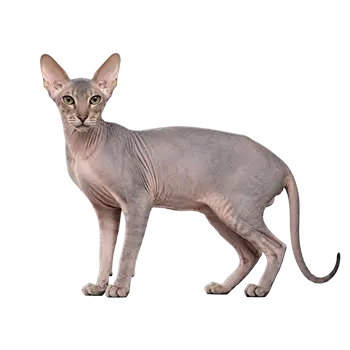

Play Style & Drive

Peterbalds are among the most playful and intelligent cat breeds, combining the curiosity of an explorer with the energy of a much younger animal well into adulthood. They do not simply bat at objects — they investigate, manipulate, and problem-solve. Understanding this play style is essential to choosing toys that will hold their attention rather than being ignored after five minutes.

This breed exhibits strong prey drive with a particular affinity for chase-and-pounce sequences. They are fast, agile, and surprisingly acrobatic despite their elegant appearance. Toys that move unpredictably — changing direction, speed, or height — engage the hunting instincts that drive most of a Peterbald's play behavior. Static toys that sit on the floor are unlikely to generate sustained interest.

Peterbalds are also notably social players. Unlike some cat breeds that prefer solitary play, Peterbalds actively seek interaction with their owners during playtime. They will bring toys to you, vocalize to initiate games, and show visible frustration if ignored. Plan for at least two dedicated interactive play sessions per day, each lasting fifteen to twenty minutes, to meet this breed's social and physical needs.

Boredom is a genuine risk with Peterbalds. A mentally understimulated Peterbald will create its own entertainment, often in ways that involve opening cabinets, knocking items off shelves, or disassembling anything that comes apart. Proactive enrichment is not just about fun — it is about channeling intelligence into appropriate outlets before destructive habits develop.

Interactive & Puzzle Toys

Puzzle feeders are one of the best enrichment investments for a Peterbald. These devices require the cat to manipulate levers, slide compartments, or fish treats out of chambers, turning mealtime into a cognitive challenge. Start with simple designs and progress to more complex puzzles as your cat masters each level. Many Peterbalds will solve beginner puzzles within minutes, so plan to have several difficulty levels available.

Interactive wand toys remain a staple for good reason. A feather, ribbon, or small lure attached to a flexible wand mimics the erratic movement of prey and gives you direct control over the play session's intensity. Vary your movements — drag the lure along the floor, lift it into the air, pause and twitch — to simulate realistic prey behavior. Peterbalds respond especially well to toys that "hide" behind furniture and reappear, triggering their ambush instincts.

Automated interactive toys can supplement human-led play but should not replace it. Robotic mice, laser circuits, and motion-activated toys provide stimulation when you are away or busy, but a Peterbald's need for social interaction means that mechanical toys alone will not satisfy them. Use automated options as part of a broader enrichment plan rather than a standalone solution.

Rotate interactive toys on a weekly basis. Even the most engaging toy loses its appeal through constant exposure. Keep three or four toy sets and swap them in and out so that each rotation feels fresh. Storing unused toys in a sealed bag with a pinch of catnip can renew interest when they reappear.

Chew Toys & Texture Play

While cats are not typically thought of as chewers in the way dogs are, Peterbalds often enjoy chewing and gnawing on textured toys. This behavior can serve as both stress relief and dental exercise. Look for toys made from sisal, compressed catnip, or natural rubber that can withstand moderate chewing without breaking into ingestible pieces.

Texture variety matters more for hairless cats than many owners expect. Without the constant tactile input of fur against surfaces, Peterbalds seem to seek out novel textures through their paws and mouths. Crinkle toys, corrugated cardboard scratchers, and toys with mixed materials — such as a fabric body with a rope tail — provide the sensory variety this breed craves.

Avoid toys with small, detachable parts like plastic eyes, bells inside thin plastic shells, or glued-on decorations. Peterbalds are dexterous and persistent, and they will eventually pry loose anything that is not securely embedded. Ingested small parts pose choking and intestinal blockage risks. Opt for toys where any noise-making element is sewn inside a durable fabric casing.

Cardboard scratching pads serve double duty as both scratching surfaces and chew toys. Many Peterbalds will shred corrugated cardboard with evident satisfaction. These pads are inexpensive and can be replaced frequently, which is preferable to allowing a cat to continue using a heavily soiled or disintegrating scratcher that could harbor bacteria.

Chase & Movement Toys

Track toys — enclosed circuits with a ball that spins inside a channel — are perennial favorites for Peterbalds. The ball's movement is unpredictable enough to trigger hunting behavior, and the enclosed design prevents the ball from rolling under furniture and ending the game prematurely. Multi-level track toys with balls on different tiers add complexity and hold attention longer than single-circuit designs.

Spring-mounted toys that attach to a base and wobble when batted provide self-directed play opportunities. A Peterbald can engage with these toys independently, swatting the spring toy and watching it bounce back erratically. Look for versions with a sturdy base that will not slide across the floor during vigorous play, and check the spring mechanism regularly for metal fatigue.

Kicker toys — long, cylindrical plush toys designed for cats to grab with their front paws and kick with their hind legs — tap into the bunny-kick behavior that is a core part of feline play. Fill or scent these with catnip for added appeal. Peterbalds tend to be enthusiastic kickers, so choose kicker toys with reinforced seams that can withstand aggressive hind-leg action.

Laser pointers should be used with caution. While Peterbalds will chase a laser dot with great enthusiasm, the inability to ever "catch" the prey can lead to frustration and anxiety in some cats. If you use a laser, always end the session by directing the dot onto a physical toy or treat that the cat can capture, providing a satisfying conclusion to the hunt.

Comfort & Companion Toys

Peterbalds form strong attachments, and some individuals adopt a specific plush toy as a comfort object that they carry, groom, and sleep with. If your cat shows this tendency, let them choose their own companion toy rather than imposing one. Once a favorite is identified, consider purchasing a duplicate — these toys inevitably need washing or eventual replacement, and having an identical backup avoids distress.

Heated plush toys can be especially comforting for a breed that constantly seeks warmth. Some products contain a microwave-safe insert that retains heat for several hours, providing a warm companion for napping. Ensure the heating element cannot be accessed by the cat and that the toy's exterior fabric is durable enough to withstand daily use without tearing.

Calming toys infused with valerian root or silver vine offer an alternative to catnip for cats that do not respond to it. Roughly thirty percent of cats are indifferent to catnip, and some individuals who lack the catnip response will react strongly to silver vine instead. Having both options available lets you determine which your Peterbald prefers.

Avoid plush toys with long, loose threads or yarn-like elements. Peterbalds are curious chewers, and linear foreign bodies — strings, ribbons, yarn — are among the most dangerous items a cat can ingest, often requiring surgical removal. Choose plush toys with short, dense pile and no dangling attachments.

DIY & Budget Options

Some of the most engaging Peterbald toys cost nothing at all. A paper bag with the handles removed, a cardboard box with holes cut in the sides, or a crumpled ball of packing paper can provide extended entertainment. The key is novelty — rotate homemade toys just as you would commercial ones, and remove them once they become soiled or structurally compromised.

DIY puzzle feeders can be made from muffin tins covered with tennis balls, paper towel tubes with the ends folded shut, or plastic bottles with treat-sized holes cut in the sides. These homemade puzzles work on the same principle as commercial versions and can be customized to your cat's skill level. Start with easy configurations and increase difficulty as your Peterbald learns to solve them.

Ice cubes made from diluted low-sodium broth can serve as both a toy and a hydration aid. Place one in a shallow dish and let your Peterbald bat it around and lick it as it melts. This is particularly useful during warmer months when increased fluid intake is beneficial. Supervise the first few sessions to ensure your cat enjoys the cold sensation rather than finding it aversive.

A simple wand toy can be made from a wooden dowel, a length of sturdy string, and a small piece of fleece or leather tied to the end. This costs pennies and works just as well as commercial wands. The important thing is to store all string toys out of reach when not in use — unsupervised string play poses a serious ingestion risk for any cat, and Peterbalds are curious enough to chew on string left unattended.

Always consult a qualified professional before making any health-related decisions. This content is provided for informational reference only and should not replace professional guidance specific to your animal.