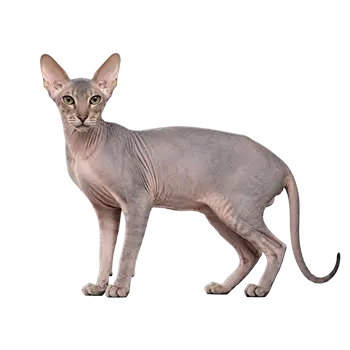

Space Requirements

Peterbalds are active, curious cats that need more usable space than their slim frames might suggest. They are climbers and explorers by nature, so vertical space matters just as much as floor area. A well-designed living environment for a Peterbald includes multiple elevated platforms, shelves, or cat trees that allow the cat to survey its territory from above and burn energy through climbing.

Despite their need for activity, Peterbalds are strictly indoor cats in almost all climates. Their minimal coat provides virtually no protection against sunburn, temperature extremes, or physical injuries from outdoor hazards. Even Peterbalds with a fine brush coat lack the insulation that outdoor exposure demands. Designing an engaging indoor environment is therefore not optional — it is the primary way to meet this breed's physical and psychological needs.

A single Peterbald in a standard apartment or home should have access to at least two rooms to prevent boredom and territorial stress. Cats that are confined to a single room for extended periods — even a large one — can develop anxiety behaviors including over-grooming, excessive vocalization, and furniture destruction. If your living space is compact, maximize vertical options and rotate enrichment items to keep the environment stimulating.

Consider traffic flow and quiet zones when setting up your Peterbald's living space. These cats are highly social and want to be near their people, but they also need retreat options where they can rest undisturbed. A balance between social areas and private hideaways creates a psychologically healthy home territory.

Cat Trees & Perches

A sturdy cat tree is one of the most valuable investments you can make for a Peterbald. Look for structures with a solid base that will not tip when an agile cat launches itself from one platform to another. Wobbling or unstable cat trees quickly become ignored furniture because cats do not trust surfaces that shift under their weight.

Material choice is important for hairless and semi-hairless breeds. Sisal-wrapped posts provide excellent scratching surfaces, but the platforms and perches themselves should be covered in soft, warm fabric rather than bare wood or plastic. Fleece, sherpa, and plush fabrics are ideal because they retain warmth and feel comfortable against exposed skin. Avoid rough carpet coverings that can abrade a Peterbald's delicate skin over time.

Height matters more than footprint for most Peterbalds. A tall, slender cat tree with platforms at varying heights will see more use than a wide, low structure. Position the tallest perch near a window — safely away from direct afternoon sun — so your cat can observe outdoor activity, which provides significant mental stimulation for an indoor-only breed.

Wall-mounted shelves and climbing steps are an excellent alternative or supplement to freestanding cat trees, especially in smaller homes. These can be arranged in staircase patterns or winding paths along walls, creating a highway system that lets your Peterbald move through rooms at elevation. Ensure all mounting hardware is rated for at least three times your cat's weight to account for the dynamic force of jumping.

Beds & Sleeping Areas

Peterbalds seek warmth constantly, and their choice of sleeping spot will almost always be the warmest available surface. Heated cat beds — either self-warming pads that reflect body heat or low-wattage electric models — are practically essential for this breed. Electric heated beds should have a chew-resistant cord and an internal thermostat that prevents overheating, as cats that sleep on them for extended periods can develop mild skin irritation from excessive warmth.

Enclosed beds, sometimes called cat caves or hooded beds, are especially popular with Peterbalds. The enclosed design traps body heat and provides a sense of security that many hairless cats find deeply comforting. Look for options with a removable, machine-washable liner, because Peterbalds produce more skin oil than coated cats and their bedding needs frequent cleaning to prevent odor buildup and bacterial growth.

Provide multiple sleeping options throughout the home rather than a single designated bed. Peterbalds will follow their owners from room to room, and having a comfortable resting spot in each commonly used space prevents the cat from choosing less ideal surfaces — like a laptop keyboard or a stack of papers — as impromptu beds.

Fabric selection directly affects how often you will need to wash bedding. Dark-colored fabrics show oil stains less readily, and tightly woven materials resist absorbing oils better than loose knits. Microfiber and fleece are both practical choices that wash well and dry quickly, which matters when you are laundering cat bedding weekly or more.

Outdoor Enclosures

Catios — enclosed outdoor spaces — allow Peterbalds to experience fresh air and natural stimulation without the risks of free roaming. A well-built catio uses wire mesh or hardware cloth with openings no larger than one inch to prevent escape and keep predators out. The structure should be fully enclosed on all sides, including the top, and should attach securely to the house via a window or pet door.

Shade is non-negotiable in any Peterbald catio. Direct sunlight on exposed skin can cause sunburn in as little as fifteen to twenty minutes, depending on the UV index. At minimum, half of the catio's roof area should be solid or covered with UV-filtering shade cloth. Ideally, the entire enclosure should be positioned on the north side of the home or under existing tree cover to minimize direct sun exposure.

Temperature limits should be strictly observed. Peterbalds should not be in an outdoor enclosure when temperatures drop below about 60 degrees Fahrenheit or exceed 85 degrees, unless the space is climate-controlled. Even within that range, provide warm bedding and a retreat option so the cat can self-regulate. In hot weather, ensure constant access to fresh water and monitor for signs of overheating such as panting or lethargy.

Flooring in a catio should be easy to clean and comfortable underfoot. Concrete and bare wood can become uncomfortably hot or cold depending on the season. Interlocking foam tiles, artificial turf rated for pet use, or composite decking provide a more temperature-stable surface. Avoid gravel or bare soil, which can harbor parasites and are difficult to sanitize.

Climate Considerations

Temperature management is the single most important housing consideration for any Peterbald. These cats are comfortable in the same temperature range that most humans prefer — roughly 68 to 78 degrees Fahrenheit — but they have very little tolerance for fluctuations outside that band. In cooler homes, a Peterbald will seek heat sources relentlessly, which can include radiators, space heaters, and stovetops, all of which pose burn risks.

Humidity also affects Peterbald comfort and skin health. Dry indoor air, common during winter months in heated homes, can cause flaking and irritation on exposed skin. A room humidifier set to maintain relative humidity between 40 and 50 percent helps keep skin supple and reduces the oily overproduction that the skin sometimes triggers in response to dryness.

Drafts are a particular concern. A coated cat barely notices a draft from a poorly sealed window, but a Peterbald will feel it acutely. Survey your home for draft sources — under doors, around windows, near HVAC vents — and either seal them or ensure your cat's primary resting areas are positioned away from airflow paths. This is especially important for sleeping spots, where a cat may remain stationary for hours.

If your home experiences significant temperature swings — due to climate, inconsistent heating, or large windows — consider creating a dedicated warm zone for your Peterbald. A small room or enclosed area with a stable temperature, heated bedding, and no direct sun exposure can serve as a reliable retreat. This is particularly valuable in older homes where whole-house temperature control is difficult to maintain evenly.

Multi-Cat Households

Peterbalds are exceptionally social cats that generally adapt well to multi-cat homes, but the physical environment must support multiple animals to prevent resource competition and territorial stress. The basic rule is to provide key resources — litter boxes, feeding stations, water sources, and sleeping areas — in a ratio of one per cat plus one extra, distributed across different locations rather than clustered in a single room.

Vertical space becomes even more important in multi-cat households. Cats establish social hierarchies partly through access to elevated positions, and providing enough high perches for all cats reduces conflict. If one cat consistently monopolizes the tallest perch and blocks others from climbing, add alternative routes and additional elevated platforms so subordinate cats can access height without confrontation.

When introducing a Peterbald to an existing cat household, the standard slow-introduction protocol applies: separate rooms with scent-swapping for the first week, then supervised visual contact through a gate or cracked door, followed by gradual supervised cohabitation. Peterbalds tend to be eager to socialize, which can overwhelm more reserved cats, so let the existing cat set the pace.

Be aware that a Peterbald's exposed skin is more vulnerable to scratches during play or minor disputes. While most multi-cat play is harmless, a scratch that would barely mark a coated cat can leave a visible wound on a hairless one. Keep all cats' nails trimmed regularly, and monitor play sessions until you are confident that interactions remain gentle. Providing ample space and resources is the most effective way to minimize tension and rough play.

Always consult a qualified professional before making any health-related decisions. This content is provided for informational reference only and should not replace professional guidance specific to your animal.