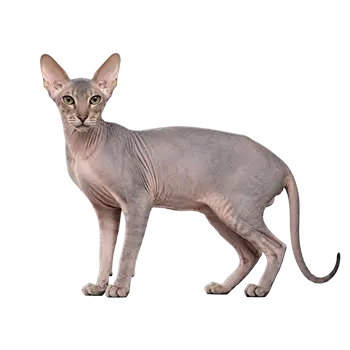

Collars for Peterbalds require more thought than for coated breeds. A standard nylon or leather collar can cause friction burns, irritation, and even raw patches on exposed skin within hours of wear. If you use a collar at all, choose one made from soft, wide fabric — padded satin, neoprene-lined, or stretchy jersey — that distributes pressure across a broader area and minimizes rubbing.
Breakaway collars are strongly recommended for safety regardless of breed, but they are especially important for an indoor cat like the Peterbald that might snag a collar on furniture, shelving, or cat tree components. The breakaway mechanism should release under moderate pressure — roughly eight to twelve pounds — to prevent strangulation. Test the release periodically, as some mechanisms stiffen with age and stop functioning properly.
Harnesses are the better option for any Peterbald that will be walked outdoors or spend time in an enclosed patio. A well-fitted harness distributes force across the chest and shoulders rather than the neck, which is both safer and more comfortable. For hairless cats, look for harnesses with a soft lining — fleece or mesh — and avoid designs with narrow straps that can dig into skin. The figure-H and vest-style harnesses tend to work best for this breed's narrow-chested, long-bodied build.
Leash training a Peterbald is entirely feasible given their intelligence and social nature. Start indoors with short sessions, allowing the cat to wear the harness without a leash before adding the lead. Use a lightweight leash no longer than six feet — retractable leashes give too much slack and too little control for a cat. Outdoor walks should be limited to shaded areas during mild weather, never in direct sun or cold.