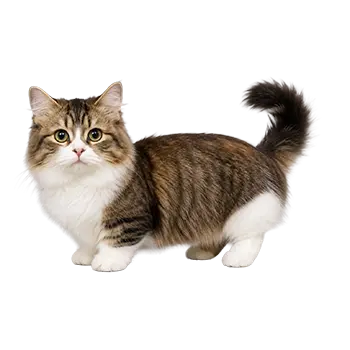

Play Style & Drive

The Kinkalow is an exceptionally playful breed that retains kitten-like energy well into adulthood. Despite their short legs, these cats are surprisingly agile and quick, darting after targets with enthusiasm and engaging in bursts of high-energy activity followed by periods of rest. Understanding this play pattern is essential for selecting toys that match their natural instincts rather than frustrate them.

Kinkalows tend to favor ground-level pursuit and pouncing over aerial acrobatics. Their shortened limbs make them better suited to chasing objects across the floor than leaping to catch items mid-air. This does not mean they will not jump at all, but their play style leans heavily toward horizontal movement, batting, and wrestling rather than vertical hunting behavior.

Social play is a strong driver for this breed. Kinkalows bond closely with their owners and often prefer interactive play sessions over solitary toy engagement. They will happily chase a wand toy or retrieve small objects, and many Kinkalows develop a particular attachment to one or two toys that they carry around the house. Building daily interactive play sessions into your routine strengthens the bond and provides both physical exercise and mental stimulation.

Curiosity is another defining trait. Kinkalows investigate new objects thoroughly, which means novel toys generate immediate interest. However, this also means they can grow bored with familiar toys quickly. Rotating toys in and out of circulation on a weekly basis keeps the environment fresh and maintains engagement without requiring constant new purchases.

Interactive & Puzzle Toys

Puzzle toys challenge the Kinkalow's natural problem-solving abilities and provide mental enrichment that physical play alone cannot deliver. Food-dispensing puzzle toys are particularly effective because they combine the motivation of a treat reward with the cognitive challenge of figuring out how to access it. Start with simpler designs and gradually increase complexity as your cat masters each level.

Treat balls and rolling dispensers work well for Kinkalows because they operate at ground level, aligning with the breed's natural play orientation. The cat bats the ball around the floor, and kibble or treats fall out through adjustable openings. This type of toy also slows down fast eaters, serving double duty as both enrichment and portion control.

Stationary puzzle boards with sliding covers, pegs, and compartments offer a different type of challenge. These require the cat to use its paws to manipulate components and uncover hidden treats. Kinkalows, with their dexterous front paws and persistent curiosity, tend to take to these puzzles readily. Look for boards with multiple difficulty settings so you can scale the challenge over time.

Interactive electronic toys that move unpredictably across the floor or pop in and out of hiding can sustain a Kinkalow's attention when you are not available for hands-on play. Choose models with automatic shutoff timers to prevent overstimulation, and always supervise the first few sessions with any battery-operated toy to ensure the cat does not try to disassemble it.

Wand Toys & Teasers

Wand toys are the single most effective tool for interactive play with a Kinkalow. A simple rod with a string and an attachment at the end mimics the movement of prey, triggering the cat's hunting sequence of stalk, chase, pounce, and catch. Vary your technique by dragging the toy along the floor, pulling it behind furniture, and making it dart unpredictably to simulate realistic prey behavior.

Attachment variety keeps wand play interesting. Feathered attachments mimic birds and trigger batting and grabbing behavior. Fabric streamers and ribbon-style attachments encourage chasing and pouncing. Small plush attachments that can be dragged along the ground appeal to the Kinkalow's preference for floor-level pursuit. Keeping several different attachments on hand and swapping them between sessions prevents habituation.

Play sessions should last approximately 10 to 15 minutes and ideally end with the cat successfully catching the toy. Allowing the cat to capture its target satisfies the hunting drive and prevents frustration. Follow the catch with a small treat to complete the hunt-catch-eat sequence that mirrors natural predatory behavior. Two to three sessions per day is a good target for an adult Kinkalow.

Always store wand toys out of reach when not in use. The strings, ribbons, and elastic cords pose serious ingestion and entanglement risks if the cat plays with them unsupervised. Inspect attachments regularly for loose parts, fraying string, or detached feathers that could be swallowed.

Chew Toys & Dental Toys

While cats are not aggressive chewers in the way dogs are, many Kinkalows enjoy gnawing on textured toys that provide oral stimulation. Rubber or silicone dental toys with nubs and ridges can help massage gums and reduce mild tartar buildup. These are not a substitute for proper dental care, but they contribute to overall oral hygiene as a supplementary measure.

Catnip-stuffed toys serve dual purposes, providing both a chewing target and the behavioral stimulation of nepetalactone, the active compound in catnip. Approximately 60 to 70 percent of cats respond to catnip, and those that do typically exhibit rolling, rubbing, and energetic play behavior. If your Kinkalow is not responsive to catnip, silver vine is an alternative that affects a broader percentage of cats and produces a similar reaction.

Avoid toys with small, detachable parts that could be bitten off and swallowed. Button eyes, plastic noses, bells, and small decorative elements are all choking hazards. Choose toys with embroidered features rather than glued-on components, and discard any toy once it begins to show signs of significant wear or stuffing exposure.

Natural chew options like dried fish skins or dehydrated chicken tendons provide a safe, digestible chewing experience. These are essentially single-ingredient treats that satisfy the urge to gnaw while delivering a small nutritional benefit. Offer them in moderation and always supervise to ensure the cat does not attempt to swallow large pieces.

Comfort & Companion Toys

Kinkalows form strong attachments to specific objects, and many adopt a favorite plush toy that they carry, groom, and sleep with. Providing a small, soft comfort toy can reduce anxiety during stressful events like veterinary visits, household moves, or changes in routine. Choose a toy that is small enough for the cat to carry in its mouth and durable enough to withstand daily handling.

Kicker toys, elongated plush toys designed for the cat to grab with its front paws and kick with its hind legs, channel the natural bunny-kick behavior that cats use during hunting. These toys provide an outlet for energy and wrestling instincts. For Kinkalows, a kicker toy in the eight to ten inch range is an appropriate size relative to their compact body.

Some Kinkalows respond well to toys that incorporate recorded sounds, such as chirping bird calls or rustling crinkle material. The auditory component adds a sensory dimension to play and can revive interest in a toy the cat has otherwise outgrown visually. Crinkle material inside a plush toy is particularly effective because it produces sound with every touch, rewarding the cat's interaction.

If your Kinkalow experiences separation anxiety when you leave the home, consider leaving a comfort toy that carries your scent in the cat's favorite resting area. A small plush toy placed in your laundry for a day before giving it to the cat will carry enough scent to provide reassurance during your absence.

DIY & Budget Options

Not every effective cat toy requires a purchase. Kinkalows are curious enough to find entertainment in everyday household items, provided they are safe. A crumpled ball of paper, a cardboard box with holes cut in the sides, or a paper bag with the handles removed can provide significant enrichment at no cost. Cardboard boxes in particular are universally loved by cats and serve as hiding spots, scratching surfaces, and play structures all at once.

Toilet paper and paper towel rolls can be converted into simple puzzle feeders by folding in the ends and cutting small holes along the tube. Drop a few pieces of kibble inside and let the cat figure out how to extract them. This takes seconds to make and provides the same cognitive challenge as a commercial puzzle toy. Stack several tubes in a box for a more complex version.

DIY wand toys can be made from a dowel rod, a length of cotton string, and a small fabric or feather attachment tied securely to the end. Ensure all knots are tight and the attachment cannot come loose during play. Replace the string when it shows fraying, and never leave a homemade wand toy unattended with the cat.

Rotation is the key to making any toy collection, whether commercial or homemade, last longer and stay engaging. Keep a basket of toys out of the cat's reach and swap three or four items into the active rotation every few days. Toys that have been out of sight for a week feel novel again, effectively doubling the value of your existing collection without spending a cent.

Always consult a qualified professional before making any health-related decisions. This content is provided for informational reference only and should not replace professional guidance specific to your animal.