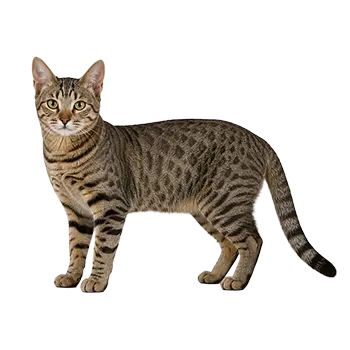

The Dragon Li retains predatory instincts that are remarkably close to those of its wild ancestors. Developed as a natural breed over centuries of self-selection in rural China, these cats were historically valued for their exceptional mousing ability — a role that required sharp reflexes, sustained focus, and patient stalking behavior. These traits have not been diluted through selective breeding, and they define the kind of play that a Dragon Li finds genuinely engaging versus merely tolerable.
Play for the Dragon Li is not optional enrichment — it is a behavioral necessity. Without adequate outlets for hunting-related behaviors, these cats frequently develop problems ranging from destructive scratching and furniture ambushing to nocturnal hyperactivity and excessive vocalization. A Dragon Li that seems restless, aggressive toward ankles, or prone to knocking objects off surfaces is almost certainly under-stimulated rather than poorly behaved.
The breed's play style tends toward the methodical rather than the frenetic. While some breeds engage in brief, explosive bursts of activity followed by disinterest, the Dragon Li is more likely to display sustained stalking sequences — crouching low, tracking movement with intense focus, creeping forward incrementally, and then executing a precise pounce. Toys and play strategies that accommodate this full predatory sequence are far more satisfying to the cat than those that skip straight to the chase.
Daily interactive play sessions are essential and should total at least 20–30 minutes for an adult Dragon Li, ideally split into two or three sessions distributed throughout the day. Evening play before the last meal of the day is particularly effective at burning off energy and promoting a restful overnight period. The timing mirrors natural hunting patterns — stalk, catch, eat, groom, sleep — and following this sequence at the end of the day can significantly reduce nighttime disruptive behavior.