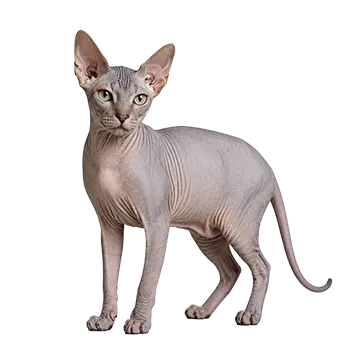

Play Style & Drive

The Donskoy is one of the more playful and interactive cat breeds, combining high intelligence with genuine athleticism. This breed retains its kitten-like playfulness well into adulthood, and many Donskoy owners report that their cats actively initiate games, fetch toys, and seem to understand the concept of turn-taking during interactive play. Understanding this play profile is essential for selecting toys that will actually hold your cat's attention.

Prey drive in the Donskoy tends to be moderate to high, with a strong preference for toys that simulate the movement patterns of small prey animals. Quick, erratic movements trigger the most enthusiastic hunting responses, while slow or stationary targets may be ignored after a brief investigation. This breed is particularly responsive to toys that combine visual movement with sound — rustling, crinkling, or chirping elements add an extra layer of engagement.

The Donskoy's intelligence means it can become bored with toys more quickly than less cognitively demanding breeds. A toy that fascinates a Donskoy on day one may sit untouched by day three if it offers no variability. Rotating toys in and out of availability on a weekly basis helps maintain novelty, and investing in toys with adjustable difficulty or multiple interaction modes extends their useful lifespan.

Social play is a hallmark of the Donskoy temperament. This breed thrives on interactive play sessions with its owner rather than solitary play alone. While automated and self-directed toys have their place, they should supplement rather than replace daily hands-on play. Aim for at least two dedicated interactive play sessions of fifteen minutes each to satisfy the Donskoy's social and physical needs.

Interactive & Puzzle Toys

Puzzle toys are arguably the most important enrichment category for the Donskoy. This breed's intelligence demands mental stimulation, and puzzle feeders, treat-dispensing balls, and multi-step problem-solving toys channel that brainpower into constructive activity. Without adequate mental challenges, the Donskoy may redirect its cognitive energy into mischief — opening cabinets, manipulating door handles, or dismantling household objects.

Treat-dispensing puzzle toys that require the cat to slide, lift, or rotate components to access hidden food rewards work exceptionally well with the Donskoy. Start with simpler designs and progress to more complex multi-step puzzles as your cat masters each level. Many Donskoy owners are surprised at how quickly their cats solve puzzles that are marketed as advanced-level challenges for other breeds.

Interactive wand toys remain the gold standard for direct play between owner and cat. Choose wands with interchangeable attachments — feathers, fabric strips, leather tassels — so you can vary the prey simulation from session to session. The Donskoy responds well to a hunting sequence that mimics natural predatory behavior: stalk, chase, pounce, and catch. Allow your cat to successfully capture the lure regularly to prevent frustration.

Electronic interactive toys that move unpredictably across the floor or project laser-like patterns onto walls can supplement owner-led play when you are busy or away. However, ensure any electronic toy provides a tangible target the cat can eventually catch and "kill." Endless chasing without a capture moment can create anxiety in some cats. Pair electronic chase toys with a physical treat reward at the end of the play session.

Chew Toys & Durability

While cats are not typically aggressive chewers in the same way dogs are, the Donskoy does engage in chewing behavior, particularly during teething in kittens and as a stress-relief mechanism in adults. Providing appropriate chew toys prevents your Donskoy from targeting household items like cables, shoe laces, or fabric.

Look for chew toys made from cat-safe materials such as natural rubber, woven cotton, or compressed catnip. Avoid toys with small detachable parts, button eyes, ribbon attachments, or plastic components that could break off and become choking hazards. The Donskoy's dexterous paws make it adept at pulling apart toy components that other cats might ignore, so durability testing is important before leaving any toy with your cat unsupervised.

Catnip-infused chew toys serve a dual purpose, providing both a chewing outlet and an aromatic enrichment experience. Approximately two-thirds of cats respond to catnip, and the Donskoy breed does not appear to differ from the general population in this regard. For cats that do respond, catnip toys can provide brief but intense periods of engagement followed by a satisfying cooldown. Silver vine is an effective alternative for cats that are indifferent to catnip.

Dental health chew toys designed for cats can contribute to oral hygiene, though they should not replace regular dental care. Textured surfaces that massage gums and help dislodge plaque are a practical bonus feature in a chew toy. Replace chew toys as soon as they show significant wear, fraying, or loss of structural integrity to prevent ingestion of toy materials.

Fetch & Active Play Toys

The Donskoy is one of the cat breeds most likely to engage in fetch, a behavior more commonly associated with dogs. Many Donskoys will spontaneously retrieve small thrown objects and return them to their owner, and this natural inclination can be encouraged and developed through consistent play sessions. Lightweight balls, crinkle balls, and small soft toys are ideal fetch objects for this breed.

Ball toys in various textures and sizes provide versatile active play options. Foam balls are gentle enough for indoor play and quiet enough for apartment living, while ping-pong balls on hard floors create the erratic bouncing movement that triggers the Donskoy's hunting instincts. Keep a variety available and observe which types your individual cat prefers — preferences can be surprisingly specific.

Track-and-ball toys, where a ball circulates inside a contained track that the cat bats with its paws, offer sustained solo play opportunities. These toys appeal to the Donskoy's combination of physical energy and problem-solving interest, as the cat must figure out the right angle and force to keep the ball moving. Models with multiple levels or interchangeable track configurations hold interest longer than simple single-loop designs.

Spring-mounted toys that bob and bounce when struck provide immediate physical feedback that many Donskoys find deeply satisfying. Mount these on a stable base to prevent tipping, and choose models with soft, rounded striking surfaces. Because the Donskoy plays with exposed paws and skin, avoid toys with sharp edges, exposed metal components, or rough surfaces that could cause abrasion during vigorous batting.

Comfort & Companion Toys

The Donskoy's affectionate, people-oriented temperament means this breed can experience genuine loneliness and separation anxiety when left alone. Comfort toys — soft, warmth-retaining plush items — can provide a measure of soothing presence during periods of solitude. Some Donskoys bond with a specific plush toy and carry it around, knead on it, or sleep curled against it.

Microwavable warming toys combine comfort with the thermal support that hairless cats crave. These plush companions contain grain or gel inserts that retain heat after a brief time in the microwave, providing a warm cuddle buddy that mimics the body heat of a resting companion animal. They are especially useful during cold weather or for Donskoys that spend time alone during the workday.

Heartbeat-simulating toys, originally designed for puppies, have found a following among hairless cat owners. The rhythmic pulse can calm anxious cats and may help kittens transitioning to a new home feel less isolated. While not every Donskoy will respond to a heartbeat toy, those that do often show reduced stress behaviors such as excessive vocalization, overgrooming, or restless pacing.

When selecting comfort toys, fabric safety is paramount. The Donskoy's bare skin comes into prolonged contact with comfort toy surfaces, so materials should be hypoallergenic, non-toxic, and free of loose fibers or threads that could irritate skin or be ingested during kneading. Machine-washable construction is essential, as comfort toys accumulate skin oils and need frequent laundering to remain hygienic.

DIY & Budget Options

Some of the most engaging toys for the Donskoy cost nothing at all. A crumpled ball of paper, a cardboard box with holes cut into the sides, or a paper bag with the handles removed can provide extended entertainment for this curious, imaginative breed. The novelty of a simple household item often outperforms expensive commercial toys, at least in the short term.

Cardboard boxes deserve special mention as an enrichment staple. The Donskoy's love of enclosed spaces and its natural curiosity make boxes irresistible. Stack multiple boxes together, cut connecting holes between them, and you have a custom tunnel-and-cave system that your cat will explore for days. Replace boxes as they wear out — the arrival of a fresh box is itself an enrichment event for most cats.

DIY puzzle feeders can be constructed from muffin tins covered with tennis balls, egg cartons with treats hidden in the compartments, or toilet paper rolls folded shut with kibble inside. These homemade puzzles are effective mental enrichment tools and allow you to customize difficulty to your Donskoy's skill level. Increase complexity gradually by adding obstacles, requiring multiple steps, or hiding the puzzle itself in an unexpected location.

One important caution with DIY toys: always supervise initial interactions and inspect homemade items for safety hazards. Remove staples, tape, string, rubber bands, and any small components that could be swallowed. Avoid foil and cellophane, which pose ingestion risks. The goal is to provide stimulation through simple, safe objects that leverage the Donskoy's natural curiosity without introducing physical dangers.

Always consult a qualified professional before making any health-related decisions. This content is provided for informational reference only and should not replace professional guidance specific to your animal.