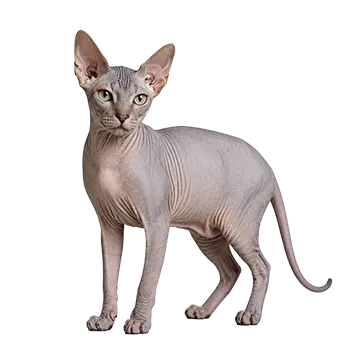

Harnesses, Collars & Leashes

Traditional collars are generally not the best choice for the Donskoy. Without fur to cushion the collar against the neck, even soft fabric designs can cause chafing, irritation, and pressure marks on exposed skin. If a collar is necessary for identification tags, choose the widest, softest option available — rolled leather or padded neoprene designs distribute pressure more evenly than narrow nylon webbing.

Harnesses are the preferred restraint for leash walks and outdoor excursions with a Donskoy. A well-fitted harness distributes force across the chest and shoulders rather than concentrating it at the neck, which is both safer and more comfortable for a hairless cat. Look for harness designs with wide, padded straps and smooth interior linings that won't rub against bare skin during movement.

Fit is critical when selecting a harness for the Donskoy. This breed's muscular build and lack of fur means standard sizing charts may not apply accurately. Measure your cat's chest circumference snugly and compare against the manufacturer's size guide, erring toward the smaller size if your cat falls between two options — a loose harness on a determined Donskoy is an escape waiting to happen. Adjustable harnesses with multiple sizing points offer the most customizable fit.

Leash selection should prioritize lightweight materials that don't weigh down the harness or restrict the cat's natural movement. A four-to-six-foot lightweight nylon or cotton leash provides adequate control without excess bulk. Avoid retractable leashes for cats, as the sudden tension when the line reaches its limit can startle or injure a small animal. Bungee-style leashes with gentle elasticity absorb sudden movements more safely.

Grooming Tools

Grooming a hairless cat is fundamentally different from grooming a coated breed, but it is not less demanding. The Donskoy's skin produces the same oils that a furred cat's coat would normally absorb and distribute, and without fur to wick away these oils, they accumulate on the skin surface. Regular bathing — typically once a week or every two weeks — is necessary to prevent oil buildup, blackheads, and skin infections.

Bathing supplies for the Donskoy should include a gentle, pH-balanced cat shampoo free of harsh detergents, fragrances, and dyes. Human shampoos are not appropriate, as feline skin has a different pH balance. Some owners use hypoallergenic baby wipes for quick cleanups between baths, focusing on skin folds, between toes, and around the face where oils tend to concentrate most heavily.

Ear care requires specific attention in the Donskoy. Without fur to filter debris, hairless cats often produce more visible ear wax and are more prone to ear dirt accumulation. A veterinary-approved ear cleaning solution and soft cotton pads should be used weekly to gently clean the outer ear canal. Never insert cotton swabs into the ear canal itself, as this risks pushing debris deeper or damaging the delicate inner ear structures.

Nail care is essential and typically needed every one to two weeks. The Donskoy's nails can accumulate a waxy, oily residue between the nail and the nail bed that coated cats do not experience as visibly. During nail trimming sessions, gently clean around each nail with a warm, damp cloth to remove this buildup. A quality pair of cat-specific nail clippers with a sharp, clean cutting edge makes the process quick and comfortable for both you and your cat.

Bowls & Feeders

Bowl material matters for the Donskoy. Stainless steel and ceramic are the preferred choices for both food and water dishes. Plastic bowls can harbor bacteria in surface scratches over time and have been associated with feline acne — a particular concern for a breed whose skin is already prone to oil-related issues. If you use ceramic, ensure the glaze is lead-free and food-safe, and discard any bowls that develop cracks where bacteria can colonize.

Shallow, wide bowls are generally more comfortable for cats than deep, narrow designs. Cats dislike having their whiskers press against bowl sides while eating — a phenomenon known as whisker fatigue. While the Donskoy has normal whiskers despite its hairless body, the preference for wide bowls remains. Flat saucer-style dishes work well for wet food, while slightly lipped bowls contain dry kibble without restricting access.

Water intake is a priority for the Donskoy due to its elevated metabolic rate and the skin hydration needs of a hairless breed. Cat water fountains that circulate and filter water encourage more frequent drinking than still water bowls. The movement and sound of flowing water attracts feline interest, and the filtration removes debris, hair, and saliva that can make standing water less appealing over the course of a day.

Elevated feeding stations bring bowls to a more comfortable eating height, reducing neck strain during meals. This is a modest ergonomic improvement that benefits cats of all breeds but is particularly worthwhile for the Donskoy if it eats enthusiastically or tends to push food around the bowl. Elevated stations with non-slip bases prevent the bowl from sliding across the floor during mealtimes.

Travel Gear

A high-quality carrier is the most essential travel accessory for the Donskoy. For veterinary visits and short trips, a hard-sided carrier with a top-loading option provides security and easy access. For longer travel, soft-sided carriers with mesh ventilation panels offer more comfort and flexibility. Regardless of style, the carrier should have a smooth interior lining — avoid carriers with rough fabric or exposed hardware that could scratch exposed skin.

Temperature management during travel is more critical for the Donskoy than for most cats. In cold weather, line the carrier with a fleece blanket and consider adding a microwavable warming disc wrapped in cloth. In warm weather, ensure the carrier has adequate ventilation and never leave a hairless cat in a vehicle, even briefly — the combination of enclosed heat and no fur insulation creates a dangerous situation faster than it would for a coated cat.

For car travel, secure the carrier with a seatbelt to prevent sliding and tipping during stops and turns. Position the carrier away from direct sunlight through windows, as the Donskoy's skin is susceptible to UV exposure even through glass on extended drives. A light cloth draped over the sun-facing side of the carrier provides shading without restricting airflow.

If you travel frequently with your Donskoy, invest in a portable travel kit that includes a collapsible water bowl, a small supply of the cat's regular food, any medications or supplements, grooming wipes, a familiar blanket or comfort item, and copies of veterinary records. Having these items pre-packed reduces stress during departure and ensures your cat's needs are met consistently away from home.

Safety & ID

Microchipping is the most reliable form of permanent identification for the Donskoy. Unlike collars and tags, which can be removed or lost, a microchip provides a permanent link between your cat and your contact information in veterinary and shelter databases. The procedure is quick, minimally invasive, and performed during a routine veterinary visit. Keep your registration information current with the microchip company, as the chip is only useful if the contact details are accurate.

If you use an ID tag in addition to a microchip, attach it to a breakaway collar or directly to the harness your Donskoy wears during outdoor time. Breakaway collars are designed to release under pressure if the cat becomes snagged on an object, preventing strangulation. For a hairless cat that wears a collar only occasionally, this safety mechanism is non-negotiable — the Donskoy's curious, active nature increases the likelihood of entanglement scenarios.

Window and balcony safety is a serious concern for any indoor cat, and the Donskoy's boldness and agility compound the risk. Secure all windows with sturdy screens that can withstand a cat's weight pressing against them. Balconies should be enclosed with cat-safe netting if the Donskoy has access to the space. Falls from even modest heights can cause severe injury, and a hairless cat sustains worse skin trauma from a fall than a furred cat would.

Poison-proofing your home involves identifying and securing common household toxins. Certain houseplants — including lilies, which are highly toxic to cats — must be removed entirely. Cleaning products, medications, essential oils, and antifreeze should be stored in latched cabinets. The Donskoy's intelligence and dexterity mean it can open unsecured cabinet doors and drawers, so childproof latches are a worthwhile investment for any cabinet containing hazardous materials.

Seasonal Gear

Cat clothing is not merely cosmetic for the Donskoy — it serves a genuine thermoregulatory function. During cooler months, lightweight sweaters, vests, or bodysuits help the Donskoy retain body heat and reduce the caloric burden of thermoregulation. Look for garments made from soft, breathable fabrics like cotton jersey or lightweight fleece that provide warmth without overheating or restricting movement.

Fit and construction quality determine whether a cat will tolerate clothing. Seams should be flat or positioned on the exterior of the garment to prevent rubbing against bare skin. Closures should be secure but easy to manipulate — snaps or gentle hook-and-loop fasteners are preferable to buttons or zippers, which can catch skin. The garment should allow full range of motion for walking, jumping, and using the litter box without assistance.

Sun protection is the warm-weather equivalent of cold-weather clothing for the Donskoy. Pet-safe sunscreen formulated specifically for cats can be applied to ears, nose, and other exposed areas if the cat will have any sun exposure, though limiting direct sun is always the first line of defense. Some owners use lightweight UV-protective bodysuits during summer months if the cat uses a catio or spends time near sunny windows.

Seasonal bedding adjustments round out the Donskoy's year-round comfort. Swap heavier, insulated bedding in during autumn and remove it in late spring, replacing it with lighter cotton or bamboo fabric covers. Heated beds should be available from early fall through late spring in most climates, with the thermostat set to the lowest effective setting. This seasonal rotation of gear and bedding mirrors the natural temperature adaptations that a furred cat's coat would provide automatically.

Always consult a qualified professional before making any health-related decisions. This content is provided for informational reference only and should not replace professional guidance specific to your animal.