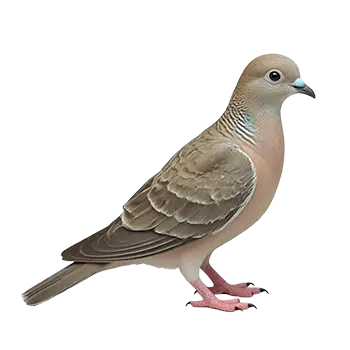

Zebra Doves are not typically thought of as playful birds in the way parrots are, and this misconception leads many owners to provide little or no enrichment beyond food and a clean cage. In reality, Zebra Doves are active, curious ground foragers that spend hours each day in the wild searching for seeds, exploring substrate, dust bathing, and interacting with their environment. A captive bird deprived of these outlets does not simply sit contentedly on a perch. It becomes lethargic, develops repetitive behaviors, and may show signs of chronic stress including feather damage and loss of appetite.
The key to understanding Zebra Dove enrichment is recognizing that their interaction with the world is primarily terrestrial and tactile rather than aerial and manipulative. Parrots explore objects by gripping them with their feet and dismantling them with powerful beaks. Doves explore by walking through, pecking at, and standing on things. Enrichment strategies that work brilliantly for a cockatiel or conure, such as hanging puzzle toys and foraging wheels, are largely irrelevant to a dove that has no interest in climbing or manipulating suspended objects.
Effective dove enrichment focuses on the enclosure floor and creates opportunities for investigation, movement, and sensory variety. Changing the visual environment, introducing new textures underfoot, scattering food in ways that require searching, and providing safe materials to peck and explore all tap into natural behaviors that keep the bird psychologically engaged. The best enrichment strategies are simple, inexpensive, and closely modeled on the activities that occupy wild Zebra Doves throughout the day.
Social enrichment is also a significant component of Zebra Dove welfare. These birds are flock-oriented in the wild and derive comfort from the presence of conspecifics. A single dove benefits from regular visual and auditory contact with its owner and from being housed in an area with moderate household activity. Pairs and small groups naturally enrich each other through social behaviors including allopreening, courtship displays, and quiet vocalizations. For owners unable to house multiple doves, providing a mirror or placing the cage where the bird can observe daily routines offers partial social substitution.