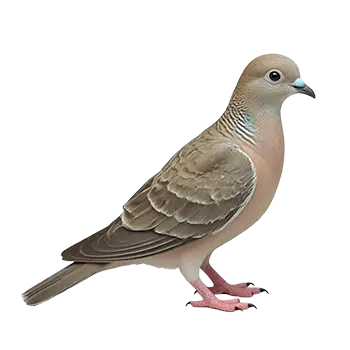

Nutritional Needs

Zebra Doves are primarily granivorous birds whose wild diet consists almost entirely of small grass seeds foraged from the ground. In captivity, replicating this dietary pattern requires a thoughtful selection of seed blends that match the bird's small beak size and digestive physiology. Unlike hookbills that crack and husk large seeds, Zebra Doves swallow seeds whole or nearly so, relying on their muscular gizzard to grind food with the help of ingested grit. This fundamental difference in feeding mechanics means that products designed for parrots or finches are often poorly suited to doves.

Protein requirements for Zebra Doves are modest compared to many other captive bird species. An adult dove in maintenance condition generally thrives on a diet containing roughly twelve to fifteen percent protein. Breeding birds, juveniles in their growth phase, and molting adults have elevated protein needs that may reach eighteen percent, but exceeding this range can stress the kidneys and liver over time. Seed mixes formulated for doves typically fall within the appropriate range without supplementation, though owners should verify protein content on product labels rather than assuming all dove mixes are equivalent.

Fat content is another consideration that distinguishes dove nutrition from that of psittacines. Zebra Doves are small-bodied birds with relatively high metabolic rates, and they benefit from moderate fat levels to sustain energy throughout the day. However, an over-reliance on oil-rich seeds like sunflower or safflower, which are staples in many parrot mixes, can lead to hepatic lipidosis and obesity in doves. The ideal fat content for a Zebra Dove seed mix falls between four and eight percent, with the bulk of calories coming from carbohydrate-rich grass seeds and millets.

Minerals play a critical role in Zebra Dove health, particularly calcium and phosphorus. Doves that are laying eggs require substantially more calcium than non-breeding birds, and even males benefit from consistent access to mineral sources to support bone density and gizzard function. The calcium-to-phosphorus ratio in the overall diet should approximate two to one, a balance that straight seed mixes rarely achieve on their own. Supplemental calcium sources such as crushed oyster shell, cuttlebone, and mineral grit help close this gap and should be considered essential components of the feeding program rather than optional extras.

What to Look For

The single most important criterion when selecting a Zebra Dove food product is seed size. Zebra Doves have small, delicate beaks adapted for picking up tiny seeds from flat surfaces. A mix dominated by large seeds like safflower, striped sunflower, or whole corn will be largely ignored or impossible for the bird to consume. The best dove mixes feature small millets, canary grass seed, and fine-grade grains as their primary components, with any larger seeds cracked or processed to a manageable size.

Ingredient freshness is a quality marker that separates premium seed mixes from budget offerings. Seeds are living organisms that degrade over time, losing nutritional value and developing rancidity as their oils oxidize. Fresh seed has a clean, slightly sweet smell and a plump appearance, while stale seed looks shrunken and may carry a musty or sharp odor. Purchasing from retailers with high turnover, checking lot dates when available, and storing opened bags in airtight containers all help ensure the bird receives maximum nutritional benefit from its food.

Avoid products that rely heavily on filler ingredients to reduce cost. Oat groats, wheat, and dried corn are common fillers in lower-quality mixes. While none of these ingredients are harmful in small amounts, a mix where they dominate the ingredient list provides a narrow nutritional profile and poor value. Similarly, mixes that contain large quantities of grit, vitamin pellets, or colored kibble mixed directly into the seed are often designed to appear more complete than they actually are. Grit and supplements are better offered separately so the bird can regulate its own intake.

For owners seeking the highest quality, single-ingredient seed purchases allow complete control over the blend. Buying white proso millet, Japanese millet, canary grass seed, and niger seed individually and mixing them in custom proportions ensures freshness and lets the owner adjust ratios based on the bird's preferences and nutritional needs. This approach requires more effort than buying a pre-mixed product, but it eliminates concerns about filler ingredients, stale components, and unknown sourcing.

Recommended Seed Mixes

A well-formulated dove seed mix forms the caloric foundation of a captive Zebra Dove's diet, typically accounting for seventy to eighty percent of daily intake. The ideal mix centers on small millets, which closely resemble the grass seeds these birds consume in the wild across Southeast Asia and the Pacific. White proso millet is the most commonly available and widely accepted variety, but a quality mix should also include red millet, Japanese millet, and panicum millet to provide nutritional diversity and textural variety.

Canary grass seed is another essential component of a good dove mix. Slightly larger and more elongated than millet, canary seed offers a different amino acid profile and fat content that complements millet-heavy blends. It is well-accepted by virtually all dove species and is easily processed by the Zebra Dove's gizzard. A mix containing twenty to thirty percent canary seed alongside fifty to sixty percent mixed millets provides an excellent baseline that can be further customized with smaller additions of other seeds.

Niger seed, sometimes labeled as thistle seed, is a valuable inclusion at five to ten percent of the total mix. It is oil-rich relative to millets and provides essential fatty acids that support feather quality and skin health. Because of its higher fat content, niger seed should remain a secondary ingredient rather than a dominant one. Similarly, small amounts of flax seed or perilla seed can contribute omega-three fatty acids, though these should collectively represent no more than five percent of the mix to keep overall fat levels appropriate.

Some commercially available dove mixes include small pellets or crumbles designed to deliver vitamins and minerals that seeds alone may lack. While Zebra Doves are less inclined to accept pelleted food than parrots, finely ground or micro-pellet formulations mixed into the seed blend may be consumed incidentally during normal feeding. These fortified mixes can serve as a nutritional safety net, particularly for owners who find it difficult to provide a consistent rotation of fresh foods. However, the pellet component should not displace more than ten percent of the total seed volume, as excessive pellet content tends to be sorted out and wasted.

Fresh Foods and Supplements

While seeds form the dietary core for Zebra Doves, fresh foods provide micronutrients, hydration, and dietary variety that seeds cannot deliver alone. Leafy greens are the most universally accepted fresh offering for doves. Finely chopped romaine lettuce, dandelion greens, chickweed, and spinach are typically eaten with enthusiasm when scattered on a flat feeding surface that mimics ground foraging. Greens should be washed thoroughly to remove pesticide residues and offered in small enough quantities that they are consumed within a few hours, preventing bacterial growth on uneaten portions.

Finely grated vegetables such as carrot, broccoli florets, and cucumber can supplement the greens rotation, though Zebra Doves tend to be more conservative in their vegetable acceptance than parrots. Introducing new foods gradually and presenting them alongside familiar items increases the likelihood of acceptance. Some keepers find success mixing finely diced vegetables into a slightly moistened seed blend, which encourages the bird to sample new items while eating its regular diet.

Grit is a dietary essential for Zebra Doves, not merely a supplement. Because doves swallow seeds whole, their gizzards require small, hard particles to mechanically break down seed hulls and access the nutrients inside. Insoluble grit, typically composed of crushed granite or flint, provides the grinding material the gizzard needs. Solite grit, made from crushed oyster shell or limestone, dissolves in the digestive tract and serves as a calcium source. A blend of both types, offered in a small dish that the bird can access freely, allows the dove to self-regulate its grit intake according to its digestive needs.

Calcium supplementation beyond grit is particularly important for breeding hens, which draw heavily on calcium reserves during egg formation. Liquid calcium supplements added to drinking water provide a bioavailable source that is absorbed efficiently, though care must be taken to change supplemented water daily to prevent bacterial contamination. Cuttlebone mounted within easy reach offers another calcium source that also satisfies the dove's instinct to peck and nibble. Vitamin D3, which facilitates calcium absorption, is synthesized through exposure to unfiltered sunlight or full-spectrum lighting, making these environmental provisions an indirect but critical component of nutritional management.

Treats and Foraging Foods

Treats for Zebra Doves are less elaborate than those marketed for parrots, reflecting the dove's simpler palate and ground-foraging habits. Spray millet is the most popular and readily accepted treat for nearly all dove species. It provides the same nutritional profile as loose millet but offers the added enrichment of allowing the bird to pick seeds directly from the natural seed head, an activity that occupies time and stimulates natural foraging behavior. Spray millet can be laid flat on the enclosure floor or clipped to the side of the cage at a low height to encourage the bird to forage in a natural posture.

Egg food, a soft mixture designed to provide concentrated protein and fat, is a valuable treat during breeding season, molting periods, and for juvenile birds still developing their adult plumage. Commercial egg food products formulated for softbills and doves are available as dry crumbles that can be offered plain or moistened slightly with water. Some keepers prepare their own egg food by combining hard-boiled egg crumbled finely with dry breadcrumbs and a small amount of grated carrot, creating a fresh mixture that most doves find highly palatable.

Live or dried insects represent an occasional treat that can provide valuable animal protein. While Zebra Doves are not insectivorous by nature, wild populations do consume small invertebrates opportunistically, particularly during the breeding season when protein demands increase. Finely chopped mealworms or small waxworms scattered among seed can trigger enthusiastic foraging behavior. Dried insects marketed for wild bird feeding can also be offered, though acceptance varies between individual birds and may require repeated exposure before the dove recognizes them as food.

Foraging trays filled with a thin layer of clean soil, sand, or coconut fiber and seeded with scattered millet provide environmental enrichment that doubles as a feeding activity. Zebra Doves are ground foragers by nature and will spend extended periods walking through substrate material, picking out seeds and grit particles in a manner that closely mirrors their wild behavior. This type of foraging enrichment reduces boredom-related stress and encourages physical activity, making it one of the most effective treat and enrichment strategies available for this species.

Foods to Avoid

Several categories of food are dangerous or inappropriate for Zebra Doves and should be entirely excluded from the diet. Avocado tops the list of toxic foods for birds, as all parts of the fruit contain persin, a fungicidal toxin that causes myocardial necrosis and respiratory distress in avian species. Even small quantities can be lethal, and the relatively small body mass of a Zebra Dove means that a dose insignificant to a larger bird could prove fatal. Avocado should never be present in any area where the bird forages or feeds.

Chocolate and caffeine-containing foods are toxic to all birds, including doves. Theobromine and caffeine act as cardiac and neurological stimulants that a bird's metabolism cannot safely process. Similarly, alcohol in any form, including fermented fruit that may have begun to spoil, can cause rapid intoxication, organ damage, and death in a bird as small as a Zebra Dove. All food offered to doves should be fresh and free of any fermentation.

Salted, seasoned, or heavily processed human foods are inappropriate even when the base ingredient might otherwise be safe. Dove kidneys are not designed to handle concentrated sodium loads, and a single pretzel or salted cracker can deliver more sodium than a Zebra Dove should consume in an entire week. Sugar-laden foods encourage yeast overgrowth in the crop and contribute to metabolic imbalances. Bread, while not acutely toxic, offers essentially no nutritional value to doves and can cause crop impaction if consumed in large quantities, particularly when it absorbs moisture and swells.

Certain seeds that are staples in other bird diets can be problematic for Zebra Doves when offered in excess. Raw, unprocessed flax seed in large quantities contains cyanogenic glycosides that release small amounts of hydrogen cyanide during digestion. While the trace amounts in a typical seed mix pose no danger, a diet disproportionately heavy in flax should be avoided. Apple seeds, cherry pits, and the seeds of other stone fruits contain amygdalin and should be removed before offering fruit. Dried beans and legumes must be thoroughly cooked before feeding, as raw varieties contain lectins that are toxic to birds.

Feeding Schedule and Portions

Zebra Doves are consistent, methodical feeders that do best with a predictable daily routine. In the wild, these birds feed most actively during the first two hours after dawn and again in the late afternoon before roosting, spending the middle of the day resting and digesting in sheltered areas. A captive feeding schedule that mirrors this natural rhythm, with fresh seed offered in the morning and replenished or supplemented in the late afternoon, aligns with the bird's metabolic expectations and promotes steady energy levels throughout the day.

Daily seed portions for a single adult Zebra Dove typically range from one to two level tablespoons, depending on the bird's size, activity level, and whether it has access to an outdoor flight or is housed in a smaller indoor cage. Breeding pairs and birds housed in outdoor aviaries where they expend more energy maintaining body temperature may require portions at the upper end of this range. It is better to offer slightly more than needed and discard uneaten seed daily than to restrict intake and risk underfeeding, as doves have limited fat reserves and can lose condition rapidly during even brief periods of food scarcity.

Fresh foods and greens should be provided in the morning, ideally in a separate dish from the seed supply. A small portion roughly equivalent to a tablespoon of chopped greens or grated vegetable is sufficient for a single bird. Uneaten fresh food should be removed within three to four hours to prevent spoilage, particularly in warm environments where bacterial growth accelerates quickly. Grit and cuttlebone should be available at all times in a dedicated container, refreshed weekly or whenever contaminated by droppings.

Water must be available continuously and changed at least twice daily. Zebra Doves drink by a suction method unique to the pigeon and dove family, submerging their bills and drawing water upward without tilting their heads back. This drinking style means they prefer water dishes with a depth of at least half an inch and a width that allows comfortable bill insertion. Shallow, wide dishes are ideal and should be placed away from perches to minimize fecal contamination. In warm weather or heated indoor environments, water can become a bacterial breeding ground within hours, making frequent changes a nonnegotiable element of daily husbandry.

Always consult a qualified professional before making any health-related decisions. This content is provided for informational reference only and should not replace professional guidance specific to your animal.