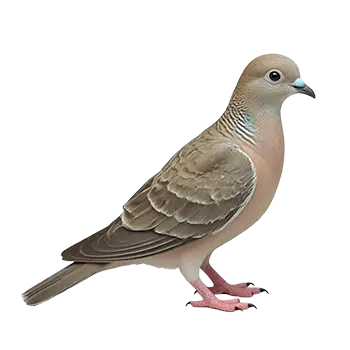

Zebra Doves are ground-oriented birds that spend the majority of their waking hours walking, foraging, and resting on horizontal surfaces rather than climbing or swinging the way parrots do. This behavioral profile has direct implications for enclosure design. Horizontal floor space is far more valuable to a Zebra Dove than vertical height, and an enclosure that prioritizes width and depth over towering dimensions will produce a more comfortable, behaviorally appropriate environment. Understanding this distinction is the first step toward selecting housing that truly serves the bird rather than simply containing it.
These doves are also surprisingly fast in short bursts of flight, and they startle easily when disturbed by sudden movements or loud noises. A cage that is too cramped forces a frightened dove to crash into walls and bars during panic flights, which can result in broken blood feathers, bruised keels, and chronic stress. Providing enough room for the bird to take off, fly a short distance, and land safely is a practical safety requirement, not merely a comfort preference. For this reason, minimum cage dimensions for Zebra Doves are considerably larger than what their modest body size might suggest.
Ventilation and airflow are important considerations that are sometimes overlooked in favor of aesthetics or price. Zebra Doves are susceptible to respiratory infections, and stagnant, humid air within an enclosed space accelerates the growth of mold, fungal spores, and airborne bacteria. Enclosures with solid walls on three or more sides, while sometimes marketed as draft-free or cozy, can trap moisture and create unhealthy air quality. Wire or mesh enclosures that allow free air circulation are generally preferable, provided the bird is protected from direct drafts and extreme temperature swings.
The social nature of Zebra Doves adds another layer to housing decisions. These birds are gregarious in the wild and thrive in the company of their own species. Housing a single Zebra Dove is possible but requires the owner to provide substantial social interaction to compensate for the absence of avian companionship. Pairs and small groups are more natural arrangements, but they demand proportionally larger enclosures to prevent territorial friction and ensure each bird has access to food, water, and resting spots without competition.