
Enrichment Needs

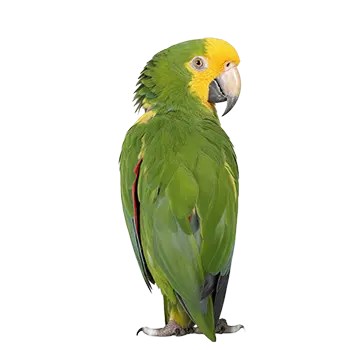
Yellow-Crowned Amazons are among the more intellectually demanding companion parrots, possessing a curiosity and manipulative dexterity that require consistent environmental stimulation. In the wild, these birds spend the majority of their waking hours engaged in activities that challenge them physically and cognitively — foraging through dense vegetation, manipulating fruit and seed pods with their beaks and feet, navigating complex canopy structures, and engaging in social play with flock members. Captivity eliminates most of these outlets, and without deliberate enrichment, the resulting boredom manifests as feather-destructive behavior, excessive screaming, stereotypic movements, and aggression.

The enrichment philosophy for this species should center on replicating the problem-solving and physical engagement that wild life provides rather than simply filling the cage with objects. A toy is only enriching if it elicits active engagement — a colorful hanging object that the bird ignores after the first day provides no more enrichment than an empty cage. Yellow-Crowned Amazons tend to prefer toys they can destroy, manipulate with their feet, or solve for a food reward, and understanding these preferences helps focus purchasing decisions on products that will actually be used.

Enrichment needs change over the course of the bird's life and across different behavioral states. Juvenile Yellow-Crowned Amazons are typically more exploratory and accepting of novel objects than mature adults, who may become neophobic and refuse to interact with unfamiliar items. Hormonal birds during breeding season often redirect their energy toward destructive chewing and territorial behavior, which can be channeled productively with the right enrichment materials. Older birds may develop physical limitations that require adaptations in toy type and placement. A static enrichment program that never evolves fails to meet a bird that is itself constantly changing.

The number of toys in the cage at any given time should balance stimulation against spatial freedom. Three to five toys of different types is generally appropriate for a well-sized Amazon cage, with additional items rotated in on a regular schedule. Overcrowding the cage with toys reduces the bird's ability to move freely and can create a cluttered, stressful environment rather than an enriching one. The quality of engagement matters far more than the quantity of objects.

Foraging Toys

Foraging toys represent the single most important category of enrichment for Yellow-Crowned Amazons because they address the fundamental behavioral need that captivity most severely curtails. Wild Amazons spend four to six hours daily searching for, accessing, and processing food. A captive bird with an open food dish can consume its entire daily ration in fifteen minutes, leaving the remaining waking hours without this primary occupation. Foraging toys extend feeding time by requiring the bird to work for its food, transforming a passive consumption event into an active problem-solving exercise.

Entry-level foraging toys include stainless steel or acrylic containers with openings that require the bird to extract food pieces using its beak or tongue. These are appropriate starting points for birds new to foraging enrichment because they present a visible reward with a straightforward access challenge. Wrapping food items in plain paper or placing them inside loosely folded cardboard tubes provides a similar introductory challenge at minimal cost. The key is ensuring that the initial difficulty level allows the bird to succeed quickly enough to remain motivated rather than becoming frustrated and disengaging.

Intermediate foraging devices introduce mechanical elements — sliding doors, rotating covers, pull-out drawers, or threaded lids — that require the bird to perform a specific action sequence to access the food reward. Yellow-Crowned Amazons excel at this level of complexity because their strong beaks and dexterous feet allow them to manipulate hardware that would defeat smaller parrot species. Products constructed from stainless steel and food-grade acrylic withstand the mechanical forces an Amazon applies better than wooden or thin plastic alternatives, which tend to be bypassed through destructive force rather than solved through the intended mechanism.

Advanced foraging systems present multi-step challenges where the bird must complete several actions in sequence to reach the reward. Some designs incorporate elements that the bird must unscrew, slide, lift, and turn within a single device. Others distribute foraging opportunities across multiple stations within the cage, encouraging movement and exploration as part of the feeding process. Rotating between different foraging devices and varying their positions within the cage prevents the bird from developing a rote solution that eliminates the cognitive challenge. The goal is a dynamic foraging landscape where the bird genuinely works for its food every day.

Chewing and Shredding Toys

The urge to chew is deeply embedded in Amazon parrot behavior. In the wild, Yellow-Crowned Amazons use their powerful beaks to strip bark, open seed pods, excavate nesting cavities, and process hard-shelled foods. In captivity, this drive persists regardless of whether appropriate outlets are available, and a bird without sanctioned chewing materials will redirect its energy toward cage bars, perches, furniture, or its own feathers. Providing a consistent supply of chewable and shreddable materials is not optional enrichment — it is a behavioral necessity.

Wood forms the foundation of most chewing enrichment for Amazon parrots. Bird-safe softwoods like pine, balsa, and yucca provide satisfying destruction with minimal beak strain, while harder woods like manzanita and java wood offer more resistant chewing surfaces that last longer and provide greater exercise for the jaw musculature. Many commercial chew toys combine wood blocks of various sizes strung on stainless steel or nickel-plated chains, creating a multi-textured chewing station that the bird can work on from different angles. Untreated, non-toxic wood is the essential criterion — pressure-treated lumber, painted wood, and pieces from trees treated with pesticides or herbicides are all potentially dangerous.

Shreddable materials offer a different tactile experience that many Yellow-Crowned Amazons find particularly satisfying. Products made from palm leaf, seagrass, corn husk, coconut fiber, and woven rattan provide fibrous textures that the bird can grip, tear, and reduce to fragments. The destruction is the point — a shreddable toy that survives intact for weeks is either too durable for its intended purpose or not engaging enough for the bird. Budget expectations should account for the consumable nature of these products; they need regular replacement and should be viewed as an ongoing supply cost rather than a durable purchase.

Leather strips and vegetable-tanned leather pieces add another dimension to the chewing repertoire. Leather is tough enough to resist immediate destruction yet pliable enough for the bird to manipulate with its feet while chewing. Only vegetable-tanned leather should be used, as chrome-tanned leather contains heavy metals that are toxic when ingested. Leather knots, leather strips threaded through wooden beads, and leather-wrapped bundles combine the durability of leather with the destructibility of wood or other materials, creating multi-texture toys that sustain interest longer than single-material options.

Puzzle and Interactive Toys

Puzzle toys engage the Yellow-Crowned Amazon's cognitive abilities in ways that foraging and chewing toys alone cannot fully address. While foraging toys challenge the bird to access a food reward through physical manipulation, puzzle toys present problems that require observation, experimentation, and sometimes sequential reasoning to solve. The distinction matters because cognitive enrichment and physical enrichment serve different neurological needs, and a comprehensive enrichment program includes both.

Acrylic puzzle boxes with visible treats inside are among the most effective puzzle toys for Amazon parrots. The transparency allows the bird to see the reward, which maintains motivation through the problem-solving process. Designs that require the bird to slide panels, lift levers, or rotate components to open a compartment leverage the Amazon's natural dexterity and reward persistence. The difficulty level should be calibrated to the individual bird — a puzzle that is never solved provides frustration rather than enrichment, while one that is solved instantly offers no challenge. Starting with simpler puzzles and gradually introducing more complex ones as the bird develops its problem-solving repertoire is the most effective progression strategy.

Interactive toys that respond to the bird's actions provide a form of environmental feedback that static toys cannot. Musical toys that play notes or sounds when buttons are pressed, toys with moving parts that shift in response to the bird's manipulation, and mirror-based toys that create visual responses all fall into this category. Yellow-Crowned Amazons are often particularly responsive to auditory feedback, consistent with their vocal nature, and toys that produce sounds in response to interaction tend to sustain engagement longer than silent alternatives. However, mirror toys should be used cautiously and monitored for signs of obsessive interaction or territorial behavior directed at the reflection.

Foot toys — small items designed to be held in the bird's foot and manipulated — deserve specific mention because they engage a different motor pattern than hanging or mounted toys. Wooden beads, small wiffle balls, plastic chain links, and knotted leather pieces that the bird can pick up, carry, and manipulate while perched provide fine motor enrichment and can occupy a Yellow-Crowned Amazon for extended periods. These items should be small enough to grip comfortably but too large to swallow, and they should be checked regularly for pieces small enough to break off and present a choking hazard.

Some owners incorporate clicker training and trick learning as a form of interactive enrichment that requires no manufactured product at all. The training process itself — learning to associate a behavior with a reward through a bridging stimulus — engages cognitive pathways that toy-based enrichment does not fully replicate. For Yellow-Crowned Amazons, which are intelligent and generally food-motivated, short daily training sessions provide mental stimulation, strengthen the human-bird bond, and often reduce problem behaviors by giving the bird a constructive outlet for its energy and attention.

Physical Activity Toys

Physical enrichment addresses the exercise deficit inherent in captive life. Yellow-Crowned Amazons in the wild fly considerable distances daily between roosting, foraging, and socializing sites. Captive birds rarely have the opportunity for sustained flight, and without alternative physical outlets, they are prone to muscle atrophy, obesity, and cardiovascular deconditioning. Toys and play structures that encourage climbing, swinging, and wing flapping partially compensate for the absence of flight exercise.

Swings and boings are among the most effective physical activity toys for Amazons. A well-constructed parrot swing made from natural wood or stainless steel hardware provides a dynamic perching surface that engages the bird's balance and core musculature as it shifts weight and adjusts to the movement. Boing-style spiral rope perches mounted vertically or diagonally in the cage serve a similar function, requiring constant postural adjustment as the bird climbs and descends. The motion element distinguishes these from static perches and recruits muscle groups that fixed perching positions do not engage.

Playtop stands and play gyms positioned outside the cage expand the bird's physical activity zone beyond the cage walls. A quality playtop for an Amazon parrot should feature multiple levels connected by ladders or ramps, several perch positions of varying diameter, and attachment points for hanging toys. Stability is essential — a play stand that wobbles or tips when the bird moves vigorously will be abandoned quickly. The base should be heavy enough or weighted to resist toppling, and the overall footprint should be proportionate to the bird's wingspan.

Climbing structures such as rope nets, cargo-net style panels, and chain ladders encourage vertical and lateral movement that exercises the legs, feet, and wings simultaneously. These can be mounted inside large cages or suspended in a bird-safe room for out-of-cage play. Rope-based climbing structures should be inspected frequently for frayed fibers that could entangle toes, and cotton rope should be preferred over synthetic materials because natural fibers are less likely to cause intestinal obstruction if small amounts are ingested during chewing.

Rotation Strategies

Toy rotation is the practice of cycling enrichment items in and out of the cage on a regular schedule, and it is one of the most effective strategies for maintaining a Yellow-Crowned Amazon's interest in its environment. Even the most engaging toy loses its novelty over time, and a bird that has habituated to every object in its cage is functionally living in an unchanging environment regardless of how many toys are present. Systematic rotation transforms a finite collection of toys into a continuously refreshed enrichment landscape.

A practical rotation system divides the available toy inventory into three or four groups, with one group active in the cage and the remaining groups stored out of sight. Every five to seven days, one or two toys from the active group are swapped for items from the stored groups. This interval is short enough to maintain novelty but long enough for the bird to engage meaningfully with each item before it is removed. Some owners find that keeping a written or digital rotation log helps ensure that no single item is over-represented and that all enrichment categories — foraging, chewing, puzzle, and physical — remain balanced in each active rotation.

The reintroduction effect is a well-documented phenomenon in animal enrichment: an item that was previously habituated to regains novelty after a period of absence. Yellow-Crowned Amazons typically resume active engagement with a returned toy as if encountering it for the first time, provided the absence was long enough — usually two to three weeks minimum. This effect means that a relatively modest toy collection, rotated intelligently, can provide indefinite enrichment without continuous new purchases.

Novel items should be introduced gradually, particularly for adult Yellow-Crowned Amazons that may exhibit neophobia — a cautious or fearful response to unfamiliar objects. Placing a new toy near but not inside the cage for a day or two before hanging it inside allows the bird to observe and approach the item on its own terms. Forcing interaction with a new object by placing it in the bird's primary perching zone can trigger avoidance behavior that becomes difficult to reverse. Patience during the introduction phase is an investment in the toy's long-term utility as an enrichment item.

Safety Considerations

Toy safety for Yellow-Crowned Amazons requires ongoing vigilance because the same beak strength and manipulative intelligence that make these birds engaging companions also make them capable of dismantling, ingesting, or becoming entangled in products that are nominally safe for less powerful species. Every toy should be evaluated for potential hazards before it enters the cage, and ongoing inspection should continue throughout the toy's lifespan as wear changes its risk profile.

Material safety is the first consideration. Toys should be constructed from bird-safe materials including untreated natural wood, vegetable-tanned leather, stainless steel, food-grade acrylic, and natural fiber ropes. Zinc, lead, and other heavy metals are toxic to birds and can be present in cheap chain links, bells, snap hooks, and quick-link connectors. Testing hardware with a zinc test kit before introducing it to the cage is a worthwhile precaution. Painted or dyed components should use only food-grade, non-toxic colorants — if the manufacturer cannot confirm this, the item should be excluded.

Entanglement and entrapment hazards are the most common acute safety risks associated with bird toys. Loose rope fibers, frayed fabric strips, and the gap between a bell's clapper and body are all potential entanglement points for toes, beaks, and tongues. Ring-shaped toys must have openings either too small for the bird's head to enter or large enough for its entire body to pass through freely — the danger zone lies between these extremes, where the bird can push through partially but cannot withdraw. Cotton rope toys should be trimmed of loose fibers regularly and replaced when fraying becomes extensive.

Ingestion hazards arise when a bird breaks off and swallows small pieces of a toy. Yellow-Crowned Amazons are particularly capable of reducing toys to fragments, and any component small enough to be swallowed — including plastic beads, small wooden pieces, detached bell clappers, and metal fastener components — poses a risk of gastrointestinal obstruction or crop impaction. Regular inspection during rotation changes helps identify toys that have deteriorated to a hazardous state. When in doubt about whether a partially destroyed toy remains safe, replacing it is always the more conservative and appropriate choice.

Supervision requirements vary by toy type. Foraging toys with small compartments, rope-based toys, and any item with moving parts should be classified as supervised-play toys that are removed from the cage when the owner is not present to monitor interaction. Solid wood chew blocks, sturdy acrylic puzzle boxes, and heavy-gauge metal toys are generally safe for unsupervised access, though even these should be checked daily for unexpected damage. Establishing a mental category of supervised versus unsupervised toys simplifies decision-making and reduces the risk of an accident occurring during the owner's absence.

Always consult a qualified professional before making any health-related decisions. This content is provided for informational reference only and should not replace professional guidance specific to your animal.