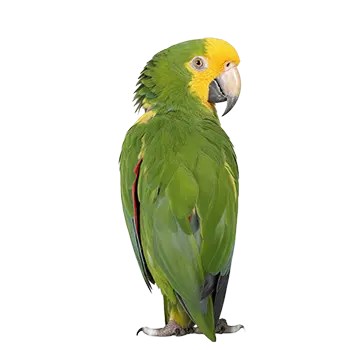

Essential Accessories Overview

Beyond the cage itself and the food that fills it, a Yellow-Crowned Amazon's daily life depends on a range of accessories that address feeding, hygiene, transport, environmental conditions, and safety. These items form the operational infrastructure of bird care — without them, even an ideal cage and a perfect diet cannot deliver a complete care experience. Approaching accessory purchases systematically rather than impulsively ensures that essential needs are covered before discretionary items enter the budget.

The accessories landscape divides into categories that map to different aspects of the bird's care routine. Feeding and watering equipment handles the mechanical delivery of food. Bathing and grooming supplies maintain the bird's physical condition. Carriers and travel gear enable safe veterinary visits and transportation. Lighting products support biological cycles and vitamin metabolism. Safety accessories protect the bird from household hazards. Each category contains both essential items that every owner needs from day one and supplementary items that enhance care quality without being strictly necessary.

Quality standards for Amazon parrot accessories differ from those for smaller species because of the Yellow-Crowned Amazon's beak strength, body weight, and longevity. Products designed for cockatiels or budgerigars typically lack the structural durability to withstand an Amazon's daily use, and replacing undersized accessories repeatedly costs more in the long run than investing in appropriately built products from the outset. Materials that contact the bird directly — food dishes, perches, bathing surfaces — should be stainless steel, food-grade ceramic, or bird-safe hardwood rather than plastic or coated metal, which degrades under the mechanical stress an Amazon applies.

Budgeting for accessories should account for the distinction between one-time purchases and consumable supplies. Stainless steel food dishes, a quality carrier, and full-spectrum lighting are durable investments that last for years with proper care. Grooming supplies, cleaning products, cage liners, and replacement perches are recurring costs that should be factored into the ongoing monthly budget for bird care. Maintaining a stock of essential consumables prevents the temptation to defer replacements beyond their useful life.

Feeding and Watering Stations

Food and water delivery systems are the most frequently used accessories in the cage, and their design affects hygiene, waste reduction, and the bird's eating behavior. Stainless steel bowls are the preferred material for both food and water dishes because they resist bacterial biofilm formation, tolerate repeated dishwasher or boiling-water sterilization, and cannot be chipped or cracked by the bird's beak. Ceramic crocks offer similar hygiene benefits and added weight stability that prevents tipping, but they can crack if dropped during cleaning. Plastic dishes should be avoided entirely for Amazon parrots because beak damage creates surface scratches that harbor bacteria and are impossible to fully sanitize.

Dish mounting systems influence how easily the bird can access its food and how much waste it generates. Locking dish holders that mount to the cage bars with a secure bracket prevent the bird from dumping the dish contents onto the cage floor — a common Amazon behavior that wastes food and creates a cleaning burden. Swing-out dish holders that allow the owner to refill dishes from outside the cage without opening the main door simplify the daily feeding routine and reduce escape opportunities. The holder mechanism should be robust enough that the bird cannot dislodge it through persistent manipulation, which is a common failure point with lightweight plastic brackets.

Water delivery presents unique challenges for Amazon parrots, which routinely dunk food in their water dishes, creating a bacterial soup within hours. Providing a separate water dish positioned away from food dishes reduces but does not eliminate this behavior. Water bottle systems with sipper tubes offer a cleaner alternative, though not all Amazons will accept drinking from a bottle, and the flow rate of the tube must be adequate for a bird this size. Some owners use both methods simultaneously — a water bottle for clean drinking water and a small dish for the bird's dunking instincts — which separates the hygiene and behavioral needs effectively.

Foraging-specific feeding stations complement standard food dishes by transforming part of the daily ration into an enrichment activity. Stainless steel foraging trays with grid covers, skewer-style fruit holders that mount to cage bars, and kabob-style hanging feeders all encourage the bird to work for its food rather than consuming it passively from an open dish. These should supplement rather than replace standard food dishes, ensuring that the bird always has access to baseline nutrition even if it does not fully engage with the foraging stations on a given day.

Carriers and Travel Gear

A sturdy travel carrier is a non-negotiable accessory for any Yellow-Crowned Amazon owner. Veterinary visits, emergency evacuations, and household situations that require temporarily relocating the bird all demand a secure, appropriately sized carrier that the bird can enter without extreme stress. The carrier should be purchased early in ownership and introduced gradually as a positive space rather than produced only during stressful events, which creates a lasting negative association that makes future carrier use exponentially more difficult.

Carrier construction for Amazon parrots requires materials that withstand strong beak pressure. Hard-sided carriers made from high-impact plastic or reinforced fiberglass with stainless steel door assemblies are the most secure option. The ventilation openings must be too small for the bird's beak to grip and pry open, and the door latch should require human dexterity to operate. Soft-sided carriers and wire carriers designed for small animals are inappropriate for Amazons — soft carriers can be chewed through, and small-animal wire cages often feature latch mechanisms that an Amazon can defeat within minutes.

Carrier sizing should allow the bird to stand comfortably, turn around, and adjust its position without being so large that the bird is thrown around during vehicle movement. A carrier approximately 18 inches long by 14 inches wide by 16 inches tall suits most Yellow-Crowned Amazons. A single perch mounted at a low height inside the carrier gives the bird a stable gripping surface during transport. Food and water cups that attach to the carrier door or interior wall should be included for trips exceeding thirty minutes, though water is often better offered at stops rather than during active vehicle movement to prevent spillage.

Carrier training transforms the carrier from a source of stress into a neutral or positive space. The process involves placing the open carrier in the bird's familiar environment with treats inside, allowing the bird to explore it voluntarily over several days or weeks, and gradually progressing to closing the door briefly while the bird eats treats inside. Short practice outings — carrying the bird to another room and back — build tolerance for movement and confinement before a real veterinary trip requires it. Investing time in carrier training during a calm period pays enormous dividends when an urgent situation demands that the bird enter the carrier quickly and without a protracted struggle.

Bathing and Grooming Supplies

Regular bathing supports feather health, skin hydration, and respiratory comfort in Yellow-Crowned Amazons. In the wild, these birds bathe in rain showers and damp foliage, and captive birds retain a strong bathing instinct that should be accommodated rather than suppressed. The three primary bathing methods for pet parrots are misting with a spray bottle, shower perch bathing in the human shower, and basin bathing in a shallow dish or dedicated bird bath. Most Yellow-Crowned Amazons develop a preference for one method, and providing the preferred option increases the frequency and thoroughness of bathing.

Spray bottles used for misting should produce a fine, gentle mist rather than a concentrated stream. A dedicated spray bottle reserved exclusively for the bird prevents accidental exposure to cleaning product residues. The water should be lukewarm — approximately body temperature — as cold water can chill the bird and hot water risks scalding. Misting sessions are most effective when conducted in the morning, allowing the bird's feathers to dry fully before the evening temperature drop. For birds that enjoy misting, a plant-style pump sprayer that produces a sustained fine mist can make the process more convenient than repeated manual pumping.

Shower perches mount to the shower wall with suction cups and allow the bird to bathe in the gentle spray of a running shower. This method provides thorough soaking that reaches the underfeathers and skin more effectively than surface misting, and many Amazons find it highly stimulating and enjoyable. The perch must use industrial-grade suction cups rated for the bird's weight, as a perch that detaches mid-shower creates a frightening and potentially injurious situation. Water temperature should be set to lukewarm before the bird is placed on the perch, and the shower spray should be adjusted to a gentle rainfall pattern rather than a direct concentrated stream.

Grooming tools for Yellow-Crowned Amazons include nail trimmers, styptic powder for bleeding control, and a scale for weight monitoring. Nail trimming is necessary when nails become sharp or long enough to catch on fabrics and cage components, though birds that regularly use concrete or grooming perches may need trimming less frequently. Guillotine-style or scissor-style trimmers designed for birds provide cleaner cuts than human nail clippers. Styptic powder or gel should always be on hand during nail trimming sessions to address any nails cut short enough to bleed. Beak trimming should be left to an avian veterinarian unless the owner has been specifically trained in the procedure, as the beak contains a blood supply and nerve structure that makes improper trimming painful and dangerous.

Lighting and Environmental Controls

Full-spectrum lighting is one of the most impactful accessories an owner can provide for a Yellow-Crowned Amazon, yet it remains one of the most frequently overlooked. Birds perceive a broader spectrum of light than humans, including ultraviolet wavelengths that influence everything from how they see their own plumage to how effectively they metabolize vitamin D3. Standard household lighting, including LED and fluorescent bulbs, does not emit the UVA and UVB wavelengths that birds require. Without UV exposure from either natural sunlight or a purpose-built avian lamp, captive birds develop subtle but cumulative deficits in calcium metabolism, immune function, and behavioral regulation.

Avian full-spectrum bulbs should emit both UVA and UVB wavelengths at intensities that approximate natural conditions without posing a burn risk. The bulb should be positioned within twelve to eighteen inches of the cage top to deliver effective UV exposure, as UV intensity drops dramatically with distance. Critically, the light must pass directly to the bird without intervening glass or plastic, which filter UV radiation. A mesh cage top allows UV penetration, but a solid acrylic cage cover between the bulb and the bird defeats the purpose entirely. Bulbs should be replaced every six to twelve months per the manufacturer's specifications, as UV output declines well before visible light output diminishes.

Lighting timers provide the consistent photoperiod that Yellow-Crowned Amazons need for hormonal regulation and sleep quality. A twelve-hour light and twelve-hour dark cycle approximates the equatorial photoperiod these birds evolved under and helps prevent the chronic hormonal stimulation that extended light exposure triggers in captive Amazons. Programmable timers that gradually dim over a fifteen to thirty minute period simulate dusk and allow the bird to settle onto its sleeping perch before full darkness arrives, reducing the startle response associated with abrupt light-to-dark transitions.

Humidity management is an environmental factor that accessories can address meaningfully. Yellow-Crowned Amazons originate from humid tropical environments, and the dry air common in heated or air-conditioned homes can cause dry, flaky skin, brittle feathers, and respiratory irritation. Room humidifiers positioned near but not directed at the cage can raise ambient humidity to the forty to sixty percent range that supports feather and respiratory health. Cool-mist humidifiers are preferred over warm-mist models because they eliminate the burn risk if the bird encounters the output stream and are generally easier to clean and maintain.

Perches and Stands

While perches are discussed in the housing context as cage interior components, standalone perch stands and play structures deserve separate treatment as accessories that expand the bird's usable living space beyond the cage. Tabletop perch stands, freestanding T-stands, and multi-level play trees each serve different functions in the bird's daily routine and offer distinct advantages for different household layouts and activity patterns.

T-stands are the simplest freestanding perch design — a horizontal perching bar mounted atop a vertical post with a stable base. Their simplicity is their strength for certain applications: a T-stand placed on a desk or counter where the owner works allows the bird to be nearby during daily activities without requiring a large play structure footprint. For Yellow-Crowned Amazons, the perching bar should be natural wood rather than dowel to provide grip variation, and the base must be heavy enough to resist tipping when the bird shifts its weight or flaps its wings. Stainless steel or powder-coated bases with a removable droppings tray simplify cleaning.

Multi-level play stands and play trees create complex out-of-cage environments that encourage climbing, exploration, and physical activity. The best designs incorporate multiple perch heights, ladder or ramp connections between levels, attachment points for hanging toys, and integrated food and water cup holders. Construction materials should follow the same safety standards as cage hardware — stainless steel or bird-safe powder-coated metal for structural components, untreated hardwood for perching surfaces, and no zinc-plated or galvanized fasteners. A well-designed play stand becomes a second home where the bird spends its supervised out-of-cage time engaged in activity rather than perched passively on a shoulder or chair back.

Window perches and wall-mounted perch shelves allow the bird to observe outdoor activity from a secure position, providing visual stimulation that enriches the captive environment. Suction-cup mounted window perches must be rated for the bird's weight with a significant safety margin, and the suction cups should be inspected and reattached regularly because UV exposure and temperature cycling degrade suction cup adhesion over time. Wall-mounted perch platforms attached with screws into wall studs offer more reliable security than suction-based designs, and they can be positioned at heights that give the bird a commanding vantage point over the room — a position most Amazons find psychologically satisfying.

Sleeping perches and hut-style sleeping enclosures address the Yellow-Crowned Amazon's nighttime roosting needs. While most Amazons sleep on the highest available perch in their cage, some individuals prefer the enclosed feeling of a tent or hut attached to the cage wall. These are controversial among avian behaviorists because enclosed sleeping spaces can trigger hormonal nesting behavior in some birds, leading to increased aggression and egg production in females. If a sleeping hut is provided, it should be monitored for signs of hormonal stimulation and removed if the bird begins displaying territorial behavior toward the enclosure.

Safety and Household Integration

Integrating a Yellow-Crowned Amazon safely into a household environment requires accessories and modifications that protect the bird from hazards it cannot recognize or avoid on its own. The most critical household hazard is cooking fume exposure, particularly from polytetrafluoroethylene-coated cookware, which releases fumes at high temperatures that are acutely lethal to birds. Replacing all nonstick cookware with stainless steel, cast iron, or ceramic alternatives is a non-negotiable safety measure rather than an optional precaution. Cookware replacement kits marketed to bird owners simplify this transition.

Window and mirror treatments prevent collision injuries during out-of-cage flight. Birds do not instinctively recognize glass as a solid barrier, and full-speed collisions with windows or mirrors can cause concussions, neck injuries, and death. UV-reflective window decals visible to birds but nearly transparent to humans provide an effective deterrent. Alternatively, keeping curtains or blinds partially closed during out-of-cage time creates a visual barrier that the bird can perceive. Mirrors should be covered or turned to the wall during supervised flight sessions.

Cord management prevents both electrocution and ingestion injuries. Yellow-Crowned Amazons are attracted to the texture and flexibility of electrical cords and will chew through them readily if given access. Cord covers made from rigid plastic or wire loom tubing protect exposed cords in areas where the bird has access. Unplugging and stowing loose cords behind furniture or inside cord management boxes is even more effective. Charging cables for phones and laptops are particularly hazardous because they are often left within reach and contain both electrical conductors and small components that can be swallowed.

Air quality accessories round out the household safety infrastructure. A quality HEPA air purifier positioned in the bird's primary room removes airborne particulates including feather dust, dander, and household pollutants that stress the avian respiratory system. The purifier should not use ionizing technology, as ozone-generating ionizers produce respiratory irritants that are harmful to birds at concentrations below what humans can detect. Activated carbon filters combined with true HEPA filtration provide the most comprehensive air cleaning without introducing secondary hazards. Smoke detectors and carbon monoxide detectors in the bird's room provide early warning of air quality emergencies that could prove fatal to a bird before a human even notices a problem.

Always consult a qualified professional before making any health-related decisions. This content is provided for informational reference only and should not replace professional guidance specific to your animal.