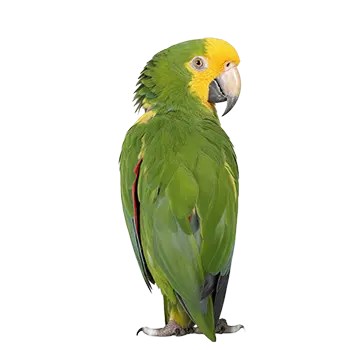

Technology has introduced a new dimension to companion bird care that was unimaginable a generation ago. For Yellow-Crowned Amazon owners, the available technology landscape spans remote monitoring cameras, environmental sensors, smart lighting controllers, digital health tracking tools, air quality management systems, and automated feeding devices. These tools do not replace attentive human care, but they augment it by providing continuous data, remote awareness, and automated environmental control that no owner can maintain through manual observation alone.
The value proposition of bird care technology is strongest for species like the Yellow-Crowned Amazon that are long-lived, environmentally sensitive, and prone to health conditions that develop gradually before becoming clinically apparent. A weight trend that shifts two percent per week may be invisible to the naked eye but perfectly legible on a digital scale log. A room temperature that spikes during the afternoon while the owner is at work may never be noticed without a sensor recording the data. Technology fills the observation gaps that the rhythms of modern life inevitably create.
Adopting technology for bird care should follow a needs-based approach rather than a gadget-accumulation impulse. The most universally useful tools — a digital gram scale and an environmental thermometer-hygrometer — cost very little and provide disproportionate value. More sophisticated systems like networked cameras, smart home integration, and automated environmental controls become worthwhile as the owner identifies specific needs that manual monitoring cannot adequately address. Starting with foundational tools and adding complexity based on observed need prevents both unnecessary expense and the overwhelming feeling of managing too many systems simultaneously.
Compatibility and reliability matter more than feature counts. A camera system that requires a proprietary app, a specific router configuration, and a paid cloud subscription to function may deliver impressive specifications on paper but fail in practice if any link in that chain breaks. Simple, reliable devices that perform their core function without complex dependencies are often more valuable than feature-rich products with fragile integrations. This principle applies across every category of bird care technology.