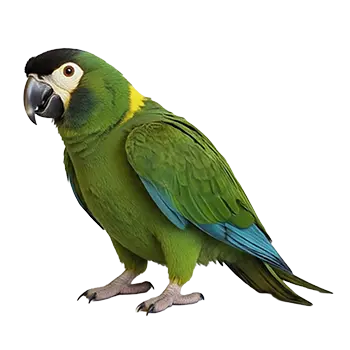

Why Enrichment Matters

Yellow-Collared Macaws are among the most playful and cognitively active of the mini macaw species, and their need for mental stimulation is not a luxury but a biological imperative. In the wild, these birds spend the majority of their waking hours engaged in activities that challenge their problem-solving abilities: locating food sources across a shifting landscape, manipulating tough seed pods and fruit rinds, navigating complex forest canopy, and interacting socially with flock members. Captivity removes nearly all of these challenges, and without deliberate enrichment to fill the cognitive gap, the bird's mental and emotional health deteriorates in predictable and often devastating ways.

Boredom and understimulation are the root causes of many of the behavioral problems most commonly reported by Yellow-Collared Macaw owners. Feather-destructive behavior, where the bird plucks, barbors, or chews its own plumage, is frequently a manifestation of chronic boredom rather than a medical condition. Excessive screaming, repetitive stereotypic behaviors like pacing or head-swinging, and aggression toward handlers can all stem from an environment that fails to engage the bird's considerable intelligence. These behaviors are far easier to prevent through proactive enrichment than to extinguish once they have become established habits.

Toys and enrichment devices serve as proxies for the challenges that wild life provides naturally. A well-chosen toy replicates one or more elements of the bird's natural behavioral repertoire: the mechanical challenge of extracting food from a hard casing, the tactile satisfaction of shredding bark and vegetation, the auditory feedback of manipulating objects that rattle or ring, or the proprioceptive stimulation of climbing, swinging, and balancing. No single toy addresses all of these needs, which is why a diverse and regularly rotated toy inventory is essential for maintaining the bird's interest and well-being over the long term.

The financial investment in toys should be viewed in the context of the bird's overall care costs. Veterinary treatment for the physical consequences of feather destruction, the behavioral consultation fees associated with entrenched problem behaviors, and the emotional toll on both bird and owner when enrichment needs go unmet far exceed the cost of maintaining an active toy rotation. Budgeting for regular toy purchases and replacement is as fundamental to responsible Yellow-Collared Macaw ownership as budgeting for food and veterinary care.

Foraging Toys

Foraging toys represent the single most valuable category of enrichment for a Yellow-Collared Macaw because they directly address the species' strongest natural drive: the motivation to work for food. In the wild, obtaining a meal requires effort, ingenuity, and persistence. A foraging toy reinstates that effort-to-reward relationship in captivity, transforming passive food consumption into an engaging activity that occupies the bird for extended periods and provides deep cognitive satisfaction.

Entry-level foraging toys include devices that require the bird to remove a simple barrier to access a visible food reward. Acrylic boxes with lift-off lids, paper cups placed over food dishes, and stainless steel skewers threaded with chunks of vegetable or fruit all fall into this category. These toys are appropriate for birds new to foraging enrichment and serve as confidence builders that teach the fundamental concept that effort produces a food reward. Most Yellow-Collared Macaws master entry-level foraging challenges within a few sessions and quickly lose interest if the difficulty level is not increased.

Intermediate foraging devices introduce mechanical complexity that requires the bird to perform multi-step actions. Puzzle boxes with sliding panels, rotating drums with access holes, and acrylic tubes with removable end caps all demand that the bird observe, plan, and execute a sequence of manipulations to reach the food inside. Yellow-Collared Macaws are exceptionally good at these devices and will often solve a new intermediate puzzle within minutes, which speaks to both their intelligence and the speed at which enrichment difficulty must escalate to remain effective.

Advanced foraging systems challenge even experienced problem-solving birds. Multi-chamber devices that require the bird to work through several compartments in sequence, combination-lock style mechanisms that demand specific rotational movements, and layered systems where solving one puzzle reveals the next all provide extended engagement for cognitively gifted species. Some owners build custom foraging walls using pegboards and interchangeable components, which allows infinite reconfiguration and prevents the bird from memorizing a single solution path. Hiding food in increasingly obscure locations around the cage or play area further extends the foraging challenge beyond purpose-built devices.

Chew and Shredding Toys

Chewing and shredding are innate behaviors in all parrot species, driven by the biological need to maintain beak condition, the psychological satisfaction of destructive manipulation, and the instinctive drive to modify the nesting environment. Yellow-Collared Macaws are enthusiastic and persistent chewers that will systematically disassemble any destructible object within reach, and providing appropriate outlets for this behavior protects both the bird's well-being and the owner's furniture, woodwork, and personal belongings.

Soft wood toys made from balsa, yucca, sola, and pine offer satisfying destructibility for a mini macaw's moderately powerful beak. These materials yield readily under beak pressure, producing the splintering and flaking that parrots find rewarding, without being so hard that the bird becomes frustrated or risks beak injury. Toys constructed from stacked wooden blocks, wooden beads on stainless steel or vegetable-tanned leather strings, and bundles of thin wooden slats provide hours of dedicated shredding activity. The key is that these toys are meant to be destroyed, and their destruction is the point rather than a sign of failure.

Paper and cardboard-based toys provide a different shredding experience that many Yellow-Collared Macaws find equally compelling. Unbleached paper rolls stuffed with treats, cardboard boxes with hidden food compartments, and crinkled paper bundles all invite the bird to tear, shred, and investigate. These materials are inexpensive enough to be replaced daily, making them ideal candidates for a rotating enrichment schedule. Phone books with the covers removed, empty paper towel rolls, and small paper bags can serve as quick and essentially free shredding opportunities, though any paper products used should be free of inks, adhesives, and chemical treatments that could harm the bird.

Leather and natural fiber components add textural variety to chew toys. Vegetable-tanned leather strips, sisal rope segments, palm leaf bundles, and woven seagrass shapes appeal to the bird's interest in varied textures and provide moderate resistance that engages the beak differently than soft wood. When selecting toys with leather components, verify that the leather is vegetable-tanned rather than chrome-tanned, as chromium compounds used in commercial leather processing are toxic to birds. Natural fiber elements should be checked regularly for excessive fraying that could entangle toes or create ingestion hazards.

The rate at which a Yellow-Collared Macaw destroys chew toys varies considerably among individuals, but most owners find that soft wood and paper toys last between one day and one week depending on the bird's interest level and activity. Budgeting for frequent replacement is necessary, and buying toy parts in bulk, wooden blocks, leather strips, beads, and stainless steel quick-links, allows owners to assemble custom toys at a fraction of the cost of pre-made commercial products.

Puzzle and Interactive Toys

Puzzle toys engage the Yellow-Collared Macaw's problem-solving abilities in ways that go beyond the food-reward mechanism of foraging devices. While foraging toys ask the question of how to access a hidden reward, puzzle toys challenge the bird to figure out how a mechanism works, sometimes with no food reward at all. The manipulation itself, turning a gear, sliding a bolt, stacking rings, or pulling a chain to produce a sound, becomes the reinforcement. This type of play mirrors the exploratory and investigative behaviors that occupy wild parrots as they interact with novel objects in their environment.

Acrylic and polycarbonate puzzle toys designed for small to medium parrots are widely available and offer a range of difficulty levels. Simple designs present a single manipulation challenge, such as removing a peg to release a trapdoor, while complex designs chain multiple steps together. The transparency of acrylic is advantageous because it allows the bird to see the internal mechanism and the reward, which motivates initial engagement and provides visual feedback on the progress of its efforts. Durability is a practical benefit as well, since acrylic resists the beak damage that destroys wooden toys and can be cleaned and reused indefinitely.

Teaching toys that build specific cognitive skills deserve a place in the Yellow-Collared Macaw's enrichment inventory. Color-sorting toys, shape-matching boards, and stackable ring sets teach concepts of categorization and sequential ordering that some birds internalize and apply to novel situations. While these toys are sometimes dismissed as training tools rather than enrichment, the cognitive engagement they provide is genuine enrichment in its own right, and the interaction between bird and owner that teaching toys facilitate strengthens the social bond that is central to this species' emotional well-being.

Musical and noise-making toys appeal to the Yellow-Collared Macaw's auditory curiosity and its natural tendency toward vocalization. Bells, rattles, and toys that produce sounds when manipulated provide immediate sensory feedback that sustains the bird's interest. Some owners introduce small percussion instruments designed for children, such as xylophones or tambourines scaled to bird size, which the macaw can strike with its beak or feet to produce sounds. The auditory stimulation these toys provide is a distinct enrichment dimension that visual and tactile toys do not address, and many Yellow-Collared Macaws develop strong preferences for specific sound-producing toys that become long-term favorites.

Swings, Climbing Structures, and Physical Toys

Physical activity toys promote the gross motor exercise that Yellow-Collared Macaws need to maintain cardiovascular health, muscle tone, and joint flexibility. While foraging and puzzle toys primarily engage the beak and cognitive centers, swings, ladders, climbing nets, and bungee-style toys engage the whole body and encourage the kinds of dynamic movement that sedentary cage life otherwise suppresses. A cage or play area that includes physical activity stations alongside cognitive enrichment toys provides a more complete behavioral outlet than either category alone.

Swings are among the most universally enjoyed toy types for this species. A swing engages the bird's balance and proprioceptive systems, creating a physical challenge that persists even after the bird has learned to mount and dismount the swing confidently. The gentle motion is calming for many birds, and it is common to observe Yellow-Collared Macaws spending extended periods on a swing in a relaxed, contented state, gently swaying and preening. Swings sized for medium parrots, with a perch diameter of approximately three-quarters of an inch, are the best fit for this species. Wooden, rope, and acrylic swing designs each offer different grip textures and degrees of movement.

Climbing structures such as rope ladders, cargo nets, and chain-link climbing walls encourage vertical and lateral movement through the cage or play space. These structures are particularly valuable for birds housed in cages that are tall relative to their width, as they convert unused vertical space into functional exercise territory. Rope-based climbing structures should be constructed from natural cotton or sisal rather than synthetic materials, and they require regular inspection for fraying or loose strands that could trap toes. Stainless steel chain ladders are a longer-lasting alternative that eliminates the fiber hazard while providing comparable climbing engagement.

Bungee toys and spiral rope perches add a dynamic, unpredictable element to the physical environment. The elasticity of a bungee cord means the bird's perch moves in response to its weight and motion, challenging its balance and coordination in a constantly shifting way. Yellow-Collared Macaws tend to respond to this instability with enthusiasm rather than anxiety, bouncing deliberately to amplify the movement and incorporating the bungee's behavior into acrobatic play routines. These toys should be installed with adequate clearance from cage walls and other perches to prevent the bird from being pinched or struck during vigorous bouncing.

Foot toys, small objects that the bird manipulates with its feet while perched, round out the physical enrichment category. Wooden blocks, wiffle balls, leather knots, and acrylic pacifiers are all popular foot toy styles that Yellow-Collared Macaws enjoy tossing, catching, and carrying. Foot toys develop fine motor coordination and satisfy the bird's desire to manipulate objects independently without requiring cage attachment hardware. Providing a small basket or tray on the cage floor for dropped foot toys allows the bird to retrieve and re-engage with them throughout the day.

Toy Safety Considerations

Toy safety is a non-negotiable priority that requires ongoing attention throughout the life of every toy in the Yellow-Collared Macaw's environment. The same qualities that make a toy engaging, destructibility, moving parts, varied textures, and small components, are the qualities that can create hazards if the toy is poorly designed, improperly maintained, or used beyond its functional lifespan. Evaluating toy safety at the point of purchase and throughout the toy's use is an essential skill for any parrot owner.

Material toxicity is the first safety filter to apply. All metals in a toy should be stainless steel. Zinc, lead, and copper components appear in inexpensive imported toys with alarming frequency, and even small amounts of these metals ingested through chewing can cause acute or chronic poisoning. Painted components should be finished with non-toxic, bird-safe vegetable dyes, and any toy with a chemical smell or visible paint inconsistencies should be discarded without introduction to the bird. Leather must be vegetable-tanned, and cotton components should be untreated and undyed to eliminate chemical exposure risks.

Entanglement is the most common acute toy hazard for parrots. Rope fibers, loose thread, thin chains, and frayed fabric can loop around toes, legs, or wings and tighten as the bird struggles, potentially causing strangulation, loss of circulation to a limb, or wing injury. Every toy with fiber or thread components should be inspected daily, and any toy that shows significant fraying should be removed immediately. The snap-in-half test is useful for evaluating rope perches and toys: if a rope component cannot be snapped cleanly by hand, it is strong enough to resist a panicking bird's attempts to free itself, which makes it an entanglement risk rather than a safe breakaway element.

Small parts present an ingestion hazard if they detach from the main toy structure during play. Beads, clips, small wooden pieces, and hardware such as split rings and S-hooks can be swallowed if they come loose, causing crop obstruction or intestinal blockage that may require emergency surgical intervention. Toys designed for parrots should use bird-safe quick-links, nickel-plated steel split rings of appropriate gauge, or stainless steel C-clamps for attachment, and all connection points should be checked for security during the daily inspection routine.

Jingle bells are a specific hazard category that warrants individual mention. Many commercially available jingle bells have openings large enough for a Yellow-Collared Macaw to insert its toenail or beak tip, and the spring-loaded construction of the bell can trap the appendage. Only cow-bell-style or liberty-bell-style bells with solid construction and no openings larger than the bird's smallest toenail should be used. If there is any doubt about whether a bell's opening is safe, it is better to remove it from the toy entirely than to risk a trapping injury.

Rotation and Refreshment Strategies

Even the most engaging toy loses its enrichment value once the bird has fully explored its properties and solved whatever challenges it presents. Yellow-Collared Macaws are quick learners with strong novelty preferences, and a toy that captivated the bird for two weeks will often sit ignored once the bird has exhausted its possibilities. Systematic toy rotation prevents habituation, maximizes the enrichment return on every toy purchase, and keeps the bird's environment feeling dynamic and stimulating without requiring constant new purchases.

The most effective rotation strategy divides the toy inventory into sets of four to six toys that are swapped in and out of the cage on a weekly or biweekly schedule. Keeping two to three sets in rotation means each set is out of the cage long enough that it regains some novelty when reintroduced. Within each set, include at least one toy from each functional category: a foraging device, a chew or shredding toy, a puzzle or interactive toy, and a physical activity toy. This ensures that every behavioral need is addressed in every rotation, regardless of which set is currently installed.

The way a toy is presented influences whether the bird perceives it as novel even if the toy itself is familiar. Changing the location within the cage where a returning toy is hung, attaching it at a different angle, or pairing it with a different neighboring toy can renew the bird's interest. Wrapping a familiar foraging toy in paper, threading a known puzzle toy onto an unfamiliar hanger, or placing a foot toy inside a paper cup all add a layer of novelty that resets the bird's exploration drive without requiring a new toy purchase.

Tracking toy usage and the bird's response helps refine the enrichment program over time. Noting which toys receive the most sustained attention, which are ignored, and which are destroyed quickest reveals individual preferences and play patterns that guide future purchasing and rotation decisions. Some owners maintain a simple log of toy installations and observed engagement, which prevents the common mistake of repeatedly offering toys the bird has demonstrated no interest in while neglecting categories it clearly favors. Seasonal variation can also influence toy preferences, with some birds showing increased chewing and shredding behavior during hormonal periods that calls for heavier stocking of destructible items.

Do-it-yourself toy construction is a cost-effective strategy that also allows infinite customization. Purchasing toy components in bulk, stainless steel hardware, untreated wood pieces, vegetable-tanned leather strips, food-grade paper, and sisal rope, and assembling them into custom creations lets the owner tailor toys precisely to the bird's demonstrated preferences and current enrichment needs. Many Yellow-Collared Macaw owners find that simple homemade toys constructed from paper, cardboard, and softwood receive as much or more engagement than expensive commercial products, particularly when the toys are designed around the individual bird's known play behaviors.

Always consult a qualified professional before making any health-related decisions. This content is provided for informational reference only and should not replace professional guidance specific to your animal.