
Nutritional Needs

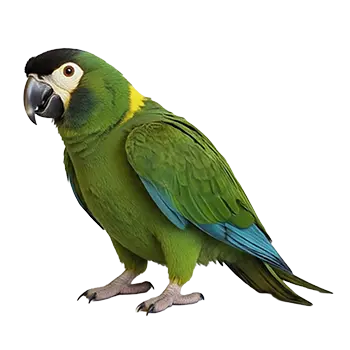
The Yellow-Collared Macaw is a compact, high-energy mini macaw whose nutritional demands reflect both its macaw heritage and its smaller body size. Weighing roughly 120 to 150 grams, this species burns calories at a faster rate relative to its mass than its larger macaw cousins, which means dietary composition matters enormously. A diet that keeps a Blue-and-Gold Macaw in acceptable condition may leave a Yellow-Collared Macaw either overfed on fats or underfed on micronutrients, depending on how it is portioned. Owners must think in terms of nutrient density per bite rather than simply scaling down a large macaw diet.

Protein requirements for this species are moderate but consistent. Yellow-Collared Macaws in the wild forage on a mix of seeds, fruits, flowers, and bark, and their captive diet should approximate the macronutrient ratios this wild intake provides. Protein should constitute roughly twelve to fifteen percent of the overall diet, sourced primarily from formulated pellets and supplemented by cooked legumes and small amounts of egg. Excess protein places unnecessary strain on the kidneys, while insufficient protein compromises feather development and muscle maintenance.

Fat is an essential macronutrient for this species, supporting feather condition, hormone production, and energy reserves, but captive Yellow-Collared Macaws are prone to weight gain if fat intake is not managed carefully. In the wild, the caloric expenditure of flight and foraging offsets a naturally fat-rich diet of palm nuts and oily seeds. In a cage or aviary environment, that expenditure drops dramatically, and fat must be reduced accordingly. Healthy fat sources such as walnuts, flaxseed, and hemp seed should be offered in measured amounts rather than as free-choice staples.

Vitamin A is a critical nutrient for all parrots and deserves particular attention in Yellow-Collared Macaw husbandry. Deficiency manifests as respiratory vulnerability, dull plumage, and compromised immune function. Because many seed-based diets are inherently low in vitamin A precursors, owners relying on seed mixes as a dietary component must compensate with generous offerings of beta-carotene-rich vegetables such as sweet potato, red bell pepper, and dark leafy greens. A pellet-based diet with adequate vitamin A content reduces but does not eliminate the need for these whole-food sources.

What to Look For

Selecting the right commercial foods for a Yellow-Collared Macaw starts with reading ingredient panels rather than marketing claims. A quality pellet should list whole grains, legumes, or vegetables as its first ingredients. Corn, soy isolates, and sugar appearing high on the ingredient list indicate a formulation designed to minimize production cost rather than maximize nutritional value. Artificial colors and flavors are unnecessary additions that can encourage selective eating behavior, where the bird picks out certain colored pieces and discards the rest, undermining the balanced formulation the pellet was designed to deliver.

Pellet size is a practical consideration that directly affects acceptance and waste. Yellow-Collared Macaws have beaks proportional to their compact bodies, smaller and less powerful than those of full-sized macaws but considerably stronger than those of cockatiels or budgies. Pellets sized for small to medium parrots are generally the best fit. Oversized pellets designed for large macaws can be difficult for this species to manipulate and may result in significant food waste as the bird breaks apart pieces and discards fragments. Conversely, very small pellets intended for finches or budgies may not engage the bird's foraging instincts and can be swallowed without the beneficial beak exercise that pellet consumption should provide.

When evaluating seed mixes for supplemental use, look for blends that contain a variety of small to medium seeds without excessive sunflower or safflower content. Safflower and sunflower seeds are high in fat and low in essential amino acids, and most parrots will preferentially consume them to the exclusion of more nutritious components in a mix. A quality supplemental seed blend should include millet varieties, canary seed, hemp seed, and small amounts of dried herbs or vegetables. The mix should smell fresh, with no musty or rancid odor that would indicate improper storage or aging stock.

Fresh food quality is equally important. Organic produce reduces pesticide exposure, which is particularly relevant for birds because their small body mass means even trace chemical residues represent a proportionally larger dose than they would for a human. If organic produce is not consistently available or affordable, thorough washing and peeling of conventionally grown fruits and vegetables mitigates much of the risk. Frozen vegetables, thawed and served at room temperature, retain most of their nutritional value and can be a practical alternative when fresh variety is limited.

Recommended Pellet Types

Formulated pellets should constitute approximately fifty to sixty percent of a Yellow-Collared Macaw's daily intake by volume. The pellet market has matured considerably in recent years, and owners now have access to formulations that vary in ingredient philosophy, manufacturing process, and targeted species profile. Cold-pressed pellets preserve heat-sensitive nutrients more effectively than extruded varieties, though quality extruded pellets compensate for processing losses through fortification. The best choice depends partly on the individual bird's preferences, since even the most nutritious pellet provides no benefit if the bird refuses to eat it.

Organic and non-GMO pellets appeal to owners seeking the cleanest possible ingredient sourcing. These formulations typically avoid synthetic preservatives, relying instead on natural antioxidants like mixed tocopherols to maintain shelf life. The trade-off is a shorter usable lifespan after opening, which means owners should purchase quantities they can use within six to eight weeks and store opened bags in airtight containers away from heat and light. For a single Yellow-Collared Macaw, smaller bag sizes are usually the most practical choice despite the higher per-unit cost.

Some manufacturers produce pellets formulated specifically for mini macaws or small to medium neotropical parrots. These species-targeted products adjust the protein-to-fat ratio and micronutrient profile to better match the metabolic needs of compact, active birds. They also tend to be sized appropriately without requiring the owner to sort through a pellet line designed primarily for larger species. While any high-quality small-parrot pellet will serve a Yellow-Collared Macaw well, species-targeted formulations remove some of the guesswork from dietary planning.

Transitioning a seed-habituated Yellow-Collared Macaw to a pellet-based diet requires patience and strategic feeding management. Abrupt dietary changes can result in the bird refusing food entirely, which is dangerous for a small-bodied species with limited metabolic reserves. Gradual mixing of pellets into the existing diet, combined with offering pellets first thing in the morning when the bird is hungriest, tends to produce the best results over a period of several weeks to a few months. Monitoring weight during the transition is essential to ensure the bird is eating enough to maintain condition.

Fresh Foods and Cooking Mixes

Fresh foods provide the nutritional complexity and foraging enrichment that pellets alone cannot deliver. For Yellow-Collared Macaws, fresh offerings should account for roughly thirty to forty percent of the daily diet and should emphasize vegetables over fruit. A well-constructed daily chop, the common aviculture term for a finely diced mix of raw and cooked vegetables, grains, and legumes, provides a convenient vehicle for delivering variety in a format that encourages thorough consumption rather than selective picking.

Dark leafy greens form the nutritional backbone of the fresh food rotation. Kale, Swiss chard, turnip greens, mustard greens, and dandelion greens all deliver calcium, iron, and vitamin A precursors in forms the body absorbs efficiently. Rotating among several types of greens prevents excessive oxalate accumulation from any single source, since some greens like spinach contain oxalates that can bind calcium and reduce its bioavailability when consumed in large quantities. Offering greens in different forms, whole leaves clipped to the cage bars for shredding, chopped into the daily chop, or lightly steamed, maintains the bird's interest and engagement.

Cooked grain and legume mixes designed for parrots offer a convenient way to add complex carbohydrates and plant-based protein to the diet. These dry mixes typically contain lentils, split peas, quinoa, barley, and dried vegetable pieces that cook into a soft, palatable blend. Preparing a batch at the beginning of the week and refrigerating individual portions saves daily preparation time. When selecting commercial cooking mixes, avoid products that include pasta as a primary ingredient, since pasta contributes calories without proportional micronutrient value, and check for added salt, which should be absent from any bird food product.

Sprouted seeds bridge the nutritional gap between dry seeds and fresh vegetables. The germination process converts stored fats and starches into proteins, vitamins, and enzymes, dramatically improving the nutritional profile of the seed while reducing its caloric density. Mung beans, lentils, sunflower seeds, and wheat berries all sprout readily and are well-accepted by Yellow-Collared Macaws. The critical safety consideration with sprouted foods is hygiene, as the warm, moist conditions that promote germination also promote bacterial growth. Rinsing sprouts thoroughly multiple times during the germination process and discarding any batches that develop off odors prevents foodborne illness.

Treats and Supplements

Treats are a powerful behavioral tool for Yellow-Collared Macaws, which are intelligent and highly food-motivated birds that respond well to positive reinforcement training. The most effective treats are items the bird perceives as high-value but that do not distort the overall nutritional balance of the diet. Small pieces of nut, particularly almond slivers, walnut fragments, and pine nuts, serve this purpose ideally. Their fat content means they should be portioned carefully, with most trainers limiting total daily nut treats to two or three small pieces for a bird of this size.

Dried fruit pieces can also function as training treats when used selectively. Unsulfured, unsweetened dried papaya, mango, and coconut chips are well-accepted and provide a different flavor profile from nuts, which keeps the bird engaged during longer training sessions. Commercial treat sticks and seed bars marketed for parrots are generally best avoided as routine offerings, since they are typically bound with sugar or honey and provide little nutritional value beyond empty calories. If used occasionally for enrichment, they should displace an equivalent amount of the daily food ration rather than being added on top of it.

Calcium supplementation is worth evaluating for any Yellow-Collared Macaw, though the need is less acute than in species like African Greys that are genetically predisposed to hypocalcemia. A cuttlebone or mineral block mounted in the cage provides a passive calcium source that the bird can access at will, and most Yellow-Collared Macaws will gnaw on these intermittently. Liquid calcium supplements are available for birds with documented deficiencies, but routine use without veterinary bloodwork to confirm a need carries a risk of over-supplementation, particularly of vitamin D3, which is included in many calcium formulations to enhance absorption.

Broad-spectrum vitamin supplements are generally unnecessary for a Yellow-Collared Macaw eating a balanced diet of quality pellets and varied fresh foods. Over-supplementation of fat-soluble vitamins, particularly vitamins A, D, and E, can cause toxicity that is more dangerous than the deficiency the supplement was intended to prevent. Water-soluble vitamin powders designed to be added to drinking water are particularly problematic because dosing is imprecise, the vitamins degrade rapidly in water, and the altered taste of the water may discourage adequate hydration. If a veterinarian identifies a specific deficiency through bloodwork, targeted supplementation delivered directly onto food is preferable to water-based products.

Foods to Avoid

Several categories of food are toxic or harmful to Yellow-Collared Macaws and must be rigorously excluded from the diet. Avocado tops the list, as every part of the fruit, including the flesh, skin, and pit, contains persin, a fungicidal toxin that causes myocardial necrosis in birds. The lethal dose for small parrots is extremely low, and there is no effective treatment once symptoms appear. Given the severity of the risk, avocado should never be present in any area where the bird has access, including kitchen counters during food preparation.

Chocolate and caffeine are both dangerous stimulants for birds. Theobromine, the compound that makes chocolate toxic to many animals, causes cardiac arrhythmia, hyperactivity, tremors, and death in parrots at doses that would be trivial for a human. Dark chocolate and baking chocolate contain the highest theobromine concentrations, but even milk chocolate and white chocolate should be considered off-limits. Caffeinated beverages including coffee, tea, and energy drinks pose similar cardiac risks and should never be shared with or accessible to the bird.

Onions and garlic in all forms, raw, cooked, dehydrated, or powdered, contain organosulfur compounds that destroy red blood cells in birds, leading to hemolytic anemia. The damage is cumulative, meaning that repeated small exposures can produce clinical disease even if no single exposure seems significant. This is particularly relevant for owners who share cooked meals with their birds, since onion and garlic powder are ubiquitous in seasoned foods. Any food prepared for human consumption should be assumed to contain these ingredients unless the owner prepared it specifically without them.

Salt is poorly tolerated by birds, which lack the renal capacity to excrete sodium efficiently. Excessive salt intake causes polydipsia, polyuria, dehydration, and in severe cases, fatal electrolyte imbalances. Processed human foods such as chips, crackers, pretzels, and canned vegetables are common sources of hidden sodium that well-meaning owners may offer without realizing the risk. Similarly, fruit seeds and pits from apples, cherries, apricots, and peaches contain cyanogenic glycosides that release hydrogen cyanide during digestion and should always be removed before offering fruit to the bird.

Feeding Schedule and Portions

A consistent feeding schedule anchors the daily routine of a Yellow-Collared Macaw and supports healthy metabolic function. The most effective pattern mirrors the natural foraging rhythm of wild parrots: a substantial fresh food offering in the morning when the bird is most active and hungry after the overnight fast, pellets available throughout the day for ad libitum grazing, and a smaller fresh food offering in the late afternoon before the bird begins to settle for the evening. This two-meal-plus-pellets structure ensures the bird receives adequate nutrition while distributing caloric intake across the active hours.

Portion sizing for a Yellow-Collared Macaw is considerably smaller than for larger parrot species, and overfeeding is a common mistake among owners accustomed to bigger birds. A general guideline is approximately one to two tablespoons of pellets and a similar volume of fresh foods per meal, though individual needs vary based on age, activity level, reproductive status, and ambient temperature. Weighing the bird weekly on a gram scale is the most reliable method for assessing whether the current feeding program is maintaining appropriate body condition, since visual assessment alone can be misleading with a fully feathered bird.

Food hygiene is a non-negotiable aspect of feeding management. Fresh foods left in the cage for more than three to four hours at room temperature begin to support bacterial growth, particularly in warm environments. Wet or cooked foods spoil even faster. Removing uneaten fresh food promptly, washing food dishes with hot soapy water daily, and replacing drinking water at least twice a day minimizes the risk of bacterial or fungal contamination that can cause crop infections and gastrointestinal disease.

Foraging opportunities should be integrated into the feeding routine rather than treated as a separate activity. Placing portions of the daily food ration inside foraging toys, wrapping them in unbleached paper, or hiding them among cage furnishings encourages the bird to work for its food, which provides mental stimulation, slows consumption, and more closely replicates the effort-to-reward ratio of wild foraging. Yellow-Collared Macaws are particularly adept and enthusiastic foragers, and most will engage readily with even simple foraging setups if introduced consistently.

Always consult a qualified professional before making any health-related decisions. This content is provided for informational reference only and should not replace professional guidance specific to your animal.