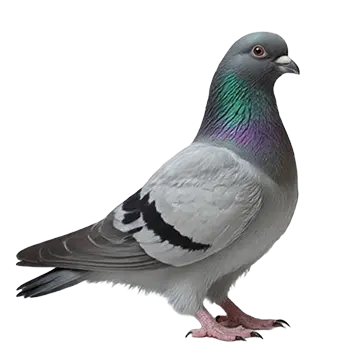

Technology in Tumbler Pigeon Management

Technology has transformed the way serious Tumbler Pigeon fanciers manage their birds, monitor performance, and maintain loft conditions. What was once a hobby conducted almost entirely through direct observation and hand-kept records now benefits from an expanding ecosystem of digital tools and connected devices. From GPS trackers that map flight paths to environmental sensors that monitor loft air quality in real time, technology gives today's fancier access to data and visibility that would have been unimaginable a generation ago.

The value of technology in pigeon keeping lies not in replacing the fancier's judgment and experience but in augmenting them with precise, objective data. An experienced eye can assess a bird's body condition, flying form, and general health with impressive accuracy, but even the best fancier cannot simultaneously watch every bird in a twenty-bird kit, measure loft humidity around the clock, or reconstruct the exact flight path of a bird that failed to return. Technology fills these observational gaps, providing data that complements the fancier's intuition and supports better decision-making.

Adopting technology does require a pragmatic approach. Not every product marketed to pigeon fanciers delivers meaningful value, and the cost of some devices may not be justified for a small backyard loft. The key is to identify the specific management challenges in your program and invest in technology that addresses those challenges directly. A fancier struggling with unexplained bird losses during free flight has a strong case for GPS tracking. A fancier dealing with recurring respiratory disease may benefit more from environmental monitoring. The technology should solve a real problem rather than exist as a novelty.

Compatibility and reliability are more important than feature lists when evaluating pigeon tech products. A device that works consistently under field conditions, connects reliably to the fancier's phone or computer, and has a responsive manufacturer behind it is worth more than a feature-rich product with spotty performance and nonexistent customer support. The pigeon hobby is a niche market, and some tech products aimed at it are produced by small companies or individuals. Seeking recommendations from other fanciers and checking for an active user community around a product before purchasing reduces the risk of investing in an orphaned device.

GPS Trackers and Flight Monitoring

GPS tracking represents perhaps the most transformative technology available to Tumbler Pigeon flyers. Miniaturized GPS units small enough and light enough to be carried by a pigeon can record the bird's flight path, altitude, speed, and duration, providing a detailed reconstruction of every flight session. For Tumbler keepers, this data offers unprecedented insight into individual flying behavior, kit cohesion, tumbling frequency, and the geographic range of the kit's flight patterns.

The primary constraint on pigeon GPS trackers is weight. A Tumbler Pigeon weighing approximately ten ounces should not carry a device exceeding five percent of its body weight, which sets the maximum tracker weight at roughly half an ounce or about fifteen grams. Several manufacturers now produce GPS loggers within this weight range, typically designed as backpack-style units that attach via a lightweight harness around the bird's body. The harness must be fitted carefully to avoid interfering with flight or tumbling, and the bird should be acclimated to wearing it during ground time before being flown with the tracker.

Flight data downloaded from a GPS tracker can reveal patterns that are invisible to ground-level observation. Altitude profiles show how high the kit is flying and whether individual birds are maintaining altitude with the group or drifting lower. Speed data can indicate when and where tumbling events occur, as a tumbling bird shows a characteristic deceleration and altitude drop in the GPS trace. Path data reveals whether the kit is circling tightly over the loft, as desired, or drifting off course into neighboring airspace where predator risk may be higher.

Real-time GPS tracking, which transmits the bird's position live to a phone or computer, is available through cellular-connected trackers but comes with significant trade-offs. Cellular units are heavier than offline loggers due to their antenna and battery requirements, pushing against the weight limits for a pigeon-sized bird. They also require a cellular data subscription, adding an ongoing cost. For most Tumbler Pigeon applications, an offline GPS logger that records data for later download provides sufficient information at a lower weight and cost. Real-time tracking is most valuable for birds being flown in unfamiliar locations or for tracking a bird that has failed to return from a flight session.

Loft Cameras and Remote Monitoring

Camera systems installed in and around the pigeon loft give fanciers the ability to observe their birds remotely, monitor loft activity during absences, and maintain a visual security watch against predators and intruders. Modern wireless cameras designed for home security are well-suited for loft use, offering high-definition video, night vision, motion-triggered recording, and smartphone access at price points accessible to most hobbyists.

Interior loft cameras provide insight into bird behavior that is difficult to gather through direct observation. Pigeons behave differently when a human is present in the loft, and some behaviors, particularly those related to illness, aggression, and nesting, are more clearly observed when the birds are undisturbed. A camera positioned to cover the main perching area can reveal which birds are being displaced by dominant loft mates, which birds are eating and drinking normally, and whether any individuals are showing early signs of illness such as fluffed feathers, lethargy, or separation from the group.

Exterior cameras pointed at the landing board, trap entrance, and surrounding airspace serve security and management functions. A camera covering the landing board records the order in which birds trap after a flight, which is useful data for evaluating individual trapping speed and kit discipline. Motion-triggered cameras aimed at the area around the loft can capture predator activity, including nocturnal visitors like raccoons and owls that the fancier would never see during normal loft visits. Reviewing this footage informs predator management decisions and can explain mysterious losses or disturbances.

Cloud-connected camera systems offer the advantage of remote access and automatic recording storage, allowing a fancier to check on the loft from any location with internet access. For fanciers who travel for work or are away from the loft during the day, cloud cameras provide peace of mind and the ability to respond quickly if a problem is detected. The footage archives also create a visual record that can be reviewed later to track behavioral trends, evaluate management changes, or document incidents for insurance or dispute resolution purposes.

Camera placement and angle selection deserve careful thought. A wide-angle lens placed high in a corner of the loft provides the broadest interior coverage. Cameras should be positioned where they will not be obscured by pigeon dust, which accumulates on exposed surfaces rapidly. A small overhang or recessed mounting position helps keep the lens clean between maintenance visits. Exterior cameras should be weatherproof and rated for the temperature extremes of the local climate, and their power source, whether wired, battery, or solar, should be reliable enough to maintain continuous operation.

Environmental Monitoring Systems

Environmental conditions inside the loft directly affect pigeon health and performance, and electronic monitoring systems provide continuous, objective measurements of the conditions that matter most. Temperature, humidity, and ammonia levels are the three environmental parameters with the greatest impact on respiratory health, which is the dominant health concern for loft-kept pigeons. Monitoring these factors in real time allows the fancier to identify and correct adverse conditions before they cause illness.

Temperature and humidity sensors designed for home or agricultural use are readily adaptable to pigeon lofts. A combined temperature and humidity sensor placed inside the loft, connected to a smartphone app via wireless protocol, provides continuous readings and can send alerts when values exceed preset thresholds. For Tumbler Pigeons, a target humidity range of forty to sixty percent and a temperature range that stays above freezing in winter and below ninety-five degrees Fahrenheit in summer represents the comfort zone where respiratory stress is minimized.

Ammonia monitoring is more specialized but arguably more important than temperature and humidity tracking. Pigeon droppings produce ammonia as they decompose, and ammonia levels in a poorly ventilated loft can reach concentrations that damage the delicate lining of the respiratory tract, predisposing birds to secondary infections. The human nose can detect ammonia at roughly twenty-five parts per million, but respiratory damage in birds begins at concentrations well below the level humans can smell. Electronic ammonia sensors with parts-per-million readouts remove the guesswork and provide an objective basis for ventilation adjustments.

Air quality sensors that measure particulate matter are a more recent addition to the loft monitoring toolkit. Pigeon feather dust is a significant respiratory irritant, and lofts with poor air exchange can develop particulate levels comparable to a dusty industrial workplace. Particulate sensors rated for PM2.5 and PM10 particles provide readings that correlate directly with respiratory disease risk. If readings consistently exceed recommended levels, the fancier knows that ventilation improvements, air filtration, or more frequent cleaning are needed regardless of what the loft smells or looks like to the human senses.

Integrated monitoring platforms that combine temperature, humidity, ammonia, and particulate readings into a single dashboard simplify environmental management. Several agricultural technology companies now produce multi-sensor hubs designed for poultry and livestock housing that are directly applicable to pigeon lofts. These systems log historical data, display trends over time, and can trigger automated responses such as activating an exhaust fan when temperature or ammonia exceeds a threshold. The initial cost of a multi-sensor system is higher than individual sensors, but the consolidated data view and automation capabilities often justify the investment for fanciers managing larger lofts.

Digital Record Keeping and Management Software

Digital record-keeping tools have replaced the paper logbook for many pigeon fanciers, offering searchability, analytical capabilities, and data backup that paper records cannot provide. For Tumbler Pigeon keepers, who need to track breeding records, flying performance, health history, and band numbers across a potentially large and changing team of birds, digital tools are not merely convenient but transformative in terms of the management decisions they enable.

Dedicated pigeon management software ranges from simple database applications to comprehensive platforms that integrate breeding records, health logs, pedigree analysis, and performance tracking into a unified system. The best programs allow the fancier to enter each bird's band number, parentage, hatch date, and photograph, creating a digital profile that accumulates data over the bird's lifetime. Breeding records within these systems can generate pedigree charts, calculate inbreeding coefficients, and identify which pairings have historically produced the best performing offspring.

Spreadsheet-based record keeping remains a practical option for fanciers who prefer a do-it-yourself approach. A well-designed spreadsheet with separate tabs for bird inventory, breeding records, health log, and performance notes can provide most of the functionality of dedicated software without the learning curve or cost. The flexibility of spreadsheets allows fanciers to customize the data fields to their specific program and to create charts and summaries that highlight the metrics they care most about.

Cloud-based storage and synchronization have eliminated one of the historical weaknesses of digital records: vulnerability to hardware failure. Records stored on a cloud service are accessible from multiple devices, automatically backed up, and protected against the loss of any single computer or phone. Many pigeon management applications offer cloud synchronization as a built-in feature, while spreadsheet-based systems can achieve the same protection by using cloud-hosted file storage. The peace of mind that comes from knowing years of breeding and performance data cannot be lost to a hard drive crash or a stolen laptop is significant for fanciers with deep programs.

Mobile applications designed for pigeon management allow record keeping to happen where the work happens: at the loft. Rather than observing a bird, making a mental note, and hoping to record it later at a desktop computer, a mobile app lets the fancier enter observations, health notes, and performance data immediately. Some apps include barcode or QR code scanning features that link directly to a bird's digital profile by scanning its leg band or a tag on its perch box, reducing data entry errors and speeding the recording process.

Automated Loft Systems

Automation in the pigeon loft ranges from simple timer-controlled devices to sophisticated systems that manage trap access, lighting, feeding, and ventilation with minimal human intervention. For Tumbler Pigeon fanciers who balance their hobby with demanding work schedules, automated systems can maintain consistent loft management routines even when the fancier cannot be physically present at every critical moment.

Automated trap doors are one of the most popular and practical loft automation products. These motorized trap systems can be programmed to open and close on a schedule, allowing birds to exit for their morning flight and re-enter during a defined trapping window. Some systems incorporate RFID readers that identify individual birds by their electronic leg band as they pass through the trap, logging the exact time each bird enters or exits. This data is invaluable for tracking trapping speed, identifying birds that are consistently late to return, and confirming that all birds in the kit have returned safely.

Automated feeding systems dispense a measured amount of grain at a programmed time, ensuring that birds receive their meals on a consistent schedule even if the fancier is delayed or absent. For Tumbler Pigeon management, where feeding timing is tightly linked to flight training, an automated feeder ensures that the post-flight meal is available at the right moment to reinforce trapping behavior. These systems range from simple gravity-fed dispensers with timer-controlled gates to more sophisticated units with portion calibration and multiple daily feeding events.

Lighting control is another area where automation provides meaningful management benefits. Day-length manipulation using artificial lighting is a well-established technique in pigeon management, used to influence molt timing, breeding condition, and flying behavior. A programmable light timer that extends or reduces the perceived day length inside the loft allows the fancier to manage these photoperiod-dependent processes with precision. Gradual dimming programs that simulate sunrise and sunset are preferable to abrupt on-off switches, as they avoid startling the birds and more closely replicate natural light transitions.

Ventilation automation, discussed in the housing section from a design perspective, is most effectively implemented through temperature-triggered exhaust fans and humidity-controlled dampers. A ventilation system that adjusts airflow automatically based on environmental sensor readings maintains optimal loft conditions without requiring the fancier to manually adjust vents multiple times per day. The integration of environmental sensors with automated ventilation creates a responsive system that accounts for daily temperature swings, seasonal changes, and varying occupancy levels as the loft population changes through breeding and culling cycles.

Evaluating and Adopting New Technology

The pace of technology development means that new products relevant to pigeon keeping appear regularly, and the fancier must evaluate each new offering critically rather than adopting every innovation that reaches the market. A structured evaluation approach prevents wasted spending and ensures that technology investments deliver genuine management value.

The first question to ask about any new technology product is whether it addresses a real management gap. If the fancier cannot identify a specific problem that the product would solve or a specific decision that it would improve, the product is likely a solution in search of a problem. A GPS tracker is a powerful tool for a fancier who has experienced unexplained bird losses or who wants to analyze flight patterns, but it adds little value for a fancier whose birds fly reliably over a familiar area and return consistently. The technology should be pulled into the program by a genuine need, not pushed in by marketing.

Compatibility with existing equipment and workflows is a practical consideration that is easily overlooked during the excitement of evaluating a new product. A monitoring sensor that requires a proprietary hub incompatible with the fancier's existing smart home system creates unnecessary complexity. A software application that cannot import data from the fancier's existing records forces a painful migration process. Checking compatibility before purchase, ideally by consulting other fanciers who have integrated the same product, avoids these friction points.

Reliability under field conditions is nonnegotiable. A pigeon loft is a harsh environment for electronics: dusty, occasionally damp, and subject to temperature extremes. Products designed for indoor residential use may fail quickly in a loft environment. Look for devices rated for outdoor or agricultural use, with sealed enclosures, corrosion-resistant components, and operating temperature ranges that match the local climate. If a product does not specify an ingress protection rating or operating temperature range, it may not be suitable for loft installation.

The total cost of ownership extends beyond the purchase price. Subscription fees for cloud services, cellular data plans for connected trackers, replacement batteries, and software update costs all contribute to the ongoing expense of operating a technology product. A device with a low purchase price but a required monthly subscription may cost more over three years than a higher-priced alternative with no recurring fees. Calculating the three-year total cost of ownership before purchasing provides a more accurate comparison between competing products and prevents budget surprises down the road.

Always consult a qualified professional before making any health-related decisions. This content is provided for informational reference only and should not replace professional guidance specific to your animal.