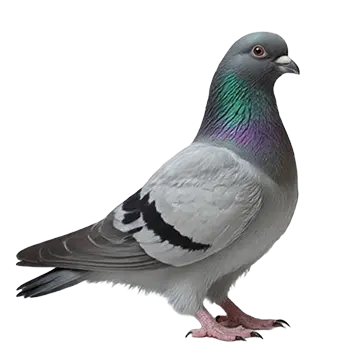

Essential Accessories Overview

Keeping Tumbler Pigeons well requires a collection of purpose-built accessories that support daily management, health maintenance, training, and transport. While the loft and feed supply represent the largest investments, the smaller tools and supplies that a fancier uses every day have an outsized impact on efficiency and bird welfare. A well-stocked accessory kit reduces the time spent on routine tasks, makes health monitoring more effective, and ensures that handling situations, whether routine or emergency, can be managed smoothly.

The accessory needs of a Tumbler Pigeon keeper differ from those of fanciers who keep show breeds or racing homers. Show fanciers invest heavily in grooming and presentation equipment, while racing fanciers focus on clocking systems and training baskets. Tumbler keepers need accessories that support the unique demands of managing flying performance birds: tools for catching and handling birds gently, identification systems for tracking individual birds within a kit, training aids that shape flying behavior, and transport solutions for moving birds to and from training releases or competitions.

Quality matters more than quantity when building an accessory collection. A few well-made, durable tools will serve a fancier for years, while cheap alternatives often fail at critical moments and need frequent replacement. This is particularly true for items like catching nets, transport carriers, and health instruments, where a failure can mean a lost bird, an injury, or a missed diagnosis. Investing in professional-grade equipment from the outset is more economical over the life of a loft than repeatedly replacing bargain alternatives.

Organization is the final piece of the accessory equation. Tools and supplies scattered across a garage or shed are effectively useless in an emergency. A dedicated storage area near the loft, with hooks, shelves, and labeled containers for different categories of equipment, ensures that everything is accessible when needed. Many fanciers mount a pegboard inside the loft anteroom for daily-use tools and keep a sealed container of first-aid supplies within arm's reach of the handling area.

Identification Bands and Record Keeping

Leg bands are the primary identification system for domestic pigeons and are essential for any serious Tumbler Pigeon operation. Seamless aluminum bands, applied to young birds between five and ten days of age, provide permanent, tamper-proof identification that remains with the bird for life. These bands are stamped with a unique serial number, the year of hatch, and typically the abbreviation of the issuing organization. In many countries, pigeon clubs and national organizations issue numbered bands to registered members, creating a traceable identification chain from breeder to current owner.

Band sizing must match the breed. Tumbler Pigeons generally require a band size in the eight to nine millimeter internal diameter range, depending on the specific variety. A band that is too small will constrict the leg as the bird grows, causing injury and circulatory problems. A band that is too large will slide over the foot and be lost, or worse, catch on loft fittings and trap the bird. Ordering bands from a pigeon supply company that lists size recommendations by breed eliminates the guesswork.

Colored plastic clip bands serve a different purpose than permanent identification bands. These snap-on bands come in a wide range of colors and can be added or removed at any time, making them useful for quick visual identification of individual birds within a flying kit. A fancier might use colored bands to distinguish between different breeding lines, identify birds of different ages, or mark specific individuals for observation during training flights. Using a consistent color-coding system and recording it in the loft logbook prevents the confusion that inevitably arises when color assignments are tracked only by memory.

Record keeping is the companion practice to banding that gives identification its real value. A loft logbook or digital record system should document each bird's band number, hatch date, parentage, health history, and performance notes. For Tumbler Pigeons, performance records might include observations about tumbling style, kit flying behavior, flying duration, and any competitive results. These records become invaluable for breeding decisions, helping the fancier identify which pairings produce offspring with the best flying characteristics and which lines carry health vulnerabilities that should be managed or bred away from.

Digital record-keeping tools have become increasingly accessible to pigeon fanciers. Spreadsheet programs, dedicated pigeon management software, and even purpose-built mobile applications allow fanciers to maintain detailed records with search and sorting capabilities that paper logbooks cannot match. Many of these tools support photo attachments, allowing each bird's record to include current photographs for identification purposes. Regardless of the format chosen, the critical requirement is consistency: a record system that is not updated regularly becomes unreliable and loses its value for decision-making.

Catching and Handling Equipment

Catching and handling Tumbler Pigeons efficiently and without causing stress or injury is a skill that depends partly on technique and partly on having the right tools. A catching net is the most important handling accessory in any pigeon loft. The ideal pigeon net has a long handle for reach, a deep, soft-mesh bag that cushions the bird on capture, and a frame shape that matches the loft interior. Round-framed nets tend to work better in open loft spaces, while D-shaped or rectangular frames are more effective in corners and along walls where birds tend to retreat.

The net material should be a soft, knotless mesh that will not damage feathers or entangle toes. Knotted netting, which is common in inexpensive fishing-style landing nets, catches on pigeon toe nails and can cause painful injuries. Purpose-built pigeon catching nets use a fine, soft mesh that contains the bird securely while minimizing the risk of feather breakage or foot entanglement. The mesh color matters as well: dark-colored netting is less visually alarming to birds than white or bright-colored netting, resulting in less evasive behavior during catching.

Proper handling technique after the catch is as important as the catching method itself. A pigeon should be held with both wings secured against the body, the handler's fingers wrapped gently around the bird from above or below, and the legs either allowed to hang freely or secured between the handler's fingers depending on the task being performed. Handling gloves are generally not recommended for pigeon work because they eliminate the tactile feedback needed to gauge grip pressure. Bare hands allow the fancier to feel the bird's body condition, detect lumps or abnormalities, and apply exactly the right amount of restraint without over-squeezing.

A handling station or examination area near the loft simplifies health checks, banding, and treatment administration. This can be as simple as a sturdy table with a non-slip surface at a comfortable working height, positioned near natural light or equipped with a task lamp. Having health supplies, band tools, and record-keeping materials organized within reach of the handling station allows a fancier to work through health checks efficiently without putting a bird down to search for equipment.

Training Flags and Kit Management Tools

Training flags are among the most distinctive accessories associated with Tumbler Pigeon flying. A training flag is a long pole fitted with a piece of brightly colored fabric, typically white, orange, or red, that the fancier waves to communicate with birds in flight. The flag serves multiple functions: it signals the kit to fly higher, discourages birds from breaking away from the group, directs the kit's flight pattern, and communicates landing cues. Experienced Tumbler flyers develop a vocabulary of flag signals that their birds learn to recognize and respond to over time.

The construction of a training flag should prioritize visibility, lightness, and durability. A pole length of eight to twelve feet provides sufficient visual prominence without being unwieldy. Fiberglass, bamboo, and lightweight aluminum are all suitable pole materials, with each offering different trade-offs in flexibility, weight, and cost. The flag fabric should be large enough to be visible to birds at altitude but light enough that it moves fluidly in the wind. A piece of ripstop nylon approximately two feet by three feet, attached securely to the pole end, meets these requirements for most Tumbler flying applications.

Droppers are another kit management tool used by some Tumbler flyers. A dropper is a trained bird, typically not a Tumbler itself, that is released from the loft to call a flying kit back down. The dropper's descent from the loft to the landing board or ground signals to the Tumblers that it is time to return, and a well-trained kit will follow the dropper's lead. While not every Tumbler flyer uses droppers, they can be highly effective for managing landing timing, especially with young kits that have not yet developed reliable trapping behavior. The dropper bird itself requires its own training and conditioning, making this approach more labor-intensive but potentially more precise than flag signals alone.

Whistles and auditory training devices complement visual flag signals. Some fanciers use a specific whistle pattern associated with feeding time, which conditions the birds to associate that sound with the reward of food in the loft. When the whistle is sounded during flight, the birds respond by returning to the loft in anticipation of the meal. Consistency is essential for auditory conditioning to be effective: the whistle must always be followed by food, and it must not be used at other times that would dilute its associative meaning. Purpose-built pigeon training whistles, which produce a consistent, carrying tone, are preferable to improvised noisemakers.

Transport Carriers and Shipping Supplies

Transporting Tumbler Pigeons safely requires carriers designed specifically for pigeon physiology and behavior. Unlike parrots, which are transported in rigid cages with perches, pigeons travel best in enclosed boxes or baskets that restrict movement and keep the bird in a calm, darkened state. The darkness reduces stress and prevents the bird from thrashing against the container walls, which can cause wing, keel, and head injuries.

Single-bird carriers are used for transporting individual pigeons to veterinary appointments, shows, or one-on-one training releases. These are typically small cardboard boxes with ventilation holes, soft-sided pet carriers with mesh panels, or purpose-built pigeon carrying boxes made from lightweight wood or corrugated plastic. The interior should be smooth, without projections that could catch feathers, and the ventilation must be adequate for the expected transport duration and ambient temperature. A layer of absorbent bedding on the carrier floor, such as paper towels or a small amount of pine shavings, manages droppings and provides footing.

Multi-bird transport baskets are used when moving groups of birds for kit training releases, club competitions, or relocation. Traditional wicker pigeon baskets have been used for centuries and remain popular because they are well-ventilated, lightweight, and durable. Modern alternatives include plastic transport crates with ventilated lids and collapsible wire-frame baskets with fabric covers. Regardless of material, the basket should provide enough space for each bird to sit comfortably without being stacked on top of one another, while being compact enough that the birds cannot move around freely and injure each other during transit.

Shipping supplies for sending pigeons by air or ground freight involve additional considerations. Many pigeon organizations have established shipping guidelines that specify container dimensions, ventilation requirements, and labeling standards for live bird shipments. Approved shipping containers are typically rigid cardboard or wooden boxes with screened ventilation openings, internal partitions that prevent birds from piling, and secure closures that cannot be opened accidentally during transit. Water containers that do not spill and a small amount of grain for journeys exceeding a few hours are standard provisions. Familiarizing oneself with both the shipping carrier's live animal policies and the applicable national or regional animal transport regulations is essential before the first shipment.

Health and First Aid Supplies

A well-assembled health kit allows a Tumbler Pigeon keeper to address common health issues promptly and to stabilize a sick or injured bird while arranging veterinary care. The contents of a pigeon health kit overlap partially with those of a general avian first-aid kit but include some items specific to the conditions most commonly seen in performance pigeons.

Basic examination tools should include a small digital scale accurate to one gram for monitoring body weight, a penlight or small flashlight for examining the mouth and throat, and a magnifying glass or jeweler's loupe for inspecting feathers, skin, and droppings for parasites. Weight monitoring is one of the most sensitive indicators of health in pigeons, as birds that are developing illness often show weight loss before any other symptoms become apparent. Establishing a baseline weight for each bird and checking periodically allows early detection of problems.

Wound care supplies should include a bottle of saline solution for flushing wounds, a non-stinging antiseptic solution such as chlorhexidine, cotton-tipped swabs, non-adherent wound pads, and self-adhesive veterinary wrap for bandaging. Tumbler Pigeons are susceptible to wounds from hawk strikes, loft wire, and occasionally territorial aggression from loft mates. Small puncture wounds and lacerations that are cleaned promptly and protected from contamination often heal well without veterinary intervention, though any wound that is deep, involves a joint, or shows signs of infection warrants professional treatment.

Medications commonly kept on hand by pigeon fanciers include an avian-safe electrolyte powder for rehydration, a broad-spectrum avian antibiotic prescribed by a veterinarian for emergency use, an antifungal treatment for crop infections, and a parasiticide effective against both internal worms and external parasites such as mites and lice. Medications should be stored according to their label instructions, checked for expiration dates regularly, and used only according to veterinary guidance. Indiscriminate antibiotic use contributes to resistance and can suppress the normal gut flora that protects against opportunistic infections.

A quarantine or hospital cage should be readily available for isolating sick or injured birds. This can be a small wire cage, a modified cardboard box with ventilation, or a dedicated section of the loft fitted with a solid partition. The quarantine space should be warm, quiet, and easy to clean, with food and water containers that the compromised bird can access without difficulty. Having this setup ready before it is needed eliminates the scramble of improvising a sick bay during an actual health emergency.

Grooming and Maintenance Tools

Grooming requirements for Tumbler Pigeons are modest compared to those of long-feathered show breeds, but a basic set of grooming tools supports feather health, foot care, and the overall tidiness needed for birds that are handled regularly. The primary grooming tasks for Tumblers are nail trimming, feather inspection, and occasional feather repair.

Nail trimming is the most routine grooming task. Pigeon nails grow continuously, and loft-kept birds that spend most of their time on smooth surfaces do not wear their nails down as quickly as wild pigeons walking on abrasive ground. Overgrown nails can catch on cage wire, nesting material, and the mesh of catching nets, causing broken nails and torn toes. A pair of small, sharp bird nail clippers or human nail clippers trims pigeon nails efficiently. The cut should remove only the pointed tip, avoiding the quick, which is visible as a darker area within the nail on light-colored nails. Styptic powder or cornstarch should be on hand to stop bleeding if the quick is accidentally nicked.

Feather condition assessment is less a grooming task than an inspection routine, but the tools overlap. A wing spread during a health check reveals broken flight feathers, stress bars indicating past nutritional deficiencies, and the progress of the molt. For Tumblers, flight feather integrity is directly linked to flying performance, and a bird with broken or missing primary feathers will not fly at the level of its loft mates. While broken feathers cannot be repaired, identifying them allows the fancier to rest that bird from training until the next molt cycle replaces the damaged feathers.

Imping is an advanced feather repair technique used by some experienced pigeon fanciers and falconers. The procedure involves splicing a replacement feather shaft into the base of a broken flight feather using a short length of bamboo or carbon-fiber rod and waterproof adhesive. Imping can restore a broken primary feather to functional condition, returning the bird to flying fitness weeks or months before the next natural molt would replace the feather. The technique requires precision and practice, and the replacement feather must match the original in species, size, and position. An imping kit containing feather stock, splinting rods, and adhesive is a specialized but valuable accessory for fanciers who fly their birds competitively.

Foot and leg care completes the grooming routine. Pigeon feet should be checked regularly for signs of scaly leg mite infestation, which produces raised, crusty scales on the legs and toes, and for bumblefoot, a bacterial infection of the foot pad that presents as a swollen, reddened area on the sole. Petroleum jelly applied to the legs can smother early mite infestations, while established cases may require an ivermectin-based treatment. Bumblefoot caught early responds to cleaning and topical antibiotic treatment, but advanced cases may require veterinary intervention to lance and drain the infected area.

Always consult a qualified professional before making any health-related decisions. This content is provided for informational reference only and should not replace professional guidance specific to your animal.