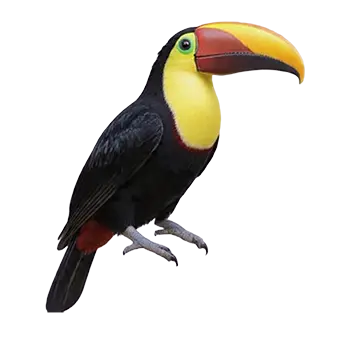

Enclosure Size and Configuration

Swainson's Toucans are powerful, agile flyers that require enclosures dramatically larger than what most parrot keepers expect. A single Swainson's Toucan needs a minimum enclosure size of approximately four feet wide by six feet long by four feet tall, though larger is always better for a bird that naturally covers significant distances between fruiting trees in the Central and South American rainforests it calls home. Unlike parrots, which can adapt somewhat to smaller cages because they climb more than they fly, toucans rely primarily on hopping and short flights to move between perches, and they need the horizontal distance to do so without colliding with cage walls.

The ideal enclosure for a Swainson's Toucan is a dedicated flight cage or small aviary rather than a standard parrot cage. Flight cages are typically constructed with a rectangular footprint that emphasizes length over height, which aligns with the toucan's movement patterns. While vertical space is not unimportant, it is the horizontal dimension that most directly affects the bird's ability to exercise and engage in natural behavior. A cage that is tall but narrow forces the bird into a sedentary lifestyle of climbing rather than flying, which contributes to obesity and muscular atrophy over time.

For keepers with the space and resources, an outdoor or indoor aviary represents the gold standard of toucan housing. An aviary measuring eight feet or more in length with a corresponding width of four to six feet provides genuine flight space and allows for more naturalistic perching arrangements, planted vegetation, and environmental complexity. Indoor aviaries can be constructed as walk-in enclosures within a dedicated room, while outdoor aviaries require weather protection, predator-proofing, and climate control depending on geographic location. Dual-compartment designs that allow the bird to choose between indoor and outdoor sections are particularly effective.

Regardless of the enclosure type chosen, the internal layout matters as much as the overall dimensions. Perches should be arranged to encourage movement across the full length of the enclosure rather than clustered in one area. Food and water stations placed at opposite ends from the primary sleeping perch promote activity throughout the day. The enclosure should include areas of varying light exposure, allowing the bird to seek sun or shade according to its preference, and at least one sheltered area where the bird can retreat when it feels the need for privacy or security.

Bar Spacing and Construction Materials

Bar spacing is a critical safety specification for any toucan enclosure. Swainson's Toucans require bar spacing no wider than one inch, which prevents the bird from wedging its head or body between bars. While toucans are not typically escape artists in the way that parrots are, their bills are not designed for the kind of manipulative pressure that would free them from a tight spot, which means a stuck toucan can injure itself severely before being discovered. Some flight cages designed for large softbills use half-inch by one-inch rectangular mesh rather than round bars, which provides excellent visibility and security while maintaining a clean aesthetic.

Stainless steel is the preferred construction material for toucan enclosures. Unlike parrots, toucans do not habitually chew on cage bars, which means that powder-coated steel and even welded wire mesh can be acceptable alternatives if the coating is non-toxic and applied durably. However, stainless steel resists the corrosive effects of the acidic fruit-based waste that toucans produce in abundance, and it withstands the frequent wet cleanings that toucan enclosures demand without degrading. Galvanized wire should be avoided, as zinc toxicity from ingested galvanized particles is a documented risk for captive birds.

The cage floor presents a design consideration unique to softbill species. Toucans produce loose, voluminous droppings due to their high-moisture, fruit-heavy diet, and these droppings are ejected with enough force to reach surrounding walls and floors well beyond the cage footprint. A cage with a deep tray, high side guards or splash panels, and a removable grate above the tray simplifies the considerable cleaning effort required. Some keepers prefer enclosures with solid lower panels rather than bars along the bottom eighteen inches, which contains waste more effectively and also prevents drafts at the bird's sleeping level.

Door design deserves deliberate attention. Toucans are curious, fast-moving birds that will exploit any opportunity to escape through an open door. Large service doors that allow the keeper to reach all areas of the cage for cleaning and maintenance are essential, but they must latch securely. Spring-loaded or double-latch mechanisms are preferable to simple slide bolts, which a toucan can learn to manipulate with its bill over time. A separate, smaller feeding door that allows food dishes to be swapped without fully opening the enclosure reduces escape risk during daily care routines.

Perches and Platforms

Perch selection for Swainson's Toucans must account for the bird's zygodactyl foot structure and its preference for hopping between perches rather than climbing along them. Natural wood branches of varying diameters, ranging from approximately one to two and a half inches, provide the best combination of grip security and foot exercise. The variation in diameter encourages the feet to adjust constantly, which promotes circulation and reduces the risk of pressure sores that develop when a bird stands on the same uniform surface day after day.

Hardwood species are strongly preferred for toucan perches. Manzanita, java wood, dragonwood, and grapevine are all commercially available in suitable sizes and offer the density and bark texture that provides secure footing. Softwoods and dowel-rod perches should be avoided, as their smooth, uniform surface fails to engage the foot muscles adequately and their lighter weight makes them unstable under the impact of a landing toucan. Any natural branch used as a perch should be free of pesticide residue, mold, and insect infestation, and it should be scrubbed and dried before installation.

Perch placement within the enclosure follows a logic distinct from parrot housing. Rather than arranging perches at multiple heights like a ladder, toucan perches should be positioned primarily at two levels: a high sleeping perch at the top of the enclosure and several lower perches distributed horizontally across the mid-section. The horizontal distribution encourages the hopping and short-flight behavior that constitutes the toucan's primary form of exercise. Perches placed too close together reduce the impetus to fly, while perches placed too far apart may intimidate less confident birds or juveniles still developing their flight skills.

Flat platforms made from natural wood or food-safe composite materials serve a complementary role to traditional perches. Toucans use flat surfaces for resting, preening, and manipulating food items that have been carried from the feeding station. A platform positioned near the food area gives the bird a comfortable place to eat without balancing on a round perch, which can reduce food waste caused by dropped items. Platforms should be sized generously, at minimum eight by twelve inches, and mounted securely enough to support the bird's weight plus the impact force of landing.

Substrate and Cleaning Systems

Managing waste in a toucan enclosure is substantially more demanding than in a parrot cage, and substrate selection directly affects both the effort required and the hygiene achieved. The high-moisture, fruit-based diet of a Swainson's Toucan produces droppings that are liquid-heavy, deeply pigmented by fruit dyes, and prone to rapid bacterial colonization in warm environments. A substrate system that contains and absorbs this output while allowing quick daily changes is not a luxury but a practical necessity for maintaining the enclosure in sanitary condition.

Newspaper and butcher paper remain among the most practical substrate choices for the cage tray beneath a grate. These materials are inexpensive, readily available, and can be replaced in their entirety in minutes. Their flat surface also allows keepers to monitor dropping consistency and color, which provides valuable early warning of digestive disturbances or dietary problems. Paper substrates work best when layered several sheets thick, which prevents moisture from soaking through to the tray surface and reduces the frequency of deep tray cleaning.

For keepers seeking more absorbent options, paper-based bedding products designed for small animals or birds offer superior moisture management. Recycled paper pellets and crumbled paper bedding absorb liquid quickly and reduce odor more effectively than flat paper, though they make visual monitoring of individual droppings more difficult. Corn cob bedding should be avoided entirely, as it supports mold growth when wet and poses an ingestion hazard if the toucan drops food items into the substrate. Similarly, cedar and pine shavings release aromatic oils that can irritate avian respiratory systems and should not be used.

The cleaning schedule for a Swainson's Toucan enclosure is necessarily intensive. Substrate should be fully replaced at least once daily, and twice daily in warm weather or for enclosures housing multiple birds. Food and water dishes require washing with hot water and mild dish soap at every meal change. The cage grate, bars, and any surfaces contacted by fruit residue or droppings should be wiped down daily and thoroughly scrubbed with a bird-safe disinfectant weekly. Perches accumulate dried fruit and fecal matter and should be scraped or replaced regularly. Establishing a consistent cleaning routine from the outset prevents the accumulation of bacterial and fungal loads that can cause respiratory and digestive illness.

Drainage considerations become relevant in aviary setups where the floor is not a removable tray but a permanent surface. Concrete aviary floors with a slight grade toward a central drain simplify washdown cleaning dramatically. Epoxy-sealed concrete prevents moisture absorption into the slab, which otherwise becomes a reservoir for bacteria and odor. Outdoor aviaries with natural substrate floors such as gravel or decomposed granite offer good drainage but require periodic raking and replacement of contaminated material.

Environmental Controls

Swainson's Toucans originate from the humid tropical lowlands and foothills of Central America and northwestern South America, and their housing must replicate the warmth and moisture of that environment to maintain health and comfort. The ideal ambient temperature range for this species falls between seventy-five and eighty-five degrees Fahrenheit, with nighttime temperatures remaining above sixty-five degrees. Prolonged exposure to temperatures below sixty degrees can cause respiratory distress and immune suppression, while sustained temperatures above ninety degrees, particularly in low-humidity conditions, can lead to heat stress.

Humidity management is as important as temperature control for ramphastid health. Swainson's Toucans thrive at relative humidity levels between sixty and eighty percent, which maintains the health of their respiratory mucosa, supports feather condition, and replicates the atmospheric conditions under which their physiology evolved. In dry climates or during winter months when indoor heating reduces ambient humidity, a room humidifier or dedicated misting system may be necessary to maintain appropriate levels. Hygrometers placed near the enclosure provide the data needed to make informed adjustments.

Lighting requirements for toucans include access to full-spectrum illumination that includes ultraviolet wavelengths in the UVA and UVB range. While toucans synthesize vitamin D less efficiently through skin exposure than some reptile species, UV light supports natural behaviors including feeding, preening, and activity cycling. Full-spectrum avian bulbs mounted above the enclosure on a timer that provides ten to twelve hours of light followed by twelve to fourteen hours of darkness mimics the photoperiod of tropical latitudes and supports healthy circadian rhythms. The bulbs should be positioned close enough to the bird's primary perching areas to deliver effective UV exposure, typically within twelve to eighteen inches, and replaced according to the manufacturer's UV output schedule, as UV production diminishes well before the visible light output fails.

Air quality in the room housing a toucan enclosure must be actively managed. The high-moisture waste and fruit residue produced by toucans can generate airborne mold spores and bacterial aerosols if ventilation is inadequate. An air exchange system or HEPA-rated air purifier appropriate for the room size reduces airborne particulates and odors. Avoid placing the enclosure near kitchen cooking surfaces, where fumes from heated nonstick cookware containing polytetrafluoroethylene can release gases that are rapidly lethal to birds. Scented candles, air fresheners, and aerosol sprays should also be excluded from any room housing a toucan.

Nest Boxes and Sleep Enclosures

Swainson's Toucans have a distinctive sleeping behavior that requires specific housing accommodations. Unlike most birds, which sleep on an open perch, toucans prefer to roost inside enclosed cavities, folding their tails over their backs and tucking their massive bills beneath a wing to fit into surprisingly compact spaces. This behavior reflects their use of tree cavities in the wild both as nesting sites and as communal sleeping quarters. Providing an appropriate sleep enclosure or nest box is essential for the bird's sense of security and rest quality.

A suitable nest box for a single Swainson's Toucan should measure approximately twelve inches square by eighteen to twenty inches deep, with an entrance hole roughly four inches in diameter positioned near the top of the front panel. Constructed from untreated hardwood or exterior-grade plywood, the box should be sturdy enough to support the bird's weight and resist the gradual wear from the bird entering and exiting nightly. The interior should be left rough or lightly scored to provide grip for the bird's feet as it descends to the sleeping position at the bottom. A removable bottom panel or rear access door facilitates cleaning and inspection.

Placement of the nest box within the enclosure affects both its use and the keeper's ability to maintain it. Toucans prefer to sleep at the highest available point, so the nest box should be mounted near the top of the enclosure, secured firmly to prevent rocking or shifting when the bird enters. Orientation of the entrance hole away from the primary light source and away from high-traffic areas of the room gives the bird a sense of seclusion. A short perch or small platform just below the entrance hole serves as a landing pad and eases entry, particularly for juvenile birds still developing coordination.

Cleaning the nest box is a task that cannot be neglected even though toucans are generally clean roosters. Droppings accumulate at the bottom of the box over time, and in humid environments, this creates a breeding ground for bacteria and fungi. A thin layer of paper towel or unprinted newsprint at the bottom of the box simplifies daily cleaning by allowing the liner to be pulled out and replaced. The box itself should be removed from the enclosure and scrubbed with a bird-safe disinfectant at least biweekly, or more frequently during warmer months when microbial growth accelerates. Having a second identical nest box allows rotation so that one can be cleaned and thoroughly dried while the other is in use.

Always consult a qualified professional before making any health-related decisions. This content is provided for informational reference only and should not replace professional guidance specific to your animal.