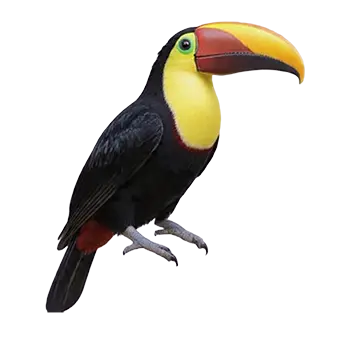

Swainson's Toucans are obligate frugivores whose dietary requirements differ radically from those of parrots, finches, and most other commonly kept companion birds. In the wild, the vast majority of their caloric intake comes from soft, ripe tropical fruits supplemented by insects, small vertebrates, and the occasional egg taken from other birds' nests. Replicating this nutritional profile in captivity requires careful product selection and an understanding of the metabolic constraints unique to ramphastids. Owners who approach toucan nutrition with the same framework used for parrots will encounter serious health consequences.
The single most critical nutritional concern for Swainson's Toucans is iron storage disease, also known as hemochromatosis. Ramphastids lack the physiological mechanisms that most other bird families use to regulate dietary iron absorption, which means that excess iron accumulates in the liver, heart, and other organs over time. This progressive accumulation eventually causes organ failure and is the leading cause of premature death in captive toucans. Every food product selected for a Swainson's Toucan must be evaluated through the lens of its iron content, and products formulated for parrots, which typically contain iron levels far exceeding what is safe for toucans, must never be substituted.
Beyond iron management, Swainson's Toucans require a diet high in natural sugars and moisture content, reflecting the water-rich tropical fruits that form their wild diet. Their digestive tract is relatively short compared to that of granivorous birds, which means food passes through quickly and nutrient absorption must be efficient. This rapid transit time also means that toucans are sensitive to dietary changes and can develop digestive upset when introduced to unfamiliar foods too abruptly. A gradual rotation of approved fruits and softbill products keeps the gut microbiome stable while providing nutritional variety.
Protein needs are moderate but important. Wild Swainson's Toucans supplement their fruit diet with insects and small prey items, providing essential amino acids that fruit alone cannot deliver. In captivity, this protein component must be addressed through carefully chosen insect products, low-iron softbill pellets, or both. Ignoring the protein fraction of the diet can lead to muscle wasting, poor feather quality, and compromised immune function over the long term.