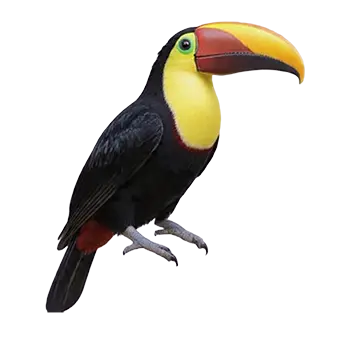

Maintaining the tropical environmental conditions that Swainson's Toucans require demands accurate, continuous monitoring of temperature and humidity in the enclosure area. Digital hygrometer-thermometer combination units provide the foundational data needed to detect and correct environmental deviations before they affect the bird's health. The best units for avian applications display both current readings and recorded highs and lows over a selectable time period, which reveals overnight temperature drops and humidity swings that the keeper might otherwise miss during waking hours.
Placement of environmental sensors significantly affects the usefulness of the data they collect. A single sensor placed on the outside of the cage or across the room provides room-level readings that may differ substantially from conditions at the bird's actual perching level inside the enclosure. Ideally, one sensor should be positioned near the bird's primary daytime perch and a second near the sleeping area, as microclimates within the enclosure can vary by several degrees and multiple percentage points of humidity depending on proximity to heating vents, windows, humidifiers, and lighting equipment. Wireless sensors that transmit data to a base station or smartphone application allow monitoring from outside the bird room without disturbing the bird.
Smart environmental monitors that connect to home automation systems offer the most comprehensive monitoring capability for serious toucan keepers. These devices log temperature and humidity data continuously, generate alerts when readings fall outside user-defined acceptable ranges, and integrate with smart plugs or controllers that can automatically activate supplemental heating, cooling, or humidification equipment in response to changing conditions. For keepers who travel or who house toucans in detached buildings or dedicated bird rooms, remote monitoring with push notifications provides peace of mind that the bird's environment remains within safe parameters even when the keeper is not physically present.
Calibration and accuracy verification should be performed periodically on any environmental sensor used for avian care. Consumer-grade hygrometers can drift by five percent or more in their humidity readings over time, which in the context of toucan care could represent the difference between an acceptable sixty-five percent relative humidity and an uncomfortable or unhealthy fifty-five percent. Calibration kits that use saturated salt solutions provide a known reference point against which the sensor's accuracy can be verified. Replacing batteries proactively, before low-power conditions degrade sensor performance, ensures continuous reliable readings.