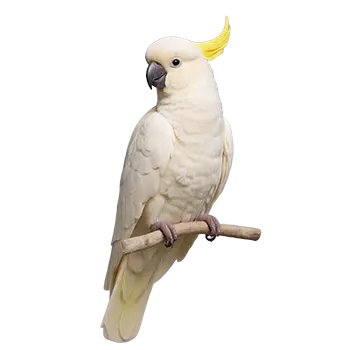

Sulphur-Crested Cockatoos are among the most cognitively advanced and emotionally complex parrots kept in captivity, and their need for mental stimulation is not a preference but a biological requirement. In the wild, these birds spend the majority of their waking hours engaged in complex social interactions within large flocks, foraging across diverse landscapes, manipulating objects with their beaks and feet, and solving the daily challenges of finding food, water, and safe roosting sites. A captive cockatoo whose environment does not provide adequate outlets for these drives will redirect its energy into destructive and self-harming behaviors that can become deeply entrenched and extremely difficult to resolve.
Feather-destructive behavior is the most visible consequence of inadequate enrichment in Sulphur-Crested Cockatoos. Birds that are bored, understimulated, or socially isolated may begin plucking, barbering, or chewing their own feathers, sometimes progressing to self-mutilation of the skin beneath. Once established, feather destruction often becomes a compulsive behavior pattern that persists even after environmental improvements are made, making prevention through proactive enrichment far more effective than treatment after the fact. Veterinary behaviorists consistently identify insufficient environmental complexity as a primary risk factor for this condition.
Excessive screaming, another common behavioral complaint with Sulphur-Crested Cockatoos, is frequently linked to inadequate stimulation. While all cockatoos vocalize loudly as part of their natural communication repertoire, a bird that screams persistently throughout the day is often expressing frustration, attention-seeking, or anxiety rooted in environmental monotony. A well-enriched environment gives the bird constructive activities to occupy its attention during periods when direct human interaction is not available, reducing the motivation to scream for engagement.
The financial and time investment in enrichment should be viewed as a core component of cockatoo ownership rather than an optional luxury. Owners who budget for a steady supply of toys and enrichment materials from the outset avoid the far greater costs associated with veterinary behavioral consultations, medical treatment for self-inflicted injuries, and the emotional toll of living with a psychologically distressed animal. The ongoing cost of keeping a Sulphur-Crested Cockatoo adequately enriched is substantial, as this species destroys toys rapidly and requires constant rotation of novel items, but it is inseparable from the responsibility of housing such an intelligent animal.