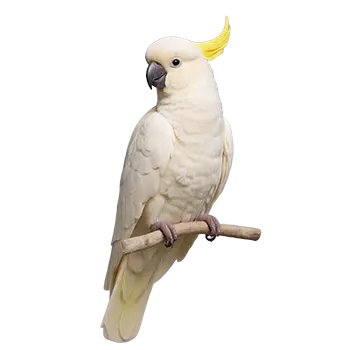

The Sulphur-Crested Cockatoo is one of the largest commonly kept companion parrots, and its housing requirements reflect both its physical dimensions and its extraordinary energy levels. A minimum cage size for a single Sulphur-Crested Cockatoo is approximately 36 inches wide by 24 inches deep by 48 inches tall, though these dimensions represent an absolute floor rather than a target. Experienced cockatoo owners and avian veterinarians consistently recommend enclosures measuring at least 40 inches wide by 30 inches deep by 60 inches tall, with many advocating for even larger walk-in style cages or dedicated bird rooms when space and budget allow. The fundamental principle is that the bird should be able to fully extend its wings and flap without touching the cage walls, and ideally should have room to climb, swing, and move between multiple perching stations.
Width and depth matter more than height for this species. While Sulphur-Crested Cockatoos do climb vertically, their play and exercise patterns involve significant lateral movement, wing stretching, and hanging from various angles. A cage that is very tall but narrow forces the bird into a vertical climbing pattern that does not adequately exercise the chest and wing muscles. Horizontal space allows the bird to hop between perches, swing toys, and engage in the acrobatic behaviors that keep it physically and psychologically healthy.
Cage shape should be rectangular or square rather than round. Round cages eliminate corners, which might seem like an advantage, but in practice they reduce usable interior space, make it difficult to position perches and toys effectively, and can create a disorienting environment for birds that use cage geometry to orient themselves. Rectangular cages with flat tops also provide a usable play area on top of the cage when a playtop model is selected, which many cockatoo owners find valuable as an additional activity zone during supervised out-of-cage time.
Door design is an often-overlooked aspect of cage selection that becomes critically important with Sulphur-Crested Cockatoos. These birds are renowned escape artists with powerful beaks and remarkable problem-solving abilities. Simple slide-up or push-out doors can be opened by a determined cockatoo within minutes. Doors with secure locking mechanisms, ideally requiring multiple steps to open or incorporating padlock hasps, are essential. Many owners add small padlocks or carabiner clips to cage doors and food access points as a standard precaution. The main door should be large enough for the owner to reach inside comfortably for cleaning and to allow the bird to enter and exit without risk of wing or crest feather damage.