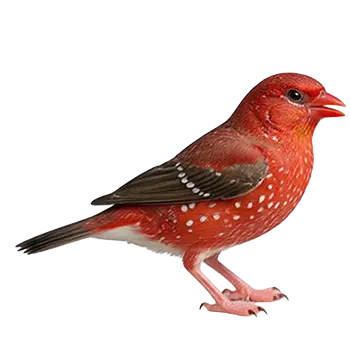

Enrichment for the Strawberry Finch must be understood through the lens of what this species actually does in the wild rather than through assumptions borrowed from parrot care. Parrots manipulate objects with their feet and beaks, solve puzzles, and destroy wooden toys for entertainment. Finches do none of these things. The Strawberry Finch's natural behavioral repertoire centers on flight, foraging through grass and ground cover for seeds and insects, bathing, singing, and social interaction with flock members. Effective enrichment for this species recreates opportunities for these specific behaviors within the captive environment.
The consequences of inadequate enrichment in Strawberry Finches are subtle but significant. Unlike parrots that develop dramatic behavioral disorders like feather destruction and screaming when under-stimulated, finches tend to become quietly withdrawn. An under-enriched Strawberry Finch may sit motionless on a single perch for hours, stop singing, and lose the vibrant plumage coloration that signals good health. These signs are easy to overlook, especially by keepers accustomed to the more obvious distress signals of hookbill species, but they represent genuine welfare compromise.
The key principle in finch enrichment is environmental complexity rather than individual toy interaction. A well-enriched Strawberry Finch habitat offers multiple microenvironments within the same enclosure: open flight space, dense vegetative cover, ground-level foraging areas, elevated perching zones, and a water feature for bathing. The bird moves through these zones throughout the day according to its own motivations, and the variety of available activities sustains engagement in a way that a single novel object cannot.
Social enrichment deserves equal emphasis alongside physical enrichment. Strawberry Finches housed alone lack the flock interactions that occupy a significant portion of their natural behavioral time budget. Mutual preening, vocal exchanges, communal roosting, and the complex social dynamics of a small group provide cognitive stimulation that no toy can replace. Enrichment planning should always begin with the question of whether the bird has appropriate social companions before addressing the physical environment.