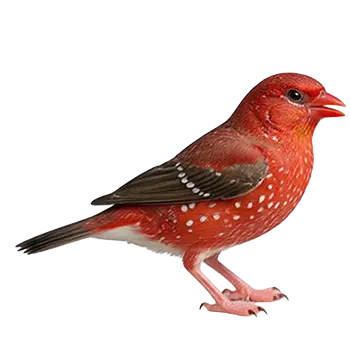

Essential Accessories Overview

Equipping a Strawberry Finch habitat involves assembling a collection of accessories that support the bird's daily needs while accommodating the specific physical characteristics of this small species. Many bird accessories are designed with parakeets and cockatiels in mind, and products sized for those medium-bodied hookbills are frequently inappropriate for a finch that weighs under half an ounce. Successful Strawberry Finch keeping depends on selecting accessories purpose-built or carefully adapted for the smallest cage birds.

The core accessory inventory for a Strawberry Finch setup includes food and water delivery systems, nesting and roosting provisions, grooming and health maintenance supplies, lighting equipment, transport carriers, and cleaning tools. Each category contains products that range from bare-minimum functional to highly refined, and the right choices depend on the keeper's housing setup, the number of birds maintained, and whether breeding is planned. Investing in quality accessories from the outset prevents the cycle of cheap replacements that ultimately costs more in both money and bird welfare.

Accessory material safety is a recurring concern throughout every product category. Small finches mouth and manipulate objects in their environment, and even accessories not intended as toys may be nibbled, perched on, or splashed with water that contacts food. Every item placed in or near the cage should be made from materials verified as non-toxic to birds. Zinc, lead, and copper are the most common metal hazards. Plastics should be food-grade and free of bisphenol compounds. Paints, dyes, and adhesives must be confirmed bird-safe before any decorated or assembled product enters the habitat.

Durability and ease of cleaning should weigh heavily in purchasing decisions. Accessories that cannot be thoroughly sanitized on a regular schedule become bacterial reservoirs regardless of how well the cage itself is maintained. Stainless steel, food-grade plastic, and glazed ceramic are the easiest materials to clean and the most resistant to bacterial colonization. Porous materials like unglazed clay, raw wood, and fabric absorb moisture and organic matter, making them suitable only for items that will be replaced frequently rather than maintained indefinitely.

Feeders and Waterers

Seed feeders for Strawberry Finches must balance accessibility with waste reduction and hygiene. Open dishes are the simplest option and allow unrestricted access, but they also permit birds to scatter seed, contaminate the food with droppings, and selectively eat preferred seeds while leaving others. Hopper-style feeders that dispense seed from a reservoir through a narrow trough reduce waste and contamination significantly. When selecting a hopper feeder, ensure the feeding trough is wide enough for the Strawberry Finch's small beak to access comfortably and that the seed flows freely without jamming in the dispensing slot.

Tube feeders with small perch pegs are another effective option for small finches. These vertical feeders hold seed in a clear tube with access ports at various heights. The transparency allows easy monitoring of seed levels, and the enclosed design protects the seed from droppings and cage debris. However, tube feeders can be difficult to clean thoroughly if the tube diameter is too narrow for a bottle brush. Choose tube feeders with removable bases or wide-mouth openings that allow complete internal access during cleaning.

Water delivery for Strawberry Finches can use either open dishes or enclosed water bottles. Open dishes are natural and intuitive for the birds but become contaminated rapidly, as finches frequently bathe in drinking dishes if no separate bath is provided. Enclosed tube-style water dispensers with ball-valve or drip tips keep water clean for longer periods and are especially useful in warmer environments where bacterial growth in standing water accelerates. Some finches require a brief acclimation period to learn to drink from a tube dispenser, so offering both a dish and a tube during the transition ensures continuous water access.

Separate dishes for different food types prevent cross-contamination and allow precise monitoring of consumption. A dedicated dish for dry seed, another for egg food or soft food, a small cup for supplements or grit, and a water source should each occupy its own position within the cage. Clip-on dishes that attach to the cage bars at perch height are convenient and reduce the floor space occupied by food stations. Ceramic or stainless steel dishes are preferable to plastic, as they resist scratching that harbors bacteria and they withstand repeated sanitizing without degrading.

Nesting and Roosting Supplies

Nesting provisions are essential for breeding Strawberry Finches and beneficial even for non-breeding birds as roosting shelters. In the wild, Strawberry Finches build enclosed, dome-shaped nests from woven grass and plant fibers. Captive pairs readily accept wicker or bamboo nest baskets that approximate this enclosed shape. Finch nest boxes with a front entrance hole roughly one and a half inches in diameter provide a secure, private cavity that most pairs will adopt. Both open-topped baskets and enclosed boxes should be positioned in the upper third of the cage, where the birds feel most secure.

Nesting material selection directly affects breeding success. Strawberry Finches are industrious nest builders that weave elaborate structures when given appropriate materials. Dried grass, coconut fiber, sisal strands, and soft feathers form the natural material palette. Commercial nesting material packs designed for finches combine several of these fibers in a convenient format. Avoid cotton wool, loose cotton thread, and synthetic fibers, which can entangle toes and chicks or cause crop impaction if ingested. Materials should be offered in a dedicated dispenser or loosely draped over cage accessories where the birds can pull strands as needed.

Roosting shelters serve a different but related function. Even non-breeding Strawberry Finches benefit from an enclosed sleeping area that provides warmth, security, and protection from light during rest periods. A small woven grass hut or a covered corner shelf gives birds a consistent roosting location that helps establish a predictable sleep routine. In cooler environments, a roosting shelter retains body heat more effectively than an open perch, reducing the metabolic burden of overnight thermoregulation for these tiny birds.

Nest hygiene requires attention during and after the breeding cycle. Active nests should be disturbed as little as possible to avoid parental abandonment, but once chicks have fledged, the nest should be removed, discarded, and replaced with a clean alternative if another clutch is anticipated. Old nesting material harbors parasites, bacteria, and fungi that can infect subsequent clutches. Between breeding seasons, roosting shelters should be cleaned or replaced on a monthly schedule. Disposable nesting materials are preferable to permanent fabric or fiber liners that are difficult to sanitize completely.

Grooming and Health Supplies

Grooming supplies for Strawberry Finches are minimal compared to those required for hookbill species, but a small kit of essential health maintenance tools should be on hand at all times. A pair of small, sharp nail clippers designed for finch-sized birds is the most important grooming tool. Overgrown nails catch on cage fabric, nesting material, and wire, and a trapped bird can panic and break a leg before being discovered. Nail trimming is a delicate task given the bird's tiny size, and many keepers prefer to have an avian veterinarian demonstrate the technique before attempting it independently.

Styptic powder should accompany the nail clippers as an emergency blood-stop measure. Finch nails contain a blood vessel, the quick, that can be clipped accidentally during trimming. The resulting bleeding, while minor in absolute volume, can be proportionally significant for a bird with so little total blood volume. A small container of styptic powder or a styptic pencil applied immediately to the nail tip stops bleeding within seconds. Cornstarch serves as an acceptable household substitute in an emergency, though purpose-made styptic products are more effective.

A digital gram scale accurate to one-tenth of a gram is arguably the single most valuable health monitoring tool a finch keeper can own. Regular weight tracking reveals health changes long before visible symptoms appear. A Strawberry Finch typically weighs between seven and ten grams, and a loss of even one gram represents a significant percentage of total body weight that warrants close observation. Weekly weigh-ins, recorded in a simple log, establish each bird's normal weight range and make deviations immediately apparent.

A basic first-aid kit rounded out with avian-safe antiseptic, small tweezers, cotton-tipped applicators, and a heat source such as a small ceramic heat lamp covers the most common minor emergencies. Leg band removers are important if any birds are banded, as improperly sized or damaged bands can constrict growing tissue. A magnifying glass or jeweler's loupe aids in examining tiny feet, nails, and beak for the early signs of mite infestation, overgrowth, or injury that are difficult to assess with the naked eye on such a small bird.

Carriers and Travel Gear

A purpose-designed bird carrier is necessary for veterinary visits, relocations, and emergency evacuations. Small finches should never be transported in the main cage, which is unwieldy, offers too much space for the bird to be thrown around during sudden vehicle movements, and exposes the bird to temperature changes and visual stressors. A compact carrier measuring roughly twelve by eight by eight inches is ideal for transporting one to three Strawberry Finches. The carrier should have secure ventilation openings sized so that finches cannot escape, a secure latch that cannot be jostled open, and a solid floor with a removable tray for easy cleaning.

Carrier interior setup matters as much as the carrier itself. A single low perch positioned a few inches above the floor gives the bird a stable foothold during transport. Avoid tall perches or multiple levels, as a startled finch can fall from height during vehicle stops and turns. Securing a small dish of seed to the carrier floor and attaching a water tube or offering a small piece of moist fruit provides hydration for trips longer than an hour. Covering the carrier with a light cloth reduces visual stimulation and helps the bird remain calm during the journey.

For longer transport, such as moving to a new home or traveling to bird shows, insulated carrier covers maintain temperature stability within the carrier. These covers, typically made from quilted nylon with a reflective inner lining, buffer against both cold and heat. In cold weather, a chemical hand warmer wrapped in cloth and placed beneath the carrier floor provides gentle warmth. In hot conditions, a frozen gel pack wrapped in a towel placed atop the carrier allows cool air to sink through the ventilation openings. The goal is to maintain a temperature range between sixty-five and eighty degrees Fahrenheit inside the carrier.

Emergency preparedness should include a pre-packed evacuation kit containing the carrier, a bag of seed, a bottle of water, a heat source, a cloth cover, and copies of any veterinary records or band numbers. Natural disasters, power failures, and household emergencies such as gas leaks or pest fumigation can require rapid evacuation, and having a grab-and-go kit eliminates the scramble to assemble supplies under pressure. The kit should be stored in an accessible location and checked quarterly to ensure that the food remains fresh and the supplies are complete.

Lighting and Heating Accessories

Full-spectrum lighting is one of the most impactful accessories for indoor Strawberry Finches. Natural sunlight filtered through window glass loses most of its ultraviolet component, and UV-A and UV-B wavelengths play essential roles in avian biology. UV-B light drives vitamin D3 synthesis in the preen gland, which in turn governs calcium metabolism. UV-A light influences color perception, as birds see a broader spectrum than humans and use UV-reflected plumage signals in mate selection and social interaction. A bird kept under standard household lighting is functionally living in a spectrally impoverished environment.

Avian-specific full-spectrum fluorescent or LED bulbs produce light in the UV-A and UV-B ranges appropriate for birds. These bulbs should be positioned above the cage at a distance recommended by the manufacturer, typically twelve to eighteen inches from the nearest perch. A timer controlling the light cycle ensures a consistent photoperiod without relying on the keeper's daily schedule. During non-breeding periods, a twelve-hour light and twelve-hour dark cycle is standard. Breeding can be stimulated by gradually extending the light period to fourteen hours, mimicking the lengthening days of the natural breeding season.

Supplemental heat accessories protect Strawberry Finches during cold weather and are essential for birds housed in rooms where temperatures drop below sixty-five degrees Fahrenheit. Ceramic heat emitters produce infrared heat without visible light, making them ideal for maintaining warmth during the dark period without disrupting the bird's sleep cycle. These emitters must be used with a thermostat to prevent overheating and should be positioned outside the cage, directed toward one end so the bird can choose its preferred temperature zone by moving closer to or farther from the heat source.

Heated perches and panel heaters designed for bird cages provide gentle, localized warmth. Heated perches maintain a consistent surface temperature that keeps the bird's feet warm during cold nights, while flat panel heaters mounted to one side of the cage wall radiate warmth across a broader area. Both should include thermostatic control and be constructed from chew-proof materials with concealed wiring. Any electrical heating device used near birds must be specifically designed for avian use, as repurposed reptile or mammal heating products may reach temperatures unsafe for birds or may emit materials not tested for avian safety.

Cleaning Supplies and Tools

Maintaining a hygienic environment for Strawberry Finches requires a dedicated set of cleaning supplies that are effective against avian pathogens while being safe for use around birds with highly sensitive respiratory systems. The cleaning supply kit should be stored separately from household cleaning products to prevent accidental cross-use. Building the habit of reaching for bird-safe products exclusively when working around the cage eliminates the risk of exposing birds to toxic fumes from conventional cleaners.

Bird-safe disinfectants form the backbone of the cleaning routine. Enzymatic cleaners designed for avian environments break down organic matter, including dried droppings, food residue, and feather dust, without producing harmful chemical fumes. Quaternary ammonium disinfectants at avian-appropriate dilutions are effective against a broad spectrum of bacteria and fungi. Whichever product is chosen, thorough rinsing after application is mandatory, as even bird-safe disinfectants can irritate mucous membranes if residue is left on surfaces that birds contact directly.

Specific tools streamline the cleaning process and improve thoroughness. A set of bottle brushes in multiple sizes handles water tubes, feeder tubes, and narrow crevices in cage accessories. A stiff-bristled hand brush or old toothbrush works well for scrubbing perch surfaces and bar junctions where droppings accumulate. A handheld vacuum or small dustpan and brush set handles the seed hulls and feather dust that accumulate around the cage base daily. For keepers with multiple cages, a small handheld steam cleaner provides chemical-free sanitization using heat alone, which is the safest possible method for surfaces that birds will contact.

Cage liner management deserves a systematic approach. Pre-cut cage liner paper in the correct dimensions for the cage tray speeds up the daily substrate change and ensures a clean, flat surface every time. Some keepers layer multiple sheets of liner paper, removing one sheet each day to reveal a fresh layer underneath, which reduces the daily time investment to seconds. Rolls of plain butcher paper or packing paper provide an economical bulk alternative to branded cage liner products. Whatever the liner material, it should be changed daily without exception. Droppings from the previous day begin bacterial proliferation within hours, and a single day's delay in changing the liner compromises the hygienic foundation that all other cleaning efforts are built upon.

Always consult a qualified professional before making any health-related decisions. This content is provided for informational reference only and should not replace professional guidance specific to your animal.