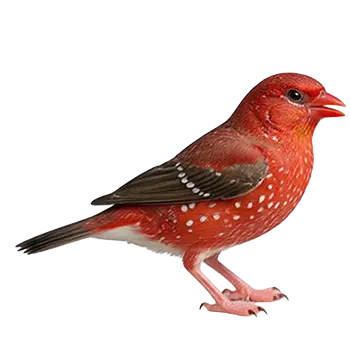

The Role of Technology in Finch Keeping

Technology in Strawberry Finch keeping serves a fundamentally different purpose than it does in the care of larger companion birds. Parrots and cockatoos benefit from interactive tech like puzzle feeders with electronic locks, tablet-based games, and video calling with their owners. Strawberry Finches have no interest in screen-based interaction and no capacity for electronic puzzle solving. For this species, technology's value lies entirely in environmental monitoring, automation of routine conditions, and remote observation that allows keepers to detect problems without the physical intrusion that stresses timid birds.

The small body mass of the Strawberry Finch makes environmental precision more important than it is for larger, more thermally resilient species. A temperature swing that a macaw would tolerate without consequence can push a ten-gram finch into hypothermic stress. A humidity drop that leaves a cockatiel mildly uncomfortable can cause a Strawberry Finch's feathers to become brittle and its respiratory mucosa to dry out. Technology that provides continuous, accurate environmental data gives keepers the ability to identify and correct subtle conditions before they affect bird health.

Remote monitoring addresses one of the central challenges of keeping timid finches. Strawberry Finches alter their behavior significantly when a human is standing at the cage. They suppress normal activity, stop singing, and retreat to cover. A keeper who evaluates bird behavior only through direct observation is seeing an edited version of the bird's daily life. Cameras and remote sensors allow observation of undisturbed natural behavior, feeding patterns, social interactions, and potential early illness signs that the bird would conceal in the presence of a human.

The technology landscape for avian keeping has expanded considerably in recent years, with many products originally designed for reptile keeping, home automation, or agriculture finding productive application in bird rooms and aviaries. Not every available device is necessary or even useful for a typical Strawberry Finch setup, and the sections that follow evaluate specific technology categories by their practical value relative to their cost and complexity.

Temperature and Humidity Monitors

A digital thermometer and hygrometer combination unit is the single most essential piece of monitoring technology for a Strawberry Finch enclosure. The target temperature range for this tropical species is sixty-five to eighty degrees Fahrenheit, with an ideal humidity range of fifty to sixty-five percent relative humidity. Conditions outside these ranges compromise the bird's comfort and health incrementally, and prolonged exposure to extreme deviations can be fatal. A basic digital unit positioned at perch level inside the cage provides accurate, real-time readings that allow keepers to spot environmental problems as they develop.

Wireless sensor systems take environmental monitoring a step further by enabling remote data access and historical logging. Multi-sensor systems designed for home automation or greenhouse management can be adapted for bird room use. These systems typically include a base station connected to a home network and one or more wireless sensor modules placed inside or immediately adjacent to enclosures. The base station records temperature and humidity at configurable intervals and provides access to current and historical data through a smartphone application. Reviewing historical data reveals patterns, such as overnight temperature drops or humidity spikes after cage cleaning, that spot checks would miss.

Alert functionality distinguishes passive monitoring from active environmental protection. The most useful sensor systems allow keepers to configure threshold alerts that send push notifications to a smartphone when temperature or humidity falls outside a specified range. This capability is especially valuable during overnight hours, when heating system failures or window drafts can drop room temperature without anyone noticing until morning. An alert sent at two in the morning when the temperature dips below sixty degrees gives the keeper time to intervene before the birds experience dangerous cold stress.

Sensor placement affects data accuracy. A sensor mounted on the outside of the cage or on a nearby wall does not reflect the actual conditions inside the enclosure, which can differ by several degrees due to heat buildup from lighting or cooling from air currents. For the most accurate readings, the sensor should be placed inside the cage at the height where the birds spend most of their time, shielded from direct contact with heat sources and protected from water splashes. Waterproof sensor probes designed for greenhouse use withstand the humidity levels common in aviary environments better than consumer-grade indoor sensors.

Lighting Controllers and Smart Timers

Consistent photoperiod management is critical for Strawberry Finch health, governing circadian rhythm, molt timing, breeding readiness, and sleep quality. Manual light switching introduces inconsistency and relies on the keeper's daily availability, making automated lighting control one of the highest-value technology investments for any finch setup. A basic plug-in timer that turns the avian light fixture on and off at set times costs very little and eliminates the most common source of photoperiod disruption.

Programmable smart timers and smart plugs offer additional features that refine the lighting experience. Gradual dimming capabilities simulate natural dawn and dusk rather than subjecting birds to an abrupt transition between full darkness and full light. This gradual transition is particularly beneficial for Strawberry Finches, which are easily startled by sudden environmental changes. A ten to fifteen minute ramp-up period in the morning and a matching ramp-down in the evening reduces fright responses and gives birds time to settle onto roosting perches before full darkness.

Smart lighting systems that integrate with home automation platforms provide centralized control over multiple light fixtures across a bird room. A keeper managing several cages or aviaries can synchronize all lighting to a single schedule, adjust photoperiods seasonally through the automation app, and verify remotely that the lights cycled correctly. Some systems also log light on and off times, creating a record that helps troubleshoot breeding failures or unexpected molt timing by correlating light exposure with biological events.

Light quality deserves as much attention as timing. Full-spectrum avian bulbs should be replaced on the manufacturer's recommended schedule, typically every twelve months for fluorescent tubes and every two to three years for LED panels, because UV output degrades before the visible light output diminishes noticeably. A bulb that appears bright to the human eye may be producing inadequate UV for the bird's biological needs. Setting a recurring calendar reminder or a smart-home notification for bulb replacement ensures that the light quality remains effective throughout the year.

Cameras and Remote Observation

Small, wireless cameras designed for home security or baby monitoring adapt readily to avian observation use. A camera positioned to view the interior of the cage allows keepers to observe their Strawberry Finches without being physically present in the room. The behavioral difference between observed and unobserved finches is substantial. Undisturbed Strawberry Finches engage in a full repertoire of natural behaviors, including singing, mutual preening, courtship displays, bathing, and active foraging, that they suppress when a human is nearby. A camera reveals the bird's true behavioral profile and provides a baseline for detecting abnormalities.

Camera selection for bird monitoring should prioritize image clarity, low-light capability, and silent operation. A resolution of at least 1080p provides enough detail to assess feather condition, observe feeding behavior, and detect subtle signs of illness such as fluffed posture, tail bobbing, or eye discharge from across the cage. Infrared night vision mode allows overnight monitoring without introducing visible light that would disturb the birds' sleep. Cameras with pan-tilt-zoom capability are useful for larger aviaries but are generally unnecessary for single-cage monitoring, where a fixed wide-angle lens covers the entire enclosure.

Cloud-based recording and playback allow keepers to review footage from earlier in the day or week, which is invaluable for diagnosing intermittent health or behavioral issues. A bird that appears healthy during the keeper's morning check may show signs of distress at midday when no one is home. Reviewing recorded footage can reveal the timing and context of concerning behaviors, such as a bird that stops eating after the household leaves or one that is being aggressively displaced from food by a cagemate. Time-lapse compilation features condense hours of footage into minutes, making behavioral pattern review practical.

Privacy and network security considerations apply to any internet-connected camera. Bird room cameras do not typically capture sensitive household areas, but they do connect to the home network and should be secured with strong, unique passwords and updated firmware. Cameras from reputable manufacturers with transparent privacy policies and local storage options reduce the risk of unwanted data exposure. For keepers who prefer to avoid cloud connectivity entirely, cameras with local SD card recording and direct WiFi access provide monitoring capability without external data transmission.

Air Quality and Filtration Systems

Air quality directly impacts the respiratory health of Strawberry Finches, whose avian respiratory system is more efficient than mammalian lungs but also more vulnerable to airborne irritants and toxins. Birds possess a system of air sacs that maintains a continuous unidirectional airflow through the lungs, which means that inhaled particles and gases contact the respiratory surfaces during both inhalation and exhalation. This anatomical feature, while excellent for oxygen extraction during flight, also doubles the exposure time to any airborne contaminants compared to the tidal breathing pattern of mammals.

HEPA air purifiers rated for the room size where the birds are housed capture the fine particulate matter generated by feathers, dried droppings, seed husks, and dander. A true HEPA filter removes at least ninety-nine point ninety-seven percent of particles at zero point three microns, which encompasses the size range of most avian dust and allergen particles. Purifiers with activated carbon pre-filters add the ability to adsorb volatile organic compounds and odors, providing a second layer of air quality improvement. The purifier should run continuously in the bird room rather than intermittently, as consistent filtration prevents the accumulation of particles between operating cycles.

Ionic and ozone-generating air purifiers must be strictly avoided in any room housing birds. Ozone, even at the low concentrations produced by consumer ionizers, damages avian respiratory tissue and can be fatal with prolonged exposure. Products that claim to be ozone-free ionic purifiers should be verified independently, as some models produce trace ozone levels that, while below human safety thresholds, exceed what is safe for birds. A true HEPA mechanical filter is the only purification technology recommended without reservation for avian environments.

Air quality monitoring devices that measure particulate levels, carbon dioxide concentration, and volatile organic compounds provide data-driven insight into the bird room atmosphere. Consumer-grade air quality monitors that connect to smartphone applications display real-time and historical air quality metrics, allowing keepers to correlate air quality changes with specific activities such as cage cleaning, cooking in adjacent rooms, or seasonal changes in home ventilation. A spike in particulate readings during a specific activity identifies a hazard that can be addressed through procedural changes, such as cleaning the cage in a different location or improving ventilation during particular household tasks.

Automated Feeding and Watering

Automated feeding systems for finches are less complex than those designed for larger birds but can still add convenience and consistency to the daily care routine. Gravity-fed seed dispensers refill the feeding trough automatically as the bird consumes seed, ensuring a continuous supply without daily manual refilling. These simple devices require no power source and function reliably for days at a time, making them particularly useful during short absences or for keepers who maintain large collections where individual daily filling of every feeder is time-consuming.

Automated waterers function on the same gravity-fed principle, with an inverted bottle releasing water into a trough as the level drops. Vacuum-sealed water dispensers maintain freshness longer than open dishes and reduce the frequency of bacterial contamination. For finch keepers who add water-soluble supplements, however, automated waterers present a limitation, as the supplement degrades over time in the reservoir and cannot be mixed fresh daily. A hybrid approach, using automated plain water dispensers alongside a small daily-changed supplement dish, accommodates both convenience and nutritional needs.

Timed feeding systems that dispense measured portions at set intervals exist primarily in the poultry and aviculture industries, with some models scaled down for companion bird use. These are rarely necessary for a small finch collection but can serve specific management goals, such as distributing small amounts of sprouted seed or egg food at intervals throughout the day when the keeper is at work. The mechanical noise of motorized dispensers may startle Strawberry Finches initially, so any automated feeding device should be introduced gradually, running empty at first so the birds habituate to the sound before food is involved.

Smart water quality monitors designed for aquarium use can be repurposed to track the condition of avian drinking water. These sensors measure pH, total dissolved solids, and temperature, providing objective data on water freshness. While most finch keepers can assess water quality through visual inspection and daily replacement, a water quality sensor adds a layer of verification for keepers who are away from home for extended periods or who rely on automated watering systems where the water may sit for longer than a single day.

Sound and Environmental Recording

Sound recording technology offers Strawberry Finch keepers a tool for behavioral assessment, breeding management, and long-term health tracking that is unique among monitoring approaches. The male Strawberry Finch produces a distinctive, complex warbling song that serves as one of the most reliable indicators of his physical condition and emotional state. A healthy, well-adjusted male sings frequently and with full tonal range. A decline in song frequency, volume, or complexity often precedes visible signs of illness or stress by days or even weeks. Recording and comparing vocalizations over time creates an auditory health record that complements visual observation and weight tracking.

Smartphone-based audio recording is the simplest entry point. A phone positioned near the cage on a recording app while the keeper is out of the room captures undisturbed vocalization patterns. Reviewing these recordings reveals how often the bird sings, the duration of song bouts, and whether the vocal quality sounds clear or strained. Over time, a library of recordings establishes the individual bird's normal vocal baseline, making deviations easier to recognize. Some dedicated birdsong recording applications include spectrogram visualization tools that display the frequency and amplitude of calls graphically, allowing keepers to compare recordings side by side.

Dedicated audio monitoring devices designed for wildlife research or home sound detection can be configured to record only when sound levels exceed a threshold, capturing vocalizations while filtering out silent periods. These devices conserve storage space and simplify review by producing a condensed record of vocal activity throughout the day. Motion-activated audio and video recorders combine both modalities, creating synchronized records of what the bird was doing when it vocalized, which provides behavioral context that audio alone cannot.

Environmental sound management is the other side of auditory technology. Sound level meters or decibel-monitoring applications help keepers assess whether household noise levels are stressing their birds. Construction noise, loud music, barking dogs, or television at high volume can elevate stress hormones in small finches even if the birds appear to be sitting calmly. A sound meter placed near the cage during various household activities reveals which sounds reach levels that may be problematic, allowing keepers to make informed decisions about cage placement and household noise management during quiet hours.

Always consult a qualified professional before making any health-related decisions. This content is provided for informational reference only and should not replace professional guidance specific to your animal.