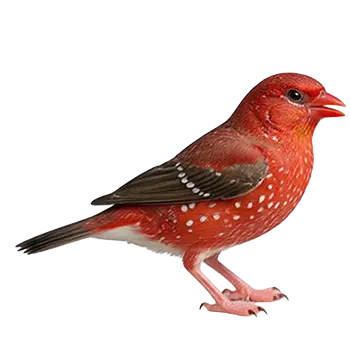

Housing Requirements

The Strawberry Finch is an active, fast-flying bird that spends much of its waking life in motion. Unlike hookbills that climb cage walls and manipulate objects with their feet, finches exercise almost exclusively through flight, making horizontal space the defining factor in housing quality. An enclosure that prioritizes height over width fundamentally misunderstands how this species uses its environment. Every housing decision, from cage dimensions to interior layout, should be evaluated through the lens of flight access and the bird's need for unobstructed horizontal movement.

Social dynamics also shape housing requirements. Strawberry Finches are flock-oriented birds that do poorly when housed alone. A single bird kept in isolation often develops stress behaviors including feather plucking, lethargy, and a cessation of song. Housing should therefore be planned for at least two birds, which immediately increases the minimum acceptable enclosure size. Pairs and small groups need enough space to establish personal zones within the enclosure, retreating from one another when social tension arises without being forced into constant close contact.

The species' natural timidity adds another layer to housing planning. Strawberry Finches startle easily and can injure themselves during panic flights if the enclosure is too small for safe aerial maneuvering or if there is no visual cover to retreat behind. Dense plantings, whether live or artificial, provide psychological security and reduce the frequency and intensity of fright responses. Housing that feels exposed from all sides keeps these birds in a state of chronic low-grade stress that suppresses immune function and breeding behavior.

Temperature sensitivity is a practical consideration that influences enclosure type and placement. As a tropical and subtropical species, the Strawberry Finch requires consistent warmth, with ambient temperatures ideally maintained between sixty-five and eighty degrees Fahrenheit. Drafts are particularly dangerous for small-bodied birds, as their high surface-area-to-mass ratio makes them vulnerable to rapid heat loss. Housing placement must account for airflow patterns in the room, and outdoor housing is only appropriate in climates that remain reliably warm or where heated shelter is available.

Cage Size and Dimensions

Minimum cage dimensions for a pair of Strawberry Finches should be thirty inches long, eighteen inches deep, and eighteen inches tall. This represents a baseline, not an ideal. Experienced finch keepers generally recommend the longest cage that available space and budget permit, with length always prioritized over height. A cage measuring thirty-six to forty-eight inches in length provides substantially better flight opportunity and noticeably calmer birds. For small groups of four to six birds, a flight cage of at least forty-eight inches in length becomes necessary to prevent territorial crowding.

Cage shape matters. Rectangular cages with flat tops are the only appropriate choice for finches. Round cages offer no corners for birds to orient themselves spatially, and the tapering walls reduce usable flight space dramatically. Decorative dome-topped cages similarly waste vertical space that finches cannot use effectively. The interior geometry of a rectangular enclosure allows keepers to arrange perches, food stations, and cover plants in a logical pattern that maximizes the unobstructed central flight corridor.

Flight cages, a category distinct from standard cages, are designed specifically for species that need extended horizontal flight paths. These enclosures typically measure forty-eight to sixty inches in length and are proportionally wider and taller than standard cages. The additional volume transforms the housing experience for Strawberry Finches, allowing sustained flight sequences rather than the short hops that smaller cages restrict them to. A quality flight cage is one of the most impactful investments a finch keeper can make.

Double-stacked breeding cages serve a different purpose than flight housing. These modular units, typically thirty inches wide with removable dividers, allow breeders to separate pairs during the breeding season and recombine colony space afterward. While they are practical management tools, they should not serve as permanent housing for non-breeding birds. The limited length of individual breeding cage compartments constrains flight exercise, and birds housed permanently in breeding cages often develop muscle atrophy and cardiovascular weakness over time.

Bar Spacing and Construction

Bar spacing is a non-negotiable safety specification for Strawberry Finch enclosures. The maximum acceptable bar spacing for this species is one-half inch, measured as the distance between the inner edges of adjacent bars. Spacing wider than one-half inch creates a genuine escape and entrapment risk. These slender birds can compress their bodies enough to push through surprisingly small gaps, and a bird wedged partway through cage bars can suffer fatal injuries to the chest and wings. Cages marketed for cockatiels, parakeets, or other medium-sized birds almost always have bar spacing that is dangerously wide for Strawberry Finches.

Bar orientation influences how the cage functions for its inhabitants. Horizontal bars allow climbing and clinging, which finches do occasionally when startled or when accessing certain food and water positions. However, finches are not habitual climbers, so horizontal bar orientation is a minor convenience rather than a necessity. More important is bar gauge, the thickness of the wire itself. Thin-gauge wire bends and deforms more easily, and cages constructed from very fine wire may not hold up structurally over years of use. Medium-gauge wire, approximately fourteen to sixteen gauge, provides a good balance of durability and appropriate bar thickness for small finch feet.

Powder-coated steel is the standard construction material for quality finch cages. The powder coating provides a smooth, non-toxic finish that resists rust and is easy to clean. Avoid cages with zinc-coated or galvanized wire, as zinc exposure can cause heavy metal poisoning in birds. While zinc toxicity more commonly affects hookbills that chew cage bars, finches can ingest zinc particles from flaking coatings or through contact with food and water dishes that touch the bars. Stainless steel cages eliminate the toxicity concern entirely but come at a significantly higher price point.

Door design is a practical detail that affects daily management. Finch cages should have doors large enough to admit a hand holding a food dish or a small catching net without requiring awkward maneuvering that startles the birds. Multiple access points, including side doors and top-opening panels, simplify cage maintenance. Spring-loaded or latch-secured doors prevent accidental openings. Some keepers add small secondary doors specifically for food and water access, allowing dish changes without opening the main door and risking escape.

Interior Layout and Perches

Interior layout determines whether a well-sized cage actually delivers the flight space its dimensions promise. The most common mistake is overcrowding the cage with perches, toys, and accessories that fragment the central flight corridor into a cluttered obstacle course. Strawberry Finches need a clear horizontal lane running the full length of the cage, unobstructed by dangling toys or crossing perches, where they can make sustained flights from end to end. Perches should be positioned near the cage ends, with the central zone left open.

Perch material and diameter affect foot health over the long term. Natural wood branches with varying diameters between one-quarter inch and one-half inch provide the best surface for small finch feet. The irregular diameter of natural branches exercises different grip muscles and prevents the pressure sores that develop when birds stand for hours on uniform dowel perches. Manzanita, java wood, and fruit tree branches such as apple and pear are popular choices that are safe and durable. Branches should be replaced when they become soiled or when the bark has worn smooth.

Perch placement follows a strategic logic. Position the primary perches at each end of the cage, staggered at slightly different heights to encourage flight between them. A perch placed near the food station at a comfortable feeding height prevents birds from having to cling awkwardly to the cage wall while eating. A higher perch near the back of the cage serves as a sleeping roost. Avoid placing any perch directly above food or water dishes, as droppings will contaminate the contents below. Angled or diagonal perch placement wastes less interior space than horizontal perches that span the full cage width.

Cover plantings, whether live or high-quality artificial, serve as visual barriers and psychological retreats. Dense clumps of artificial foliage secured to the upper rear corners of the cage provide hiding spots where timid birds can feel protected. Live plants such as pothos, spider plants, or small ferns can be placed in pots outside the cage with trailing growth directed through the bars, though any plant accessible to the birds must be verified as non-toxic. The goal is to create a sense of canopy cover along portions of the cage perimeter while leaving the central area open for flight.

Substrate and Cleaning

The cage floor requires a substrate that simplifies cleaning, supports hygiene, and does not pose an ingestion risk. Paper-based substrates are the standard recommendation for Strawberry Finch cages. Plain white or brown paper, newspaper printed with soy-based ink, or purpose-cut cage liner paper provides a clean surface that can be changed daily with minimal effort. Paper substrates also allow keepers to monitor droppings for changes in color, consistency, or volume that might indicate health problems, a diagnostic advantage that opaque substrates like wood shavings eliminate.

Sand and crushed walnut shell substrates are sometimes marketed for finch cages, but both present concerns. Sand can be ingested in excessive quantities, leading to crop impaction, particularly in young or stressed birds. Crushed walnut shell is abrasive, difficult to keep sanitary, and harbors bacteria in its porous structure. Corncob bedding poses similar bacterial risks and can develop mold when dampened by water splashes. For keepers who prefer a more naturalistic substrate appearance, sterilized fine-grade aspen shavings offer a safer alternative to sand, though they still make dropping monitoring more difficult than paper.

Cage cleaning should follow a daily and weekly cycle. Daily tasks include changing the substrate, washing and refilling food and water dishes with hot soapy water, and removing any visible droppings from perches and cage bars. Weekly cleaning involves removing all accessories and perches, scrubbing the cage tray and grate with a bird-safe disinfectant, and wiping down all cage surfaces. A thorough monthly deep clean, where the entire cage is disassembled and soaked or pressure-washed, prevents the buildup of dried organic matter that daily cleaning may miss.

Bird-safe cleaning products are essential. Household cleaners containing bleach, ammonia, or phenol-based compounds produce fumes that can damage avian respiratory tissue, which is far more sensitive than mammalian tissue. Enzymatic cleaners designed for avian use break down organic waste effectively without producing harmful fumes. Dilute white vinegar is a safe and effective daily cleaner for food dishes and smooth surfaces. After using any disinfectant, all surfaces must be rinsed thoroughly and allowed to dry completely before birds are returned to the cage.

Placement and Environment

Where a cage sits within a room affects the bird's health, behavior, and sense of security as profoundly as the cage itself. Strawberry Finches feel most secure when their cage is positioned with at least one side against a solid wall, which eliminates one direction from which potential threats can approach. A corner placement, with two solid walls behind the cage, further enhances the bird's sense of protection. Cages placed in the center of a room or in front of large windows leave the birds feeling exposed and contribute to chronic stress.

Light exposure governs circadian rhythm, breeding behavior, and molt timing. Strawberry Finches require a consistent photoperiod of approximately twelve to fourteen hours of light and ten to twelve hours of uninterrupted darkness. Natural daylight supplemented by full-spectrum lighting provides the ideal light environment. However, cages should not be placed in direct sunlight, as the greenhouse effect inside a cage can elevate temperatures to dangerous levels rapidly. A position near a window where the birds receive indirect natural light, supplemented by an overhead full-spectrum bulb on a timer, delivers the best results.

Drafts and temperature fluctuations represent serious hazards for these tropical birds. Locations near exterior doors, heating or cooling vents, and single-pane windows should be avoided. Even a gentle but persistent draft can lower body temperature enough to suppress immune function in a bird this small. Room temperature should remain stable between sixty-five and eighty degrees Fahrenheit. Keepers in climates with cold winters should monitor the temperature at cage level specifically, as floor-level temperatures can be significantly lower than the thermostat reading in a room with poor insulation.

Household hazards extend beyond temperature and drafts. Kitchens are inappropriate locations for finch cages due to cooking fumes, overheated nonstick coatings that release polytetrafluoroethylene gas lethal to birds, and temperature swings from oven use. Rooms where candles, incense, air fresheners, or aerosol sprays are used regularly also pose respiratory risks. The ideal room is a quiet living space with stable temperature, good indirect lighting, moderate household activity to provide gentle socialization, and no airborne chemical exposure.

Outdoor and Flight Aviaries

Outdoor aviaries offer Strawberry Finches the most naturalistic housing experience available in captivity. A planted outdoor aviary with live vegetation, natural sunlight, and insect life provides physical exercise, mental stimulation, and dietary enrichment that no indoor cage can fully match. Birds housed in outdoor aviaries typically display brighter plumage, stronger flight ability, and more robust breeding success than their indoor counterparts. However, outdoor housing demands careful planning to address weather, predators, and escape prevention.

Aviary construction must account for the Strawberry Finch's small size and escape ability. Welded mesh with one-half inch by one-half inch openings is the standard recommendation. Hardware cloth in this gauge prevents not only escape but also entry by mice, snakes, and sparrows. The mesh must be securely attached to the frame with no gaps at corners, seams, or where the mesh meets the ground or roof structure. Double-door entry systems, consisting of an outer door and an inner door with a small vestibule between them, prevent birds from escaping when the keeper enters.

Predator protection is a critical concern for outdoor finch aviaries. Hawks, cats, raccoons, and snakes all pose lethal threats. A solid roof, either fully enclosed or consisting of a fine mesh covered by corrugated roofing panels, prevents aerial predators from reaching the birds. The aviary floor should include either a buried mesh apron extending at least twelve inches outward from the walls or a concrete perimeter footing to prevent digging predators from tunneling underneath. Night covers or solid shelter sections give birds a safe retreat after dark when nocturnal predators are active.

Climate control measures extend the usable season for outdoor aviaries in temperate regions. A heated shelter section, either a small enclosed room attached to the aviary or an insulated nest box with a low-wattage ceramic heat emitter, provides a warm retreat during cool nights and early mornings. In regions with cold winters, a fully enclosed, heated winter room where birds can be moved during freezing temperatures is essential. Conversely, in very hot climates, shade cloth rated at fifty to seventy percent shade reduction prevents overheating during peak sun hours. Misting systems installed along the aviary roof provide evaporative cooling and create the humid conditions that Strawberry Finches enjoy.

Always consult a qualified professional before making any health-related decisions. This content is provided for informational reference only and should not replace professional guidance specific to your animal.