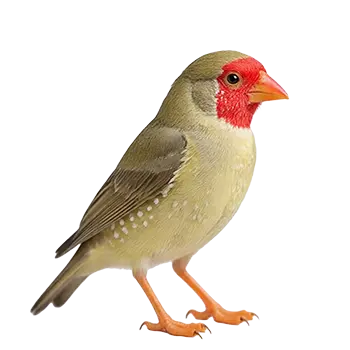

Understanding Enrichment for Finches

Enrichment for Star Finches operates on fundamentally different principles than enrichment for parrots and other hookbills. Parrots are manipulative foragers that use their feet and powerful beaks to disassemble, shred, and puzzle their way through objects, which is why the parrot toy market is dominated by destructible wooden toys, acrylic puzzles, and foot-held chewing items. Star Finches, by contrast, are ground-foraging granivores that interact with their environment primarily through flight, hopping, pecking, and sifting through substrate material. Effective enrichment for this species targets these natural behaviors rather than attempting to make a finch behave like a small parrot.

The concept of enrichment extends well beyond physical toys. Environmental enrichment encompasses anything that adds complexity, novelty, or challenge to the bird's daily experience, including changes in perch arrangement, introduction of new food presentation methods, exposure to safe natural materials, auditory stimulation, and social interaction with conspecifics or compatible species. A Star Finch in a barren cage with nothing but perches, seed, and water is an under-stimulated bird, even if all its survival needs are technically met. The behavioral hallmarks of inadequate enrichment include excessive sleeping, repetitive flight patterns, feather condition decline, and reduced vocalization.

Rotation is a key principle in any enrichment program. Even the most engaging item loses its novelty after continuous exposure, and Star Finches, like all birds, are neophilic once they overcome initial wariness of new objects. Maintaining a collection of enrichment items and rotating them on a weekly or biweekly cycle keeps the environment fresh without overwhelming the birds with constant change. Introducing one new item while removing one familiar item strikes a balance between novelty and stability that most finches tolerate well.

Safety considerations for finch toys differ from those for parrot toys in important ways. Star Finches have thin, delicate toes that can become entangled in loose threads, frayed rope, and fine chain links. Their small body size means they can squeeze into openings that would be safe for larger species. Any toy or enrichment item placed in a Star Finch enclosure must be inspected for entanglement hazards, sharp edges, small openings that could trap a head or foot, and toxic materials. When in doubt about the safety of a product, err on the side of exclusion.

Foraging Toys and Devices

Foraging enrichment is the single most impactful category of enrichment for Star Finches because it directly engages the behavior that occupies more of a wild bird's time than any other activity. In their native Australian grasslands, Star Finches spend hours each day moving through grass tussocks and across the ground, searching for ripe seeds scattered among leaf litter and soil. Captive birds that receive their entire daily food ration in an open dish complete their foraging in minutes and have nothing to do for the rest of the day. Foraging devices stretch this process out, providing both mental stimulation and physical activity.

The simplest and often most effective foraging enrichment involves scattering a portion of the daily seed ration across a tray of clean substrate material rather than offering it all in a dish. A shallow tray filled with clean river sand, dried grass, paper shreds, or coconut coir with seed mixed throughout forces the birds to search and sift for their food, replicating natural ground foraging with minimal equipment cost. This technique works well in both cages and aviaries and can be introduced to birds of any age with virtually no adjustment period, since it taps into an innate behavioral drive.

Commercial foraging toys designed for small birds are available in several formats. Woven grass or palm-leaf balls and tubes stuffed with seed or millet sprays encourage birds to pick and tug at the weave to access food hidden inside. These products are well-suited to Star Finches because they require pecking and pulling rather than the foot-held manipulation that finches are not equipped for. Hanging seed bells and compressed seed shapes provide a foraging surface that birds work at over time, though these should be used as supplemental enrichment rather than a primary food source, since the binding agents used in some compressed seed products are not always nutritionally desirable.

Spray millet is perhaps the most universally effective foraging enrichment product for seed-eating finches. A whole millet spray clipped to the cage side or suspended from the ceiling gives Star Finches a naturalistic seed-head foraging experience that holds their attention for extended periods. The act of stripping individual seeds from the spray engages beak dexterity, provides mild physical effort, and delivers a preferred food reward, combining enrichment and nutrition seamlessly. Spray millet is calorically dense, so it should be factored into the daily food allowance rather than offered as an unlimited extra.

Seeding grass stems collected from safe, unsprayed areas provide the most authentic foraging enrichment possible. Fresh grass stems with intact seed heads placed upright in a small vase or secured to the cage wall allow Star Finches to feed exactly as they would in the wild, balancing on the stem and stripping seeds from the head. The species of grass matters less than its pesticide-free status and seed maturity. Common lawn grasses, foxtail, timothy, and various ornamental grasses are all readily accepted when offered in seed.

Swings, Ladders, and Movement Toys

Swings occupy a unique niche in finch enrichment because they provide passive physical stimulation. A bird perched on a swing must constantly make small balance adjustments as the swing sways, engaging core muscles and leg stabilizers that are not activated on fixed perches. Many Star Finches take to swings readily and will choose a swing perch over a static perch for resting, preening, and even sleeping once they become comfortable with the motion. Swings constructed from natural wood with a rough, irregular surface provide the best grip and foot exercise.

The swing itself should be proportioned for small finches. Products designed for parakeets or larger birds are often too large in perch diameter and too heavy in swing weight for Star Finches to use comfortably. A swing with a perch diameter of approximately three-eighths to half an inch is appropriate for Star Finch feet. The swing arc should be gentle rather than dramatic, meaning shorter suspension chains or ropes produce a more controlled motion that timid birds find acceptable. Placing the swing in a location where it does not block the primary flight path prevents collisions and encourages voluntary use.

Ladders are less universally useful for finches than they are for climbing species like parakeets and parrots, but small wooden ladders can still serve as varied perching surfaces that add visual complexity to the enclosure interior. Star Finches may use a ladder as a stationary perch rather than climbing it rung by rung, which is perfectly acceptable since the value lies in providing additional perching options with different textures and angles rather than in the climbing behavior itself.

Boucle rope perches and flexible spiral perches offer textured, irregularly shaped surfaces that promote foot health through varied grip positions. These products, when sized for small birds, can be bent into different shapes and positions within the cage, adding a modular element that supports rotation and rearrangement without purchasing new items. The rope material should be inspected regularly for fraying, as loose fibers can entangle toes. Natural fiber ropes are generally safer than synthetic blends because they break more predictably and are less likely to form tight loops around toes.

Bathing and Water Enrichment

Bathing is one of the most enthusiastically pursued enrichment activities for Star Finches, and providing appropriate bathing opportunities is one of the easiest ways to improve a captive bird's quality of life. Star Finches bathe frequently and with visible enjoyment, splashing vigorously in shallow water and then spending considerable time preening their feathers back into order. Bathing maintains feather condition by removing dust, loose feather particles, and dried skin, and the preening behavior that follows bathing provides extended behavioral engagement that can occupy a bird for thirty minutes or more.

Shallow bath dishes are the standard bathing product for cage-housed finches. The ideal bath dish for Star Finches is wide enough for the bird to stand in comfortably, with a water depth of no more than one inch, and with a textured or stepped bottom that provides secure footing. Smooth-bottomed dishes can cause birds to slip and panic, which may create a negative association with bathing. Ceramic, glass, and heavy plastic dishes are all suitable materials. Clip-on bath houses that attach to the cage door opening contain splashing and reduce water mess in the surrounding area, though some Star Finches find the enclosed design intimidating initially.

Misting provides an alternative bathing experience that simulates rain, which Star Finches encounter regularly in their native tropical habitat. A fine mist from a clean plant sprayer directed over the cage or aviary prompts many finches to spread their wings, fluff their feathers, and orient themselves to maximize water contact. Misting should use lukewarm water and a nozzle that produces a fine fog rather than heavy droplets. Automated misting systems on timers can deliver brief daily rain showers in aviaries, providing consistent bathing opportunities without keeper intervention.

In planted aviaries, shallow ground-level water features such as terracotta saucers recessed into the substrate create naturalistic bathing stations that Star Finches gravitate to instinctively. These ground-level baths appeal to the species' natural comfort with ground-level activity and can be planted around with low vegetation to create a semi-concealed bathing spot that feels secure. Water in any bathing vessel must be changed daily at minimum, as finches defecate in bath water and bacterial contamination builds rapidly, particularly in warm environments. Offering the bath dish in the morning and removing it after a few hours prevents water from becoming a standing contamination source.

Natural Materials and DIY Enrichment

Some of the most effective enrichment for Star Finches costs nothing and comes directly from the natural environment. Branches, leaves, grasses, and seed heads collected from safe, unsprayed locations provide visual complexity, foraging opportunity, textural variety, and scent stimulation that manufactured products cannot replicate. A fresh branch of eucalyptus, bottlebrush, or grevillea placed in the aviary introduces new perching surfaces, leaf textures for the birds to explore, and in some cases flowers and seed pods that provide additional foraging interest. Fresh branches should be from known-safe species and sourced away from roadsides and chemically treated areas.

Dried grass bundles tied together and hung in the enclosure serve multiple enrichment functions simultaneously. Star Finches will pick through the grass seeking seeds, pull fibers for nesting material if they are in breeding condition, and perch on thicker stems. Bundles can be prepared from dried lawn clippings, hay, or ornamental grasses, and they are inexpensive enough to be replaced frequently, maintaining novelty through regular rotation. The visual effect of grass bundles also transforms the enclosure aesthetic from clinical to naturalistic, which benefits the keeper's experience as well as the birds'.

Leaf litter scattered across a foraging tray provides another layer of complexity to ground foraging. Dried leaves from safe trees, crumbled to varying sizes and mixed with a small amount of seed, create a foraging substrate that requires the birds to flip, push, and sift through material to find food. This closely mimics the ground foraging that Star Finches perform in the wild among fallen leaves and grass debris. Oak, maple, beech, and eucalyptus leaves are commonly used, and they can be collected in autumn and stored dry for year-round use.

DIY enrichment projects need not be complex to be effective. A toilet paper roll stuffed with hay and a few seeds creates a temporary foraging puzzle. A shallow dish of clean soil with a few seeds buried in it provides digging enrichment. A small mirror positioned outside the enclosure glass where birds can see it may stimulate social behavior and curiosity without the risks associated with in-cage mirrors, which can cause obsessive behavior in some species. The guiding principle for all DIY enrichment is to observe the birds' response and retain items that generate active engagement while retiring those that are ignored or cause visible stress.

What to Avoid

The parrot toy market is vastly larger than the finch enrichment market, and well-meaning owners sometimes purchase parrot-oriented products that are inappropriate or dangerous for Star Finches. Large acrylic puzzles, heavy wooden blocks with metal hardware, and rope toys with thick cotton strands are all designed for beaks and feet far more powerful than those of a grass finch. These items take up space without providing usable enrichment and may introduce hazards including heavy metal components, entanglement-prone fibers, and sharp fasteners that small birds can injure themselves on.

Mirrors placed inside the enclosure deserve cautious evaluation. While a mirror outside the enclosure or positioned where birds can occasionally see their reflection is generally harmless and may provide mild social stimulation, a mirror permanently fixed inside the cage can lead to problematic behavioral patterns. Some finches become fixated on their reflection, treating it as a companion and spending excessive time next to the mirror at the expense of normal social interaction, feeding, and activity. In breeding setups, mirrors can interfere with pair bonding by introducing a perceived third bird into the social dynamic.

Bell toys, a staple of the budgerigar toy market, are generally unsuitable for Star Finches. The jingle bells commonly attached to bird toys contain small clappers that can trap tiny toes, and the noise produced when bells are struck can startle sensitive finch species. Star Finches are particularly prone to night fright, and a bell that swings and rings when a bird shifts position at night can trigger panic flights in the dark that result in injury. If bell-type toys are used, they should be the solid, clapper-free type marketed for small animals, and even these should be removed at night.

Scented, dyed, or chemically treated enrichment materials should be strictly avoided. Some commercially available nesting materials, substrate products, and wooden toys are treated with dyes, fragrances, or preservatives that may be safe for mammals but are not tested for avian safety. Birds have extremely efficient respiratory systems that absorb airborne chemicals far more readily than mammalian lungs, and their small body mass means that even trace exposures represent a proportionally larger dose. Natural, untreated, unscented materials are always the safer choice for any item that will be placed inside a Star Finch enclosure.

Enrichment Schedules and Rotation

A structured enrichment rotation schedule transforms ad hoc toy placement into a systematic program that delivers consistent behavioral benefits. The simplest effective schedule divides enrichment items into three or four sets and rotates one set into the enclosure each week while the others are cleaned, inspected, and stored. This approach ensures that every item the birds encounter retains some novelty value while avoiding the stress of a complete environmental overhaul on each rotation day. Star Finches are moderately neophobic, meaning they are initially cautious around new objects, so gradual rotation is better tolerated than wholesale rearrangement.

Recording bird responses to different enrichment items helps refine the rotation over time. Keeping a simple log of which items were offered and how actively the birds interacted with them reveals preferences and allows keepers to weight the rotation toward high-engagement items while phasing out those that are consistently ignored. Some items may be seasonal in their appeal, with foraging devices seeing heavy use during the active breeding season and bathing opportunities preferred during warm weather. Adjusting the rotation to align with these seasonal preferences maximizes enrichment impact.

The frequency of environmental changes should be calibrated to the birds' temperament and the stability of the social group. A well-established colony of Star Finches in a planted aviary may tolerate daily small changes, such as the addition of fresh grass stems or the repositioning of a foraging tray, without showing stress. A newly assembled pair in a cage may need several days to acclimate to each change before another is introduced. Breeding pairs should have minimal enclosure disturbance once they begin nesting, as unnecessary changes near the nest site can trigger abandonment. Enrichment during breeding is best focused on food variety and foraging opportunities placed away from the nesting area.

Cleaning enrichment items between rotations is a hygiene practice that is often neglected but matters for disease prevention. Natural wood perches can be scrubbed with plain water and sun-dried. Plastic and ceramic items can be soaked in a dilute bird-safe disinfectant and rinsed thoroughly. Woven grass and palm-leaf items that cannot be effectively cleaned should be discarded after they become soiled or frayed and replaced with fresh ones. Maintaining a clean rotation stock prevents the gradual buildup of droppings, mold, and bacterial contamination that can accompany long-term use of uncleaned enrichment items.

Always consult a qualified professional before making any health-related decisions. This content is provided for informational reference only and should not replace professional guidance specific to your animal.