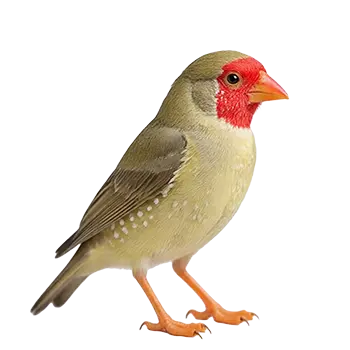

Housing Requirements

Star Finches are active, horizontally oriented fliers that spend much of their day darting back and forth across their enclosure rather than climbing vertically like parrots. This fundamental behavioral characteristic means that enclosure width and length matter far more than height when selecting housing. A cage or aviary that is tall but narrow forces Star Finches into an unnatural pattern of hopping between perches rather than flying, which leads to poor muscle tone, obesity, and behavioral frustration over time. Every housing decision for this species should prioritize horizontal flight space above all other considerations.

The social nature of Star Finches adds another layer to housing planning. These birds are colony species that thrive in the company of their own kind and are frequently kept alongside other peaceful finch species in mixed aviaries. Housing a single Star Finch in isolation is not recommended, as solitary birds often become listless, vocalize less, and may develop stress-related feather issues. At minimum, a pair should be kept together, and small groups of four to six birds display the most natural and engaging social behaviors. Housing decisions must therefore account for the space needs of multiple birds rather than a single individual.

Temperature tolerance is an important housing consideration for this tropical species. Star Finches originate from the warm, humid grasslands of northern Australia and are not cold-hardy. In temperate climates, indoor housing or heated shelters attached to outdoor flights are necessary during cold months. Outdoor aviaries in tropical and subtropical regions can house Star Finches year-round, but even in mild climates, a draft-free, dry roosting area must be available. Housing products should be evaluated partly on how well they support temperature management through positioning, insulation potential, and the ability to attach or integrate heating elements.

Ventilation is equally critical and often underappreciated. Star Finches are sensitive to airborne irritants including dust, aerosol chemicals, cooking fumes, and stagnant air. The enclosure must allow adequate air circulation without creating direct drafts across perching and sleeping areas. Indoor cages should not be placed in kitchens, near heating vents, or in rooms where aerosol products are regularly used. Outdoor aviaries naturally provide superior ventilation but must still be designed to prevent wind tunneling through the shelter area.

Cage Types and Sizing

For keepers who house Star Finches indoors, the flight cage is the minimum acceptable enclosure type. A flight cage differs from a standard pet cage in its elongated, rectangular footprint that emphasizes horizontal dimension. For a pair of Star Finches, the minimum recommended flight cage size is thirty inches long by eighteen inches deep by eighteen inches tall, though longer is always better. A cage of this size allows short flights between perches at either end, which is the bare minimum for maintaining flight muscle condition and cardiovascular health.

Small groups of four to six Star Finches require proportionally more space, and at this point many keepers find that a large indoor flight cage or a dedicated bird room becomes more practical than scaling up traditional cage dimensions. Indoor flights measuring four to six feet in length provide genuine flying space and allow keepers to observe the full range of Star Finch social behavior, including courtship displays, group roosting, and the playful chasing that characterizes a healthy colony. These larger enclosures can be purchased as assembled units or built from commercially available cage panel systems that bolt together.

Bar spacing is a non-negotiable safety specification for any Star Finch enclosure. The maximum safe bar spacing for this species is half an inch, or approximately twelve millimeters. Wider spacing allows these small, slender birds to push their heads through the bars, which can result in injury or escape. Cages marketed for parakeets or cockatiels frequently use bar spacing of five-eighths to three-quarters of an inch, which is dangerously wide for finches. Always verify bar spacing before purchase, even when a product is labeled as suitable for finches, as labeling is not always accurate.

Cage material and finish affect both durability and bird safety. Powder-coated steel is the standard for quality bird cages and resists rust and chipping far better than painted wire. Stainless steel cages represent the premium option, offering superior corrosion resistance and eliminating any concern about coating toxicity, but they come at a significantly higher price. Avoid cages with zinc-coated or galvanized wire, as zinc is toxic to birds and can be ingested when birds chew or rub their beaks on the bars. Brass and copper should also be avoided for the same reason.

Aviary Options

An outdoor or indoor aviary is the gold standard for Star Finch housing, providing the flight space, environmental complexity, and social opportunities that no cage can fully replicate. Planted outdoor aviaries in suitable climates allow Star Finches to exhibit nearly the full range of their natural behaviors, including ground foraging, grass-stem perching, bathing in rain, and building nests in dense vegetation. The transformation in behavior between cage-kept and aviary-kept Star Finches is often dramatic and immediate, with aviary birds showing higher activity levels, more frequent singing, and stronger breeding drive.

Prefabricated aviary panels are the most accessible entry point for keepers who want aviary housing without a full custom build. These panels, typically made from welded galvanized mesh on wooden or aluminum frames, bolt together to form enclosures of various sizes. When selecting panels for Star Finches, the mesh aperture must be half-inch by half-inch or smaller. One-inch by half-inch mesh is often used for larger finches but allows Star Finches to push through. Aluminum-framed panels resist weather better than timber frames but cost more and may require corner reinforcement in larger builds.

Walk-in aviaries offer the practical advantage of allowing the keeper to enter the enclosure for cleaning, maintenance, and bird observation without needing to reach through access doors. A double-door entry system or a safety porch is essential for any walk-in aviary housing Star Finches, as these quick, alert birds will exploit any gap in entry discipline to escape. The safety porch creates an intermediate chamber where the outer door is closed before the inner door is opened, effectively eliminating flyout risk during routine entry.

Roofing and weather protection must be considered carefully for any outdoor aviary. At least one-third to one-half of the aviary roof should be solid, providing shelter from rain, direct midday sun, and overhead predators such as hawks or owls. Translucent polycarbonate sheeting over the sheltered section admits light while blocking rain and can be paired with shade cloth during summer to prevent overheating. The open-mesh portion of the roof allows rain bathing and natural sunlight exposure, both of which benefit feather condition and vitamin D synthesis.

Predator protection is a serious concern for outdoor Star Finch aviaries. Rats, mice, snakes, cats, and raptors all pose threats to small finches. The aviary floor should be either concrete, paving, or wire mesh buried beneath a substrate layer to prevent burrowing predators from gaining entry. Mesh gauge should be heavy enough to resist being torn or pried open by determined predators, and all joints and edges must be secured without gaps. Hardware cloth with a minimum gauge of nineteen is generally sufficient for excluding mammals and snakes in most regions.

Perches and Internal Layout

The internal arrangement of an enclosure matters nearly as much as its dimensions. Star Finches spend most of their active hours perching, and the type, diameter, placement, and number of perches directly affect foot health, flight patterns, and overall comfort. Natural branch perches of varying diameters are far superior to uniform dowel rods, as the variation exercises different foot muscles and prevents the pressure sores that develop when birds grip the same diameter surface continuously. Branches from safe, untreated hardwood species such as eucalyptus, manzanita, apple, or willow are ideal choices.

Perch placement should encourage flight rather than obstruct it. The most effective layout positions perches at either end of the enclosure with open space in between, creating a natural flight path. Perches should not be stacked directly above one another, as droppings from higher perches will soil birds and perches below. Angling perches slightly rather than placing them perfectly horizontal adds variety to the grip surface and better mimics natural branch positions. In aviaries with live plants, the plants themselves often provide supplementary perching opportunities that birds prefer to any installed perch.

Swing perches add a dynamic element that many Star Finches enjoy. Unlike fixed perches, swings require the bird to balance actively, which engages core muscles and provides mild physical enrichment. A single swing positioned in the upper portion of the enclosure, away from the main flight path, gives birds the option to use it without interfering with flight. Swings should use the same natural-branch or textured material principles as fixed perches, avoiding smooth plastic or uniform dowel construction.

The number of perches must balance accessibility with open space. Overcrowding an enclosure with perches reduces flight room and defeats the purpose of providing a spacious cage or aviary. A useful guideline is to provide at least two perching positions per bird plus one or two communal perches or swings, while ensuring that at least sixty percent of the interior volume remains open for flight. In colony settings, distributing perches at different heights and locations allows subordinate birds to maintain comfortable distance from dominant individuals, reducing stress in the social hierarchy.

Nesting and Breeding Enclosures

When Star Finches are intended for breeding, housing considerations extend beyond general maintenance requirements to include nest site provision, privacy, and the management of breeding colony dynamics. Star Finches build enclosed, domed nests with a side entrance, and they are most successful when provided with wicker or bamboo nest baskets, half-open nest boxes, or dense vegetation in which to construct their own free-standing nests. Offering more nest sites than breeding pairs prevents territorial disputes over preferred locations and gives hens the ability to select a site that meets their individual preferences for height, privacy, and proximity to food.

Nest baskets designed for small finches and waxbills are the most commonly used commercial nest products for Star Finches. These woven baskets, typically made from wicker, coconut fiber, or bamboo strips, provide a structural framework that the birds then fill and shape with nesting material. Baskets should be positioned in the upper third of the enclosure, partially concealed by foliage or cage furnishings to provide the sense of security that encourages nest acceptance. Some breeders wire baskets in place at a slight upward angle to improve drainage and prevent egg rolling.

Nesting material should be supplied in generous quantities whenever nest baskets are present. Star Finches use fine dried grasses, coconut fiber, sisal, and soft feathers to construct the nest interior. Commercial nesting material packs containing a blend of these fibers are widely available and save keepers the effort of sourcing and preparing materials individually. The material should be offered in a small wire rack or basket mounted to the enclosure wall at a convenient height, allowing birds to pull strands as needed. Loose material scattered on the enclosure floor is also used, particularly by birds that prefer to gather material from ground level as they would in the wild.

Breeding enclosures for individual pairs differ from colony setups in their design priorities. Pair breeding in smaller flight cages allows controlled pairing, precise record keeping, and prevents the interference from other colony members that sometimes disrupts breeding attempts. A breeding flight cage of thirty-six inches or longer provides adequate space for a single pair and their nest, with room for the fledged young to exercise their flight muscles before being moved to a weaning cage. Colony breeding in a larger aviary is more naturalistic and often yields strong breeding results with well-established groups, but it requires more nest sites, more food stations, and more vigilant monitoring to detect problems early.

Substrate and Floor Management

The enclosure floor requires a substrate that is easy to clean, safe if accidentally ingested, and ideally provides some enrichment value. For indoor cages and flights, paper-based substrates are the most practical choice. Plain newsprint, butcher paper, or purpose-made cage paper liners allow easy visual monitoring of droppings, which is an important health indicator, and can be changed daily with minimal effort. Paper substrates also prevent finches from accidentally ingesting bedding material, which is a risk with some loose substrates.

Loose substrates such as corn cob bedding, walnut shell, and wood shavings are used by some keepers but carry trade-offs. Corn cob bedding absorbs moisture well but can harbor mold and fungal spores if not changed frequently, and it obscures droppings, making health monitoring more difficult. Wood shavings from safe species like aspen are acceptable in flight cages but should never include cedar or pine shavings, as the aromatic oils in these woods are respiratory irritants for birds. Walnut shell substrate is inert and dust-free but can be mistaken for food by foraging finches, creating a potential impaction risk.

In outdoor aviaries, the substrate question becomes more complex and consequential. Concrete floors are the easiest to clean and provide the best barrier against burrowing predators, but they are hard on feet if birds spend significant time on the ground, as Star Finches do when foraging. A layer of clean river sand or fine gravel over concrete provides a natural foraging surface, aids grit intake, and is easy to rake and periodically replace. Some keepers use a deep-litter system with dry leaves, straw, and sand that develops a stable microbial community and requires less frequent complete replacement, though this approach demands experience to manage properly.

Natural planted floors in outdoor aviaries offer the highest enrichment value but the greatest maintenance challenge. Grass, clover, or low ground-cover plantings create a naturalistic environment that Star Finches actively enjoy, foraging through the vegetation for seeds and small invertebrates. However, planted floors require rest periods to recover from bird activity, which means either rotating planted sections or accepting bare patches during heavy use. The plants must be non-toxic species, and the soil must be free of chemical fertilizers and pesticides. For keepers willing to invest the effort, a well-managed planted aviary floor transforms the enclosure from simple housing into a functioning habitat.

Placement, Lighting, and Climate Control

Where an enclosure is positioned within a room or property has a profound effect on the welfare of the birds it houses. Star Finches are sensitive to environmental stress, and an enclosure placed in a high-traffic hallway, next to a loud television, or in a room with erratic temperature swings will produce anxious, poorly conditioned birds regardless of how well the enclosure itself is designed. The ideal indoor location is a well-lit room with a stable temperature between sixty-five and eighty degrees Fahrenheit, away from direct drafts, kitchen fumes, and sudden noise sources. Placing the cage against a wall or in a corner provides a sense of security by eliminating approach from multiple directions.

Lighting quality and duration are among the most important and most frequently neglected aspects of indoor finch housing. Star Finches evolved under the intense, full-spectrum sunlight of tropical Australia, and standard household lighting is a poor substitute. Full-spectrum avian lighting fixtures that produce light in the UVA and UVB range support vitamin D synthesis, improve color perception, and help regulate the photoperiod-driven hormonal cycles that govern breeding and molt. These fixtures should be mounted above or beside the enclosure at the manufacturer's recommended distance and replaced on the schedule specified, as UV output diminishes well before the visible light appears to fade.

Photoperiod management through lighting timers helps establish the predictable day-night cycle that Star Finches need for hormonal regulation and restful sleep. A consistent light schedule of twelve to fourteen hours of light during the active season and ten to twelve hours during the rest period approximates the natural photoperiod variation in the species' native range. Abrupt changes in light schedule should be avoided, with adjustments made gradually over several days. At night, the enclosure should be dark and quiet, as Star Finches are not equipped to cope with nighttime disturbances and may thrash in panic if startled in the dark, a behavior known as night fright that can cause serious injury.

Climate control for indoor housing typically relies on the home's existing heating and cooling systems, but supplemental measures may be necessary. Ceramic heat emitters or radiant heat panels designed for bird use can provide gentle warmth for enclosures in cooler rooms without the light output of heat lamps, which would disrupt sleep cycles if used at night. Humidity management is important for this tropical species, and a room humidifier may be needed during dry winter months when indoor heating reduces ambient humidity well below the forty to sixty percent range that is comfortable for Star Finches. Monitoring temperature and humidity with a digital hygrometer mounted near the enclosure allows keepers to detect and correct environmental problems before they affect bird health.

Always consult a qualified professional before making any health-related decisions. This content is provided for informational reference only and should not replace professional guidance specific to your animal.