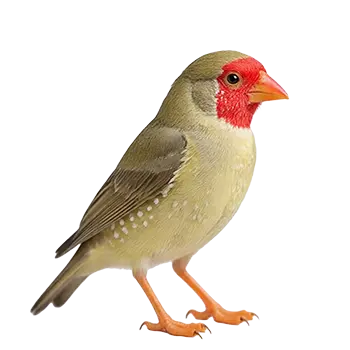

Why Technology Matters for Star Finch Keeping

Star Finches are a species where small environmental deviations can produce significant health consequences. As tropical birds adapted to the warm, humid grasslands of northern Australia, they have narrower tolerances for temperature drops, humidity swings, and lighting irregularities than many commonly kept cage birds. In the wild, the stable climate of their native range provides these conditions automatically. In captivity, especially in temperate climates with central heating, air conditioning, and artificial lighting, the keeper must actively manage these variables, and technology provides the tools to do so with precision and consistency that manual methods cannot match.

Beyond environmental management, technology serves a critical observational role. Star Finches are small, quick, and adept at concealing illness, behaviors they evolved as prey animals whose survival depends on not appearing vulnerable. By the time a keeper notices a sick Star Finch with the unaided eye during routine cage checks, the illness may already be advanced. Cameras, digital scales, and activity monitors can detect subtle behavioral shifts, weight loss, and changes in feeding patterns at an earlier stage, when intervention is more likely to succeed.

Technology also addresses a practical reality of modern aviculture: most keepers cannot be present at their aviaries around the clock. Work schedules, travel, and daily obligations create gaps in direct observation during which problems can develop and escalate. Remote monitoring systems that deliver real-time data and alerts to a smartphone or computer fill these gaps, giving keepers awareness of conditions even when they are physically away. For breeders managing multiple enclosures or housing birds in a detached aviary building, this remote visibility can be the difference between catching a heater failure at midnight and discovering frozen birds the next morning.

The cost of monitoring technology has dropped dramatically in recent years, putting devices that were once the province of professional zoos and research facilities within reach of hobby keepers. Wireless sensors, internet-connected cameras, smart plugs, and programmable timers are now commodity products available at mainstream retailers, and many of them can be deployed for avicultural purposes with minimal technical skill. The investment in these tools is modest relative to the value of the birds they protect and the peace of mind they provide.

Cameras and Visual Monitoring

A camera positioned to observe the enclosure is one of the highest-value technology investments a Star Finch keeper can make. Continuous or on-demand visual monitoring allows the keeper to observe behaviors that occur during their absence, including feeding patterns, social interactions, courtship displays, nesting activity, and the early signs of illness that birds often suppress when a human is present in the room. Many finch keepers report that camera observation reveals a far richer behavioral repertoire than they had previously appreciated from in-person observation alone.

Compact wireless cameras designed for home security or baby monitoring are well-suited to aviary and bird room use. Key features to prioritize when selecting a camera for bird monitoring include high-definition resolution sufficient to distinguish individual birds and observe subtle behaviors, night vision capability using infrared illumination that does not emit visible light that would disturb sleeping birds, a wide-angle lens that captures the full enclosure in a single frame, and two-way audio or at minimum audio capture that picks up vocalizations. Wi-Fi connectivity with a companion smartphone application allows live viewing and alert notifications from anywhere.

Camera placement requires consideration of both viewing angle and bird comfort. The ideal position captures the majority of the enclosure interior, including feeding stations, perching areas, and nest sites, without requiring the camera to be mounted inside the enclosure where birds may investigate, perch on, or soil it. External mounting aimed through the cage wire or aviary mesh works well for most setups. If the camera must be inside the enclosure, it should be positioned where it is protected from droppings and where curious birds cannot reach the lens or cable.

Motion-activated recording and cloud storage features transform a camera from a live-viewing tool into a searchable behavioral record. Reviewing time-lapse or motion-triggered clips from overnight or during the workday can reveal nest building progress, chick feeding frequency, instances of aggression between colony members, and nocturnal disturbances such as night fright episodes. Some camera systems offer activity-zone features that send alerts only when motion is detected in a specific area of the frame, such as the nest entrance, reducing notification fatigue while maintaining vigilance over critical areas.

Temperature and Humidity Monitoring

Temperature monitoring is arguably the most important single technology application for Star Finch keeping. This species is not cold-hardy, and exposure to temperatures below fifty-five degrees Fahrenheit for extended periods can lead to hypothermia, respiratory illness, and death. Conversely, temperatures above ninety-five degrees Fahrenheit in enclosed spaces without adequate ventilation create heat stress risk. A digital thermometer positioned at bird level within the enclosure provides basic temperature awareness, but standalone thermometers require the keeper to physically check the reading, which limits their utility to the hours when the keeper is present.

Wireless temperature sensors with smartphone connectivity solve the presence problem by continuously logging temperature data and transmitting it to a base station or cloud service accessible from anywhere. Many of these sensors also record humidity, providing a complete picture of the microclimate inside the enclosure or bird room. The best systems allow users to set high and low temperature thresholds that trigger instant push notifications to a phone, alerting the keeper the moment conditions fall outside the safe range. For Star Finches, a low-temperature alert set at sixty degrees Fahrenheit and a high-temperature alert at ninety degrees Fahrenheit provides a reasonable safety margin.

Humidity monitoring complements temperature data for this tropical species. Star Finches are most comfortable at relative humidity levels between forty and sixty percent. Indoor environments in temperate climates often fall well below this range during winter heating season, creating conditions that dry mucous membranes, reduce feather suppleness, and increase susceptibility to respiratory irritation. A humidity sensor that logs readings over time reveals patterns that a single-point reading cannot, such as a consistent afternoon humidity dip when the heating system cycles most aggressively, allowing the keeper to target humidification efforts to the times they are most needed.

Multi-sensor systems that monitor several locations simultaneously are valuable for keepers with multiple enclosures, separate indoor and outdoor housing, or an aviary building where conditions may differ significantly from the attached house. Placing sensors in the warmest and coldest spots within an aviary, near the heating element, and in the shelter area creates a thermal map that reveals dead zones, drafts, and temperature gradients. This information guides heater placement, ventilation adjustments, and insulation improvements that a single-point measurement would miss entirely.

Lighting Controllers and Timers

Photoperiod management through automated lighting is one of the most consequential technologies for captive Star Finch health and breeding management. The hormonal cycles that govern breeding readiness, molt timing, and metabolic rate in Star Finches are regulated primarily by day length, and erratic or inappropriate lighting schedules disrupt these cycles with cascading effects on behavior, reproductive success, and feather condition. Manual light switching is unreliable because human schedules are inconsistent, and a few late evenings or early mornings can be enough to confuse a bird's internal clock.

Digital programmable timers, available as simple outlet timers or as smart plugs controlled through smartphone applications, automate the light schedule with precision and consistency. For Star Finches, a photoperiod program that simulates the seasonal variation of northern Australia provides the most species-appropriate lighting cycle. This means longer days of approximately thirteen to fourteen hours during the breeding season and shorter days of approximately eleven hours during the rest and molt period. The transition between these photoperiods should be gradual, adjusting by fifteen to thirty minutes per week to mimic natural seasonal change and avoid the abrupt hormonal disruption that sudden day-length changes can cause.

Smart lighting systems that include dimming capability add another layer of sophistication by simulating dawn and dusk transitions rather than switching between full darkness and full light instantaneously. A gradual thirty-minute brightening period in the morning and a corresponding dimming period in the evening replicate natural light transitions that allow birds to settle onto roost perches before darkness falls, significantly reducing the incidence of night fright that abrupt light-off events can trigger. Several commercially available smart bulb systems and dedicated avian lighting controllers support programmable sunrise and sunset ramping.

Full-spectrum avian lighting fixtures require their own timer management independent of ambient room lighting. These specialized bulbs produce UV wavelengths essential for vitamin D synthesis and color perception that standard LED or incandescent lighting lacks. UV output from these bulbs diminishes over their lifespan even while visible light output remains seemingly normal, so tracking bulb hours through a simple counter or logging system ensures timely replacement. Most manufacturers recommend replacement every six to twelve months depending on daily use hours, and integrating this replacement schedule into a digital calendar with automated reminders prevents the gradual UV decline from going unnoticed.

Automated Environmental Controls

Smart plugs and relay-based controllers extend basic timer functionality to active environmental management by linking sensors to output devices. The most immediately practical application for Star Finch keeping is thermostat-controlled heating, where a temperature sensor triggers a heater to activate when the temperature drops below a set threshold and deactivate when it reaches a target temperature. This approach maintains enclosure temperature within a defined range without requiring manual intervention and without the energy waste of running a heater continuously at a fixed output level.

Ceramic heat emitters and radiant heat panels are the heating devices most commonly paired with thermostat controllers in avicultural settings. Unlike heat lamps, these devices produce warmth without visible light, making them suitable for nighttime use without disrupting the photoperiod. A thermostat controller with a probe sensor positioned at bird level in the enclosure maintains consistent warmth at the point that matters most. The thermostat should have a backup or failsafe mode that prevents the heater from running indefinitely in the event of a sensor failure, as an uncontrolled heater poses a fire risk and can overheat an enclosed space rapidly.

Humidity management can be automated in a similar fashion. A smart plug paired with a humidifier and a humidity sensor creates a feedback loop where the humidifier activates when humidity falls below the desired level and shuts off when it is restored. Ultrasonic humidifiers produce a fine, cool mist and are generally the most appropriate type for bird rooms, as warm-mist humidifiers create burn risk and evaporative models may not raise humidity adequately in drier environments. The humidifier reservoir should be cleaned frequently to prevent bacterial and mold growth in the water and mist output.

Ventilation fans in enclosed bird rooms or aviary shelters can be connected to timers or temperature-triggered controllers to maintain air circulation without creating constant drafts. A fan configured to run for ten minutes every hour provides regular air exchange that prevents staleness and reduces airborne pathogen concentration. In warm weather, a temperature-triggered fan that activates above a set threshold provides evaporative cooling effect and prevents heat buildup in enclosed structures. Fan guards or protective mesh must prevent any possibility of birds contacting moving fan blades, which would cause catastrophic injury to a small finch.

Digital Scales and Health Tracking

A precision digital scale is the most important health monitoring tool a Star Finch keeper can own, surpassing even cameras in its diagnostic value. Weight change is the earliest and most reliable indicator of health status in small birds, and a Star Finch that has lost even two grams from its normal weight may be seriously ill. The problem is that two grams of weight loss on a bird weighing twelve to fourteen grams is invisible to visual inspection, especially in a fully feathered bird whose plumage conceals body condition. Only a scale reveals this change, and only regular weighing establishes the baseline from which deviations can be detected.

The scale must be accurate to at least one-tenth of a gram for meaningful data on a bird this small. Kitchen scales that measure in whole grams lack the resolution to detect the early weight changes that matter most. Laboratory or jewelry scales with one-tenth or one-hundredth gram resolution are readily available at reasonable cost and are the appropriate tool for finch weighing. A flat perch or small container placed on the scale platform and tared to zero allows the bird to perch or stand during weighing without the stress of being held in the hand.

Establishing a weighing routine that captures consistent, comparable data requires attention to timing and conditions. Weighing in the morning before the first feeding produces the most standardized measurement, since the bird's crop is empty and body weight reflects true tissue mass rather than the variable weight of recently consumed food and water. Weekly weighing is a reasonable minimum frequency for healthy, established birds. During breeding, molt, illness, or any period of concern, daily weighing provides the granular data needed to track trajectory and assess whether interventions are working.

Tracking weight data over time in a spreadsheet or dedicated app transforms individual measurements into trend information that is far more valuable than any single data point. A bird whose weight has been stable at thirteen grams for months and then drops to twelve and a half grams over two weeks is telling the keeper something that the twelve-and-a-half-gram reading alone does not convey. Graphing weight over time reveals trends, seasonal patterns, and the relationship between weight and events like diet changes, breeding cycles, or medication courses. Several aviculture-specific apps and general-purpose health tracking tools can store, graph, and alert on weight data for multiple birds simultaneously.

Software, Apps, and Record Systems

Digital record-keeping systems bring organization and analytical power to aviculture management that paper logs cannot match. Dedicated aviculture software applications are designed to manage breeding records, track lineage and genetics, log health events, record band numbers, and generate reports on productivity and outcomes. These tools range from simple mobile apps intended for hobbyists with a few pairs to comprehensive desktop applications used by large-scale breeders managing hundreds of birds across multiple facilities. For Star Finch keepers, even a basic digital system dramatically improves the accessibility and usefulness of records compared to handwritten notes scattered across multiple notebooks.

Spreadsheet applications offer a flexible, widely accessible middle ground between paper records and specialized software. A well-designed spreadsheet can track individual bird identity, weight history, breeding pairings, clutch data, hatch dates, band numbers, veterinary visits, and medication records with sorting, filtering, and charting capabilities that make pattern recognition effortless. Templates shared within online aviculture communities provide starting points that can be customized to individual needs, and cloud-based spreadsheet applications ensure that records are accessible from any device and protected against local data loss.

Calendar and reminder applications serve an underappreciated role in bird care management. Setting recurring reminders for UV bulb replacement, periodic deep cleaning, vitamin supplement reordering, veterinary checkup scheduling, and seasonal lighting adjustments prevents important maintenance tasks from being forgotten in the routine of daily care. Smart home applications that control lighting timers, heater thermostats, and humidifiers also log device activity, creating an incidental but useful record of environmental management that can be reviewed if health problems arise and environmental factors need to be investigated.

Photographic and video documentation has become effortless with smartphone cameras, and systematic use of this capability adds a visual dimension to record keeping that text records cannot provide. Photographing each bird at regular intervals creates a visual archive of feather condition, color development, and physical conformation that supports health assessment, breeding selection, and retrospective analysis. Organizing these images in albums tagged by bird identity and date, which most smartphone photo applications support natively, makes retrieval practical even for large collections. Video recordings of courtship displays, feeding behavior, and social interactions capture behavioral data that enriches the keeper's understanding of their birds and provides material for consultation with veterinarians or experienced mentors when questions arise.

Always consult a qualified professional before making any health-related decisions. This content is provided for informational reference only and should not replace professional guidance specific to your animal.