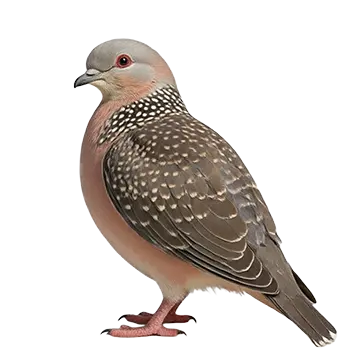

Spotted Doves are active, horizontally oriented flyers that need significantly more lateral space than the typical parrot cage provides. While parrots climb, hang, and use vertical space extensively, doves move through their environment by flying in straight, level lines from perch to perch. This fundamental behavioral difference means that enclosure selection for a Spotted Dove should prioritize width and length over height, and many cages marketed for parrots of similar body size are completely inadequate for dove keeping despite appearing spacious at first glance.
The minimum enclosure dimensions for a single Spotted Dove are approximately thirty-six inches in length, twenty-four inches in depth, and twenty-four inches in height, though larger is always preferable. A pair of doves requires substantially more space, with a flight cage measuring at least forty-eight inches in length being the realistic minimum. These dimensions allow the bird to make short flights within the enclosure, which is essential for maintaining muscle tone, cardiovascular health, and psychological wellbeing. A dove confined to a cage that permits only hopping between closely spaced perches will develop muscle atrophy, obesity, and stress-related behaviors over time.
Bar spacing is a critical safety consideration. Spotted Doves have relatively small heads compared to their body size, and bar spacing should not exceed half an inch to prevent the bird from inserting its head between bars and becoming trapped. Horizontal bars offer no climbing advantage to doves the way they do for parrots, so vertical bar orientation is acceptable and sometimes preferred for ease of cleaning. Wire gauge should be heavy enough to maintain structural integrity but does not need to withstand the beak pressure that parrot housing demands.
Placement of the enclosure within the home affects the bird's comfort and sense of security. Spotted Doves prefer a location that offers visual contact with household activity without being in the center of high-traffic zones. A position against a wall or in a corner provides the bird with a sense of security on at least one or two sides, reducing stress from feeling exposed. The enclosure should be elevated so that the highest perch is at or near the eye level of standing household members, as doves feel vulnerable when positioned below the activity around them.