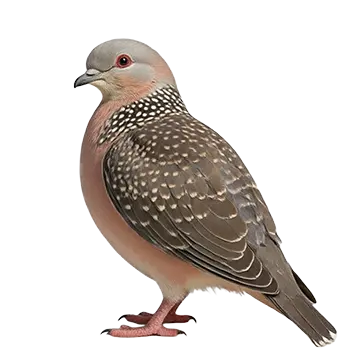

Spotted Doves are predominantly granivorous birds whose wild diet consists almost entirely of seeds, grains, and small plant matter gathered from the ground. This dietary profile makes them comparatively straightforward to feed in captivity, but simplicity should not be confused with a lack of nutritional requirements. A captive Spotted Dove still needs a carefully balanced intake of carbohydrates, proteins, fats, vitamins, and minerals to maintain feather condition, reproductive health, and the steady energy reserves that ground-feeding birds depend on throughout the day.
Protein requirements for Spotted Doves are moderate compared to hookbill species but remain essential, particularly during molting and breeding periods. In the wild, doves supplement their seed diet with occasional insects and invertebrates, which provide amino acids that pure grain diets may lack. Captive diets should account for this by including protein-rich seeds such as safflower and hemp, or by offering small amounts of cooked egg or commercial egg food during periods of increased demand.
Calcium and phosphorus balance is critical for all doves, especially breeding hens that must produce eggshells without depleting their own skeletal reserves. Unlike parrots, doves rarely chew on cuttlebone with any enthusiasm, so calcium delivery often needs to come through soluble supplements added to water or through finely ground oyster shell mixed into grit. Vitamin D3 plays a necessary supporting role in calcium absorption, making either natural sunlight exposure or full-spectrum lighting an indirect but important component of nutritional planning.
Fat content in the diet should remain on the lower side. Spotted Doves are not as metabolically active in captivity as they are in the wild, where they may travel considerable distances between foraging sites. A diet overly heavy in oil-rich seeds like sunflower and flax can lead to obesity, fatty liver disease, and reduced lifespan. The bulk of the seed mix should consist of lower-fat options such as millet, canary grass seed, and milo, with higher-fat seeds reserved for cold weather supplementation or occasional enrichment.